
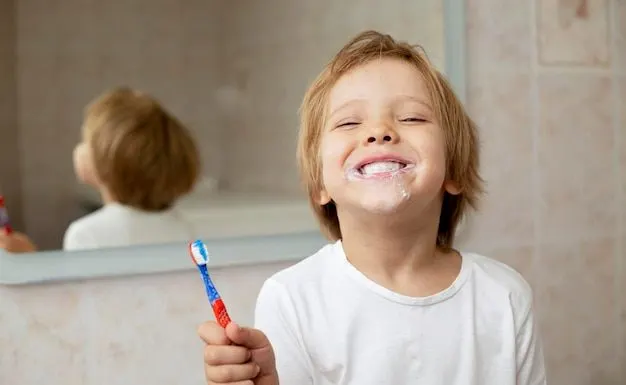
Teeth Brushing by Age Groups in Children
Oral and dental health in children forms the foundation for lifelong healthy habits. Tooth brushing is one of the most effective methods for preventing cavities and gum problems. However, the correct technique, toothbrush, and amount of toothpaste vary depending on a child’s age and developmental level. In this guide, we present tooth brushing recommendations by age group, with scientific and practical information.
Ages 0–2 (Infancy)
Baby’s oral health is important even before their teeth appear. Starting oral hygiene early during this period lays the foundation for healthy teeth later in life.
- Before teeth appear: Gums should be wiped once a day with a damp cheesecloth or finger brush.
- After the first tooth appears:
- A soft-bristled, small-headed baby toothbrush can be used.
- Toothpaste should be applied in a small amount, the size of a grain of rice.
- Brushing should be done twice a day, especially before bedtime.
During this period, parents can support the toothbrushing routine with playful and fun methods.
Ages 3–6 (Preschool)
During preschool, children begin to develop the habit of brushing their teeth, but parental support is critical.
- Brushing frequency: Twice a day (morning and night)
- Amount of toothpaste: A pea-sized amount
- Brushing duration: 2 minutes
- Parental supervision: Children cannot brush their teeth alone; parental assistance is essential.
- Motivation methods: Brushing habits can be encouraged with games, songs, or a timer.
Ages 6–12 (Primary School)
Primary school is a period when children can brush their teeth independently but still need parental supervision.
- Brushing frequency: At least twice a day, preferably in the morning and before bed.
- Amount of toothpaste: A pea-sized amount.
- Flossing: Should be added to the regular routine.
- Parental support: Manual dexterity may not be sufficient until the age of 7–8; therefore, brushing should be completed by a parent from time to time.
Demonstrating proper brushing techniques during this period is critical for children’s long-term oral health.
Ages 12 and Over (Adolescence)
Adolescence is the period when children acquire adult dental care habits and begin to manage their own oral health.
- Brushing frequency: Twice a day for 2 minutes
- Additional hygiene methods: Use of dental floss and mouthwash should be encouraged
- Self-responsibility: In this age group, children can now manage their own brushing habits, but regular monitoring is important.
Habits developed during adolescence lay the foundation for healthy teeth throughout life.
Summary Table by Age Group
| Age Group | Brushing Frequency | Amount of Toothpaste | Parental Support | Recommendations |
|---|---|---|---|---|
| Ages 0–2 | 1–2 times a day | About a grain of rice | Continuous | Wipe gums, fun brushing routine |
| Ages 3–6 | 2 times a day | About a pea | Required | With a timer or game Encourage brushing |
| Ages 6–12 | Twice a day | A pea-sized amount | Occasional | Teach flossing and proper brushing techniques |
| Ages 12 and older | Twice a day | Normal adult amount | Not necessary, should be monitored | Encourage flossing and mouthwash use |
Scientific Basis
Research shows that age-appropriate brushing and parental supervision significantly reduce the risk of cavities in children. Additionally, children who develop regular tooth brushing habits are more likely to have healthy permanent teeth later in life.
Small details like the amount of toothpaste and the duration of brushing ensure the effective use of fluoride, protecting against tooth decay.
Why Support Your Child’s Oral Health with Us?
Our service prioritizes child health and offers scientific dental care guidelines tailored to age groups:
- Expert staff: Hygiene training led by pediatric dentists
- Personalized approach: Specific recommendations for each age group
- Follow-up and counseling: Regular checkups and parental guidance
Age-specific tooth brushing is a fundamental step in protecting children’s oral health. Good habits, starting at an early age, can help prevent cavities.It prevents tooth decay, strengthens teeth, and supports the development of healthy permanent teeth.
Contact us today to ensure your child’s teeth are healthy and create an age-appropriate dental care plan.