
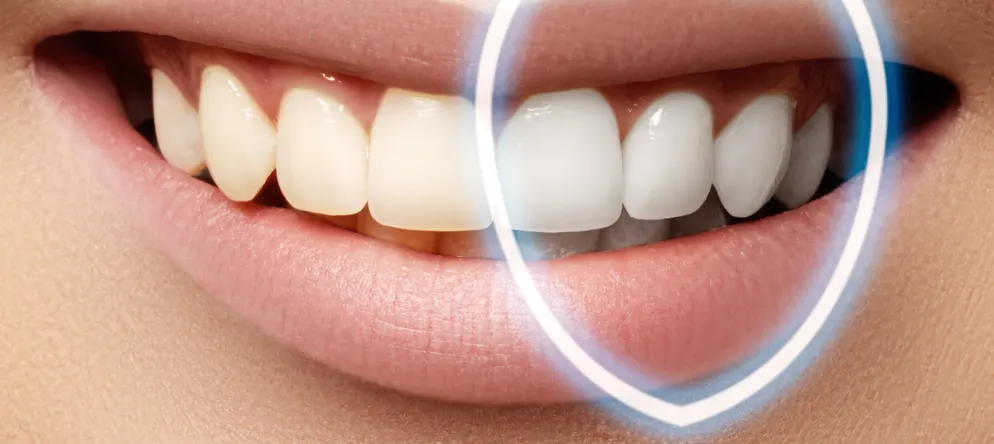
Remove the Shadow from Your Smile with Single Tooth Whitening (Internal Bleaching)
Smile aesthetics require teeth to be in harmony as a whole. Sometimes, even if all your teeth are pearly white, the darkening, graying, or bruising of just one tooth can spoil the entire aesthetic perception. This situation, which is usually encountered in teeth with a history of trauma or root canal treatment, is a serious source of aesthetic concern for patients. Dentocare, specializing in aesthetic dentistry applications in Kahramanmaraş, offers permanent and protective solutions to this problem with “Single Tooth Whitening” or “Internal Bleaching” treatments. This procedure lightens the color of the tooth’s own tissue without the need for veneers, providing a natural and harmonious appearance.
What is Single Tooth Whitening?
Single tooth whitening, unlike general tooth whitening (bleaching) procedures, is a specific aesthetic procedure that focuses only on the problematic tooth that has changed color. It is also referred to as “Devital Whitening” in the literature because it is usually applied when the tooth has lost its vitality (is devitalized). In this procedure, whitening agents are placed not on the outer surface of the tooth, but inside the pulp chamber (nerve space) of the tooth. The aim is to achieve a brightening from the inside out of the tooth, restoring color harmony with neighboring teeth. At Dentocare Kahramanmaraş clinic, this procedure is considered one of the most effective aesthetic interventions that preserves the enamel structure of the tooth.
In Which Cases is Single Tooth Whitening Applied?
This treatment method is preferred in special cases where standard whitening methods (office or at-home) are ineffective and intrinsic discoloration is observed:
- In teeth that have darkened in color (gray, brown, or purple) over time after root canal treatment.
- In teeth that have lost their vitality (necrosis) as a result of a past trauma (impact, fall).
- In cases where the filling materials or medications used during root canal treatment stain the inner structure of the tooth.
- In discoloration caused by bleeding inside the tooth seeping into the dentin tubules.
Why Does Single Tooth Discoloration Occur?
The main reason why a single tooth takes on a different color than the others is usually the “loss of vitality” of the tooth. A sudden blow to the tooth can cause the vascular-nerve bundle (pulp) inside the tooth to rupture, resulting in internal bleeding. Pigments produced by the breakdown of iron-containing hemoglobin in blood cells penetrate the dentin tubules inside the tooth, giving the tooth a dark, gray, or purple color when viewed from the outside. Additionally, the retention of nerve tissue remnants in poorly performed root canal treatments or the oxidation of root canal filling pastes over time are also major causes of discoloration.
Single Tooth Whitening Pre-Examination and Evaluation
A detailed pre-evaluation is essential for a successful internal whitening procedure. Dentocare dentists first examine the quality of the existing root canal treatment by taking an X-ray (periapical or panoramic) of the tooth. If the root canal treatment has failed, there is an infection at the root tip, or the root canal filling is leaking, the root canal treatment must be redone (retreatment) before the whitening procedure. Whitening without a healthy root canal filling can cause the whitening agent to leak out of the root and damage the bone tissue. Therefore, the examination process aims to ensure health before aesthetics.
Single Tooth Whitening Treatment Planning
During the planning phase, the difference between the tooth’s current color tone and the target color tone (of neighboring teeth) is analyzed. Records are taken using digital color measuring devices or color scales. The patient is informed about how many sessions the procedure may take and the possible results. At Dentocare in Kahramanmaraş, personalized planning is done to manage the patient’s time and expectations in the most efficient way.
What is Internal Bleaching?
Internal whitening is a method applied by making a small hole in the back surface of the tooth (from the access cavity previously opened for root canal treatment). This space is cleaned, and a watertight barrier (base) is placed on top of the root canal filling, separating the root from the crown. This barrier prevents the whitening agent from seeping into the root. Then, a special whitening gel, such as sodium perborate or hydrogen peroxide derivative, is placed in this space, and the tooth is sealed with a temporary filling. This method is called “Walking Bleach” because the patient’s teeth begin to whiten while they continue their daily lives with the whitening agent inside the tooth.
Single Tooth Whitening in Root Canal Treated Teeth
Teeth that have undergone root canal treatment lose water over time and become more fragile because they have lost their source of nutrition (blood vessels and nerves). Their color also becomes dull. Single tooth whitening is the most conservative way to restore vitality to these teeth. Cutting the tooth and applying a porcelain veneer is not recommended.Instead, simply lightening the color preserves the biological integrity of the tooth. In this procedure applied at Dentocare, biocompatible gels that do not damage the internal structure of the tooth are preferred.
Methods Used in Single Tooth Whitening
Basically, two main methods are used:
- Walking Bleach: The gel is placed inside the tooth, a temporary filling is made, and sessions are repeated every 3-5 days. This is the most frequently used and safest method.
Office Internal Bleaching (In-Clinic Thermocatalytic Method): The gel is placed inside the tooth and activated with a heat/light source to try to get quick results. However, due to the risk of root resorption, it is less preferred today or is combined with walking bleach.
How Long Does a Single Tooth Whitening Process Take?
The process varies depending on how long the tooth has been discolored and the degree of discoloration. Usually, 2 or 3 sessions are sufficient. The average time between each session is 3 to 7 days. Even after the first session, a noticeable lightening begins. When the target color is reached, the medication inside is cleaned and the procedure is completed by applying a permanent aesthetic filling (composite). Is Single Tooth Whitening Painful?
No, the procedure is completely painless. Because the tooth being treated is already a root canal treated tooth, meaning its nerves have been removed (dead). Therefore, the patient does not feel any discomfort or pain during or after the procedure. Anesthesia is not even necessary. This comfort is one of the important factors in patients choosing this treatment.
Who is Single Tooth Whitening Suitable For?
It is suitable for individuals over 18 years of age who have discoloration in the front area due to root canal treatment, whose tooth tissue is healthy (without excessive substance loss), and who do not want to have veneers. For patients with very large fillings or fractures in their teeth, porcelain veneers or crowns may be a more durable option than whitening.
Differences Between Single Tooth Whitening and Standard Whitening
| Features | Single Tooth (Internal) Whitening | Standard (External) Whitening |
|---|---|---|
| Application Area | Only discolored root canal treated teeth | Entire dental arch (vital teeth) |
| Application Location | Internal cavity of the tooth (Pulp chamber) | External surface of the tooth (Enamel) |
| Tooth Status | Devital (Lost its vitality) | Vital (Alive) |
| Process | Session-based dressing (Takes days) | Single session or at-home (Hours/Days) |
Color Matching Between Single Tooth Whitening and Other Teeth
The most critical point of the treatment is to ensure that the color of the whitened tooth matches the exact same shade as the other neighboring teeth. Sometimes the whitened tooth may become whiter than the others (over-bleaching). In this case, the dentist must manage the process in a controlled manner and stop the procedure when the color tone is fully achieved. Dentocare dentists ensure a natural transition by conducting a delicate study on color matching.
Single Tooth Whitening Application in Front Teeth
Front incisors are the most noticeable part of a smile. A single dark-colored tooth here can damage a person’s self-confidence. The selection of aesthetic filling (bonding) materials is also important in front tooth applications. After whitening is complete, when closing the access cavity, high light-transmitting composites that match the new color of the tooth should be used.
Things to Consider After Single Tooth Whitening
A temporary filling is placed inside the tooth during the procedure (between sessions). During this process, hard foods should not be bitten with that tooth, otherwise the tooth may break or the filling may fall out. Routine oral care should be continued after the treatment is completed. Root canal treated teeth are always more fragile than natural teeth, so they should be protected from trauma.
How Much Color Lightening Occurs in Single Tooth Whitening?
Generally, the color of the tooth is lightened by 80-90%, making it harmonious with the neighboring teeth. However, 100% success may not be achieved in some very old and stubborn metal oxide stains. In these cases, the whitening process lightens the tooth color slightly, then a thin porcelain veneer is applied to completely mask the color.
Permanence of Single Tooth Whitening Results
Internal whitening results are generally long-lasting, but may not be permanent. A slight return to color (darkening) may be seen between 1 and 5 years. This period varies depending on the patient’s eating habits and tooth structure. If discoloration occurs again, the procedure can be easily repeated, and the tooth is restored to its original whiteness.
How is a Natural Look Achieved in Single Tooth Whitening?
Naturalness is not about making the tooth “paper white,” but about “making it resemble the adjacent tooth.” At Dentocare Kahramanmaraş, our dentists follow the process step by step. Frequent check-ups are scheduled when the tooth color approaches the desired shade. If necessary, the whitening agent is changed.The duration is shortened or reduced. This prevents an artificial difference from occurring.
The Importance of Dentist Control in Single Tooth Whitening
Although this procedure seems simple, it carries serious risks. If the whitening agent seeps into the root canal, a condition called “Cervical Resorption,” where the tooth root melts, can occur. This leads to tooth loss. Therefore, internal whitening must be performed by an experienced dentist, with complete protective barriers (base) in place. Dentocare meticulously applies these safety protocols.
Smile Aesthetics After Single Tooth Whitening
The lightened tooth is reborn as part of the smile design. It is no longer a flaw to be hidden, but a shining member of the smile. If the patient also has discoloration problems in other teeth, a general whitening can be performed first, followed by internal whitening of this dark-colored tooth (combined approach) to achieve perfect harmony.
A More Balanced Smile with Single Tooth Whitening
Don’t let the color of a single tooth overshadow your smile. As Dentocare in Kahramanmaraş, we restore your root canal treated and discolored teeth to their natural appearance with our protective and aesthetic “Internal Whitening” method. You can have a bright smile without having to crown or cut your tooth, preserving your own tooth tissue. With our expert team of physicians and modern treatment protocols, we are here to remove that single shadow from your smile.