
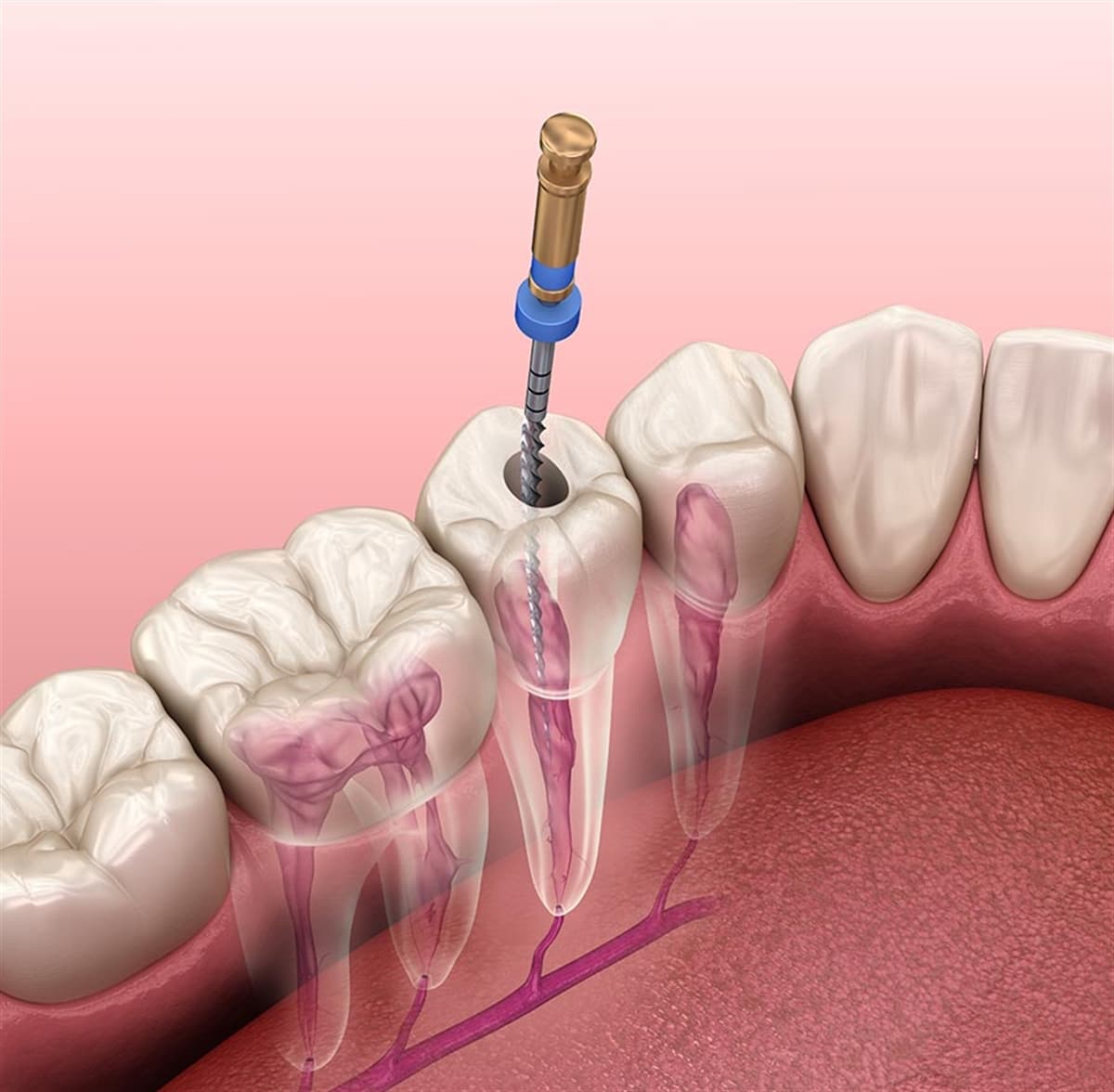
Root Canal Treatment in Teeth with Multiple Canals: Expert Endodontic Approach with Dentocare Kahramanmaraş
The sustainability of oral and dental health depends on keeping teeth in the mouth as long as possible. Especially the back teeth, known as molars, which are central to chewing function, have a complex root system due to their anatomical structure. When deep cavities or infections in these teeth reach a point where they cannot be treated with simple fillings, “Multi-Canal Root Canal Treatment” comes into play. Dentocare, offering all the possibilities of modern dentistry to its patients in Kahramanmaraş, uses microscopic precision and advanced technology in the treatment of multi-rooted and multi-canal teeth, making tooth extraction a last resort.
What is Root Canal Treatment in Teeth with Multiple Canals?
Root canal treatment (Endodontics) is the process of removing the damaged or infected nerve tissue (pulp) inside the tooth, disinfecting the canal space, and filling it tightly. In teeth with multiple canals, this procedure is much more complex and requires more technical precision than in teeth with a single canal. This is because these teeth have more than one root, and each root sometimes contains more than one canal (nerve pathway). These canals are not like a straight pipe; they can be curved, curved, and sometimes connected (isthmus). At Dentocare Kahramanmaraş clinic, this treatment begins with creating an anatomical map of the tooth and ends with millimeter-precise cleaning.
Which Teeth Are Teeth with Multiple Canals?
Teeth in the mouth have different numbers of roots depending on their position. Teeth classified as having multiple canals, and requiring more time and expertise for treatment, include:
- Upper and Lower Molars: Usually have 3 or 4 canals. In some cases, there may be extra canals, such as a 5th canal (MB2).
- Upper Premolars: Usually have 2 canals, but variations with 3 canals also exist.
- Lower Premolars: Mostly have a single canal, but in complex cases they may have 2 canals.
The Importance of Canal Structure in Teeth with Multiple Canals
The root canals of back teeth can branch out like the roots of a tree. The hidden canal, called “MB2,” found especially in upper molars, is the most difficult canal to see with the naked eye. If this canal cannot be found and cleaned, the treatment will fail and the infection will recur. Therefore, the use of magnifying glasses (loupes) or a dental microscope is critically important in the treatment of teeth with multiple canals. The curvature of the canal structure necessitates the use of flexible and unbreakable special instruments (Ni-Ti files).
Why is Root Canal Treatment Necessary?
Decay, which begins in the enamel, the hardest layer of the tooth, progresses over time, passing through the dentin layer and reaching the pulp chamber, the heart of the tooth. This is the living tissue where blood vessels and nerves are located. When bacteria reach here, irreversible inflammation begins. In addition, hard blows to the tooth or deep cracks can cause necrosis (loss of vitality) of the nerve tissue. In this case, the body cannot eliminate this dead tissue, and the infection spreads from the root tip to the jawbone, forming an abscess. Root canal treatment is the only way to stop this spread.
The Purpose of Root Canal Treatment in Teeth with Multiple Canals
The primary goal of the treatment is to relieve the patient’s pain. However, the long-term goal is to clean the bacteria and dead tissue debris that are the source of infection, all the way to the root’s tip. In teeth with multiple canals, this cleaning must be done meticulously and separately for each canal. At Dentocare, the goal is to keep the tooth in the mouth like a “biological filling material,” allowing the patient to continue chewing with their own tooth.
What are the Symptoms Requiring Root Canal Treatment?
Problems in teeth with multiple root canals usually manifest themselves with the following signals:
- Severe, throbbing pain that wakes you up from sleep at night.
- Prolonged sensitivity and aching with hot or cold foods.
- Inability to put pressure on the affected tooth during chewing.
- Swelling, redness, or pimple-like fistula formation in the gums.
- Abscesses that have progressed to the point of creating facial asymmetry.
- Referred pain that starts for no reason and does not go away with painkillers.
Examination and Diagnosis Process in Teeth with Multiple Root Canals
At Kahramanmaraş Dentocare clinic, diagnosis is made not only based on the patient’s complaint but also on scientific data. First, a vitality test (cold test) and a percussion test are performed on the tooth. However, standard X-rays (periapical) may sometimes be insufficient due to the complexity of the roots in multi-canal teeth. In these cases, a three-dimensional map of the tooth is created using 3D Dental Tomography (CBCT). This allows for a clear view of the number of roots, their inclination, and the extent of the infection within the bone.
How is the Number of Canals Determined in Multi-Canal Teeth?
How is it determined?
Determining the number of canals is like detective work. Root lines seen in X-rays give clues, but the exact number is revealed during treatment. The dentist identifies the canal entrances by reading the anatomical map at the base of the pulp chamber. Even the thinnest canals that might be missed are found using electronic apex locators and special canal dyes.
How is Root Canal Treatment Applied in Teeth with Multiple Canals?
The treatment procedure is a process where sterilization is kept at the highest level:
- Anesthesia and Isolation: The tooth is completely numbed and isolated with a “Rubber Dam” (rubber cover). This is essential for the success of the treatment.
- Entry Cavity: The caries is cleaned and the nerve chamber is reached.
- Canal Length Determination: The length of each canal is measured with electronic devices.
- Shaping and Cleaning: The canals are widened with rotary instrument systems. During this time, the canals are washed with plenty of disinfectant solution (irrigation).
- Filling: The cleaned canals are sealed with tissue-friendly gutta-percha and root canal sealants.
How Long Does Root Canal Treatment Take in Teeth with Multiple Canals?
The duration is longer than for teeth with a single canal. Depending on the infection status of the tooth and the number of canals (3 or 4 canals), the procedure time can vary between 1 hour and 1.5 hours. While treatment for vital teeth can usually be completed in a single session, devital teeth (those with an abscess at the root tip) may require dressing and treatment may be spread over 2 sessions. Dentocare aims to achieve the most effective result in the shortest time by optimizing appointments for the comfort of its patients.
Is Root Canal Treatment Painful in Teeth with Multiple Canals?
Thanks to modern anesthesia techniques, the patient absolutely does not feel pain during the procedure. In fact, patients who come with a “painful tooth” complaint feel relieved after anesthesia is administered. Comfort during the procedure is Dentocare’s priority. After the treatment, it is normal to experience a slight tingling sensation when the effect of the anesthesia wears off, but this is temporary.
Modern Techniques Used in Root Canal Treatment
Kahramanmaraş Dentocare uses the latest technology in endodontic treatments. Flexible files made of nickel-titanium (NiTi) alloy can follow curved root canals without breaking them. Ultrasonic activation systems allow disinfectant liquids to reach even the most remote corners of the canal. Additionally, digital imaging systems improve image quality while reducing radiation dose.
Anesthesia Application in Multi-Canal Teeth
The lower back teeth are the most difficult area to numb due to bone density. However, complete numbness can be achieved with the correct technique (mandibular block anesthesia and supportive injections). The dentist ensures that the tooth is completely numb before starting treatment.
Cleaning Infection in Multi-Canal Teeth
In multi-canal teeth, infection can be hidden not only in the main canal but also in the lateral canals. In these areas where mechanical cleaning (filing) is insufficient, chemical cleaning (sodium hypochlorite, EDTA) comes into play. With the “Active Irrigation” protocols applied at Dentocare, the bacterial load is reduced by 99.9%.
Tooth Sensitivity After Root Canal Treatment
After treatment of teeth with multiple roots, a feeling of “being lifted” or mild pain (flare-up) may occur during chewing. This is the healing process of the tissues at the root tip and is a natural reaction of the body. This process is overcome within 2-3 days with anti-inflammatory medications recommended by your dentist.
Filling and Crown Options for Teeth with Multiple Root Canals
The back teeth are the area where chewing force is most intense (approximately 60-70 kg of pressure). Teeth that have undergone root canal treatment become fragile over time because they cannot be nourished. Therefore, filling alone may not always be sufficient in teeth with multiple root canals. To preserve the integrity of the tooth and prevent fracture (vertical root fracture), the following restorations are preferred:
| Restoration Type | Features | Area of Use |
|---|---|---|
| Onlay / Overlay (Porcelain Filling) | Covers only the chewing surface of the tooth. | Teeth with moderate substance loss. |
| Endocron | One-piece porcelain supported from inside the root canal. | Teeth with short clinical crown length. |
| Full Veneer (Zirconium/Metal) | Completely surrounds the tooth (Like armor). | Teeth with excessive substance loss and high risk of fracture. |
Things to Consider After Root Canal Treatment
While temporary fillings are used between treatment sessions, hard foods should not be chewed on that side. Care should also be taken until a crown is placed on the tooth after the treatment is completed. Routine oral care (brushing and flossing) should not be neglected, because even if root canal treated teeth do not cause pain, they can still decay.
Success Rate of Root Canal Treatment in Teeth with Multiple Canals
The success rate of multi-canal root canal treatments performed by expert hands and with the right equipment is around 90-95%. The biggest reason for failure is overlooked extra canals or leaking top fillings. Dentocare applies protocols that minimize these risks.
Permanence and Long-Lasting Results of Root Canal Treatment
Root canal treatment is giving a tooth a second chance. With a well-done treatment and a leak-proof crown, the tooth can remain in the mouth for a lifetime. It is the most economical and biological solution that saves you from the cost of tooth extraction and implants.
Protecting the Tooth with Root Canal Treatment in Multi-Canal Teeth
Extracting a tooth is easy, but filling its place (bridge or implant) is more costly and laborious. Dentocare’s philosophy is to protect the tooth until the very end. The roots of multi-canal teeth are columns that protect the jawbone; protecting these columns is also important for facial aesthetics.
The Importance of Hygiene and Sterilization in Root Canal Treatment
Sterilization is non-negotiable for successful endodontics. In our clinic, sterile sets are opened for each patient, and disposable root canal files are preferred. The use of rubber dams increases success by preventing saliva contamination.
Post-Root Canal Treatment Check-ups in Teeth with Multiple Canals
Control X-rays are taken after 6 months and 1 year to monitor healing. The healing of the bone tissue at the root tip is observed. This follow-up process is an indicator of Dentocare’s commitment to treatment quality.
Healthy Chewing Function with Root Canal Treatment in Teeth with Multiple Canals
Don’t let the pain in your back teeth diminish your enjoyment of eating and your quality of life. As Dentocare Kahramanmaraş, we treat even teeth with the most complex root structures using modern endodontic methods, ensuring you can use them painlessly and healthily. Losing your teeth is not your destiny; Saving and protecting them with expert touch is our job. We are here for you with reliable, hygienic and technological treatment.