
CAD/CAM Dental Treatments: The Digital Revolution in Modern Dentistry
Dentistry, with the technological advancements of recent years, has rapidly moved away from traditional methods and entered a digital age. The most important architect of this transformation is undoubtedly CAD/CAM (Computer-Aided Design and Manufacturing) technologies. Dentocare, which exhibits an innovative approach in the field of oral and dental health in the Kahramanmaraş region, fully integrates this technology into its clinical routines, offering its patients a world-class treatment experience. Prosthesis manufacturing processes that used to take weeks have been reduced to hours thanks to CAD/CAM systems, error margins have been minimized, and aesthetic expectations have begun to be met at the highest level.
What are CAD/CAM Dental Treatments?
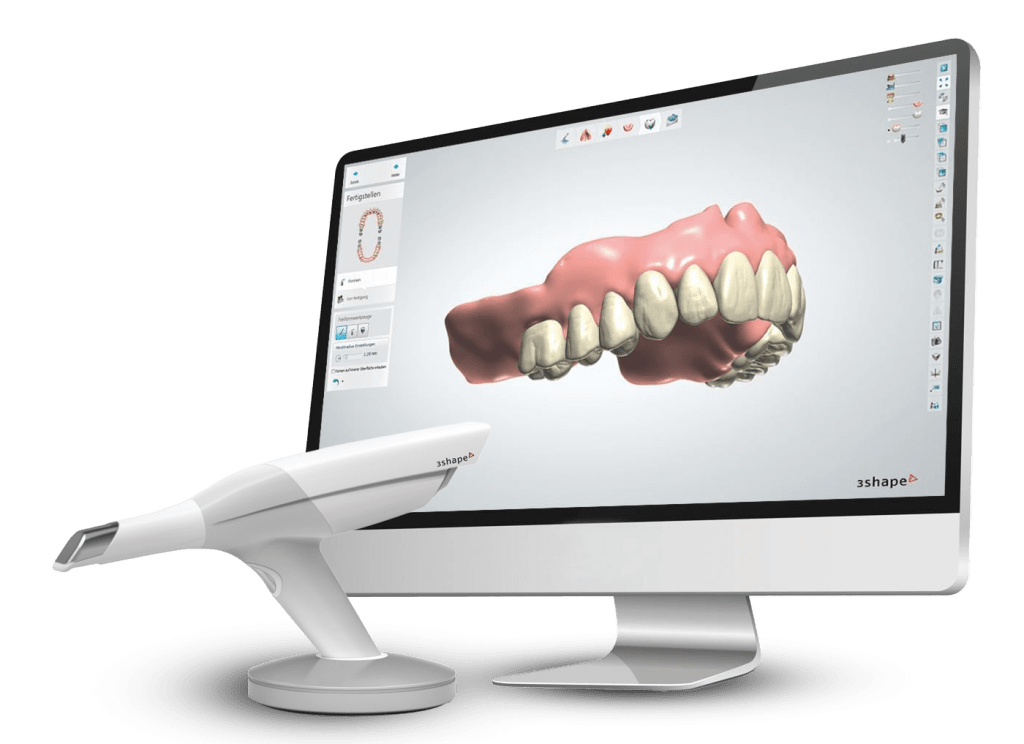
This system, which is an abbreviation of the words CAD (Computer Aided Design) and CAM (Computer Aided Manufacturing), refers to the design and production of prostheses and restorations in dentistry with the aid of computers. Traditionally performed using hand craftsmanship and wax modeling techniques, these processes are now carried out entirely digitally thanks to this technology. The dentist digitally scans the patient’s teeth, designs the restoration on a computer, and this design is produced by milling units that operate with micron precision. This process covers a wide range of applications, from porcelain veneers and inlay/onlay fillings to implant-supported structures and bridges.
How Does CAD/CAM Technology Work?
The process essentially consists of three main stages: Scanning, Design, and Production. In the first stage, a 3D virtual model is created by scanning the patient’s mouth with special intraoral cameras (intraoral scanners). In the second stage, the dentist or technician designs the tooth on this model, taking into account the patient’s bite and aesthetic needs. In the final stage, the selected block material (zirconium, ceramic, hybrid, etc.) is placed in the milling unit, and the device mills the designed tooth from the block to reveal it. At Dentocare Kahramanmaraş clinic, this cycle is fast and efficient enough to be completed in a single session.
CAD/CAM Systems in Digital Dentistry
Digital dentistry is not just about using devices, it’s a philosophy. CAD/CAM systems are the implementing force of this philosophy. These systems operate with an unforgiving precision. They analyze details invisible to the human eye, calculate contact points with opposing teeth, and create the most biomechanically durable form. Thanks to the constantly updated libraries of the software, thousands of variations suitable for every face type and tooth shape can be chosen from, or completely original designs can be created.
Advantages of CAD/CAM Dental Treatments
The advantages this technology offers to patients and dentists are revolutionary:
- Speed: Dramatically shortened treatment times, allowing patients to return to their social lives immediately.
- Precision: Perfect fit is achieved by eliminating traditional impression and casting errors.
- Aesthetics: The ability to use materials that mimic the optical properties of natural teeth.
- Comfort: No need for nausea-inducing impression materials.
- Single Session Possibility: Teeth can be fitted on the same day with the “Same Day Dentistry” concept.
Differences Between CAD/CAM and Traditional Methods
The difference between traditional methods and digital methods is like the difference between an analog camera and a digital camera. In the traditional method, the process consists of many manual steps such as measuring with a measuring spoon, dough, plaster model casting, wax modeling, casting, and firing. There is a small risk of error in each step. CAD/CAM, however, minimizes this risk by digitizing most of these steps. The differences are detailed in the table below:
| Feature | Traditional Method | CAD/CAM Digital Method |
|---|---|---|
| Measurement | Dough and spoon (Risk of nausea) | Digital camera (Fast and comfortable) |
| Process | Multiple sessions (Average 1 week) | Single session or 1-2 days |
| Margin of Error | Risk of error due to human and material causes | Micron Level of sensitivity |
| Temporary Teeth | Long-term use of temporary teeth is required | Often, temporary teeth are not needed |
| Material | Metal-supported porcelains are common | Full ceramic and zirconium are predominant |
Digital Impression and CAD/CAM Relationship
Digital impression, the first step of the CAD/CAM system, is the cornerstone of treatment. Intraoral scanners record not only the shape but also the color and texture of the teeth. This data is instantly transferred to the design computer. The high level of sensitivity used in Kahramanmaraş DentocareHigh-resolution scanners capture even the smallest detail in the patient’s mouth. Thanks to this integration, the laboratory process begins the moment the impression is taken; time losses such as shipping waiting time and plaster setting time are completely eliminated.
Personalized Tooth Design with CAD/CAM
Each individual has different facial features, smile symmetry, and character. CAD/CAM software works integrated with “Digital Smile Design” (DSD) protocols. The patient’s facial photographs are superimposed with intraoral scan images. The dentist designs the most suitable tooth form for the patient’s face on the screen. At this stage, the patient can also participate in the process, seeing the size, shape, or angular/rounded lines of their teeth on the screen and giving their opinion. Thus, the result is not a surprise, but exactly as envisioned.
CAD/CAM Technology in Same-Day Dental Treatments
The pace of modern life necessitates speed in healthcare services as well. CAD/CAM technology has made the “One Visit Dentistry” concept possible. A patient who arrives at the clinic in the morning has their teeth designed and manufactured while enjoying a cup of coffee after a digital impression is taken. Within a few hours, their permanent porcelain teeth can be bonded and they can leave the clinic. This feature provides significant comfort and time savings, especially for patients coming from out of town or those with busy work schedules.
CAD/CAM Applications for Porcelain and Zirconium
This technology can process the highest-level materials used in aesthetic dentistry. Blocks of compressed porcelain (glass ceramics, E-max) and zirconium blocks are processed without manual intervention on CAD/CAM devices. Because compressed porcelain blocks are produced under high pressure and heat in a factory environment, they do not contain air bubbles or structural defects. This ensures that the resulting teeth are much more durable than those made using traditional methods.
CAD/CAM in Crown and Inlay-Onlay Treatments
Not only full crowns, but also inlay and onlay restorations, known as “Porcelain Fillings,” are produced with perfect compatibility using CAD/CAM. After the large cavity in the tooth is cleaned, the remaining space is scanned, and a porcelain piece is produced that fits perfectly into that space like a puzzle piece. This method is a more protective (minimally invasive) approach than full crowns because it preserves the remaining healthy tissue of the tooth. Dentocare frequently uses this approach, which prioritizes the preservation of tooth tissue.
Precision and Fit in CAD/CAM Dental Treatments
The most important factor determining the lifespan of a prosthesis is “marginal fit.” The smaller the gap between the prosthesis and the tooth (at the micron level), the lower the risk of bacterial leakage and consequent caries/gum disease. CAD/CAM devices produce with a precision unattainable by the human hand. These systems, which provide fit in the 25-50 micron range, guarantee that the prosthesis integrates with the tooth and behaves almost like a part of the tooth itself.
Planning Aesthetics and Function Together with CAD/CAM
Aesthetics alone are not enough; function must also be flawless. Design software simulates the patient’s jaw movements (shifting to the right, left, and forward) (Virtual Articulator). It analyzes whether the designed tooth clashes with the opposing tooth during chewing. If there is a clash, the software indicates this with red warnings, and the dentist corrects the design. This minimizes the risk of complaints such as “it’s too high” or porcelain breakage after fitting.
Digital Smile Design in CAD/CAM Treatments
Smile design is an architectural project. CAD/CAM is the construction phase of this project. The “Golden Ratio” rules, gum levels, and tooth axes determined in the design phase are implemented precisely in the production phase. Thanks to “Mock-up” studies done in a digital environment, the patient knows from the beginning what kind of smile they will have at the end of the treatment. At Dentocare in Kahramanmaraş, aesthetics are not left to chance; they are planned with mathematical and artistic data.
How Long Do CAD/CAM Dental Treatments Take?
The duration varies depending on the scope of the procedure. The design and fabrication of a single tooth (crown or onlay) can be completed in an average of 1-2 hours. Full mouth rehabilitations or multi-unit bridges may take 1-2 days. However, in any case, the 7-10 day waiting period, trials, and back-and-forth required by the traditional method are a thing of the past. Speed is achieved without compromising quality.
Are CAD/CAM Treatments Painful?
The procedure is completely painless. Apart from local anesthesia during tooth preparation, there is no surgical intervention or painful procedure. Digital impression taking is comfortable. In treatments completed on the same day, since the permanent tooth is bonded immediately after the tooth is prepared, there is no sensitivity period caused by the prepared tooth being exposed.
Who is CAD/CAM Dental Treatment Suitable For?
It is suitable for almost everyone who has good oral and dental health and needs aesthetic or functional prosthetics. It is an ideal solution especially for those with time constraints, those who experience nausea during impression taking, those with metal allergies, and patients with high aesthetic expectations. (Implant-supported prosthesis)From dental implants to fracture repairs, there is a wide range of indications.
Natural-Looking Teeth with CAD/CAM
Naturalness is related to the passage and reflection of light from the tooth. CAD/CAM blocks are produced with a “Multilayer” feature that mimics the layered structure (enamel and dentin) of the natural tooth. The neck of the tooth is more saturated in color, while the tip is more transparent. Teeth milled from these blocks offer a natural appearance without even needing to be painted. The upper segment blocks used at Dentocare completely eliminate the feeling of artificiality.
Durability and Longevity in CAD/CAM Treatments
Industrially produced ceramic blocks are extremely resistant to fracture thanks to their homogeneous structure. Air bubbles or firing errors that can occur in traditional porcelain are not seen in these blocks. In addition, since there will be no leakage under the tooth thanks to the perfect edge fit, the life of the tooth is also extended. Research has shown that CAD/CAM restorations have very high long-term success rates.
Reducing Error Margin in CAD/CAM Dental Treatments
Errors caused by the “human factor” in manual processes (shrinkage of impression material, expansion of plaster, tremor of the technician’s hand, etc.) are absent in digital systems. Data is digital, design is digital, and production is robotic. This chain ensures standardization. At Dentocare in Kahramanmaraş, every patient receives treatment of the same high standard and quality.
Patient Comfort in CAD/CAM Treatments
The greatest comfort for our patients is the reduction in time spent in the chair. Eliminating the difficult processes with temporary teeth, the absence of anxiety about falling temporary teeth, and most importantly, the feeling of “I don’t have to wait with something like a mold in my mouth,” makes the treatment process enjoyable.
Personalized Aesthetic Solutions with CAD/CAM
The system grants the dentist unlimited freedom. From engraving the patient’s initials on the tooth to changing the tooth shape according to characteristic features (feminine, masculine, dominant), all kinds of personalization are possible. When technology is combined with an artistic touch, unique smiles emerge.
The Place of CAD/CAM Technology in Modern Dentistry
CAD/CAM is no longer a luxury, but is becoming the standard of modern dentistry. Providing a holistic digital flow from diagnosis to treatment, these systems have transformed dentistry from a craft into a science where engineering and art merge. Dentocare closely follows this transformation and maintains its technological leadership in the region.
Digital Archiving in CAD/CAM Treatments
All data obtained at the end of the treatment is stored digitally. Years later, if a patient’s tooth breaks or they need a similar tooth, an identical one can be produced from the archived data without the need for new measurements. This “Digital Twin” technology means that the patient’s oral health is guaranteed for life.
Technological Infrastructure in CAD/CAM Dental Treatments
Providing this service requires a significant technological investment and trained personnel. Intraoral scanners, powerful design computers, 5-axis milling units, and sintering furnaces are all part of this infrastructure. Kahramanmaraş Dentocare has reduced its dependence on external sources and ensured internal quality control by incorporating the latest software and hardware.
Faster and More Predictable Results with CAD/CAM Dental Treatments
In short; CAD/CAM technology is a force that eliminates uncertainties in dentistry and maximizes speed and quality. Knowing what the outcome will be when you sit in the dentist’s chair, being sure that the process will be fast, and seeing that aesthetics will not be compromised provides great confidence. At Dentocare Kahramanmaraş, we combine the opportunities offered by technology with the experience and aesthetic vision of our dentists. When designing your smile, we rely not on chance, but on science and technology. You can experience the comfort of the digital age in our clinic to achieve healthy, aesthetic, and long-lasting teeth.