
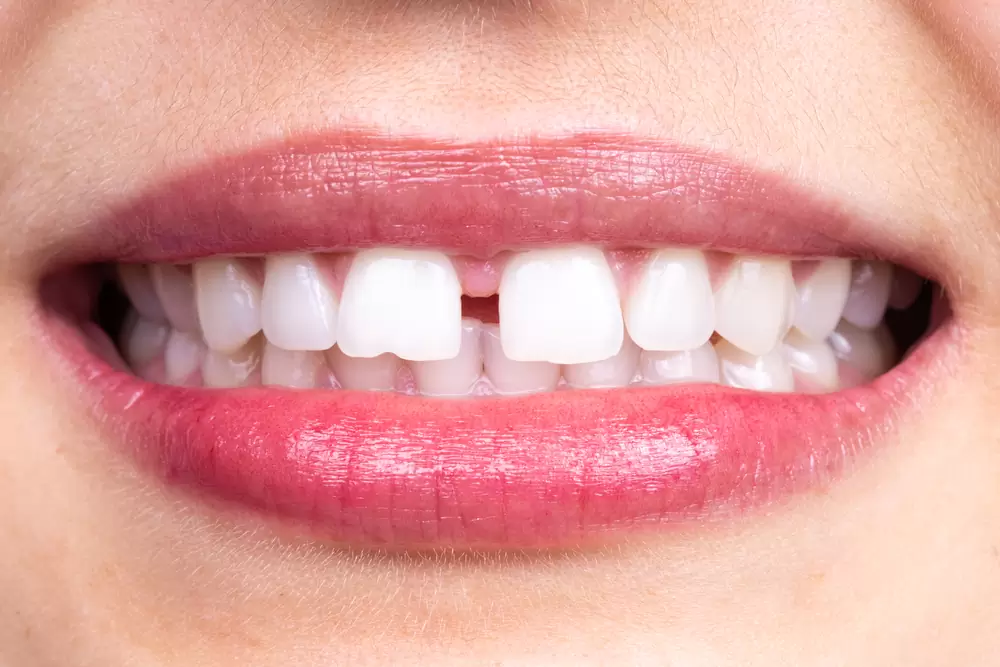
Treatment of Diastema (Gap Between Teeth) and Aesthetic Solutions
Smile aesthetics are one of the most important factors that directly affect an individual’s self-confidence and determine the first impression in social relationships. Gaps between teeth, called “diastema” in dental literature, are an aesthetic concern for many people. As Dentocare, serving the Kahramanmaraş region, we address the phenomenon of diastema, its causes, treatment methods, and aesthetic planning processes in detail in this comprehensive guide. Eliminating discrepancies in tooth structure plays a critical role not only in visual improvement but also in the long-term protection of oral health. Thanks to bonding, porcelain veneers, and orthodontic treatments offered by modern dentistry, gaps between teeth can be closed with permanent and natural methods.
What is Diastema (Gap Between Teeth)?
A diastema is a gap between two teeth that should be side-by-side, where the gum or space is visible. While it is most commonly seen between the two upper front incisors (central teeth), it can occur anywhere in the jaw. This can disrupt the alignment of teeth on the jaw arch and lead to a loss of aesthetic integrity. Frequently encountered in dentistry, this condition is considered an anatomical variation rather than a disease. However, when this variation affects a person’s smile symmetry, it may necessitate professional intervention.
Why Does Diastema Occur?
There is no single cause for the formation of gaps between teeth; it is usually a combination of genetic factors and environmental influences. The most common cause is a mismatch between jaw width and tooth size. If a person has a wide jawbone but genetically small tooth size, gaps remain between the teeth as they settle into the jaw arch. In addition, a larger or lower position of the frenulum (lip tie) tissue, which connects the lip and gum, can lead to diastema, especially by preventing the two front teeth from meeting. Childhood habits such as thumb sucking, tongue thrusting (swallowing disorders), or bone loss due to gum disease are also among the factors that cause teeth to move further apart over time.
Are Gaps Between Teeth a Health Problem?
Although diastema is primarily perceived as an aesthetic problem, in some cases it can pose a threat to oral health. Wide gaps between teeth can cause hard foods to directly press on the gums, leading to traumatic damage in this area. Furthermore, since cleaning these gaps can be difficult with standard brushing methods, the risk of food debris accumulation and plaque formation increases. This can eventually pave the way for gingivitis and periodontal disease. Therefore, closing the gaps between teeth is not only a visual preference but also a protective measure for maintaining gum health.
Why is Diastema Important from an Aesthetic Perspective?
The smile, which is at the center of facial aesthetics, is evaluated according to the rules of symmetry and harmony. According to the principles of the “Golden Ratio,” the contact of teeth with each other and their arrangement in a certain order strengthens the aesthetic perception. Gaps between teeth disrupt this integrity, creating “dark corridors” and can make a person look older or as if they have missing teeth. These dark gaps, which appear during speech or smiling, can damage a person’s self-confidence and lead them to tend to hide their smile in social situations. The aesthetic protocols applied at Dentocare Kahramanmaraş clinic aim to close these gaps, providing a dynamic and youthful smile expression that is harmonious with facial features.
What are the Treatments for Closing Gaps Between Teeth?
Thanks to developing dental technologies, there are many different methods for diastema treatment that suit the patient’s needs, budget, and expectations. When creating a treatment plan, the size of the gap, the general health of the teeth, and the patient’s aesthetic expectations are decisive. The most commonly used methods are:
- Bonding (Composite Filling): This is the process of closing the gap with special filling materials without damaging the tooth surface.
- Porcelain Veneers (Leaf Porcelain): This is the process of giving an aesthetic form to the teeth with thin porcelain layers bonded to the front surface of the teeth.
- Orthodontic Treatment: This is the process of moving the teeth and closing the gaps naturally using wires or clear aligners.
- Crown (Veneer) Treatments: These are full veneer methods preferred in cases where there is significant damage to the teeth.
Personalized Treatment Planning in Diastema Closure
Each individual’s jaw structure, tooth shape and…Each facial feature is as unique as a fingerprint. Therefore, instead of a standard approach in diastema treatment, personalized planning (Custom Smile Design) is essential. At Dentocare Kahramanmaraş, expert dentists use digital smile design technologies to determine the most suitable tooth shape for the patient’s face before treatment. Supported by photo and video analysis, this process digitally simulates the final result. This allows the patient to see the outcome before treatment and makes changes to the design together with the dentist.
Bonding to Close Gaps Between Teeth
Bonding application stands out as one of the fastest and most conservative methods in diastema treatment. This procedure does not require any abrasion of the tooth enamel. Composite resins that perfectly match the tooth color are added to the edges of the tooth to close the gap and give the tooth the desired shape. Usually completed in a single session, this procedure is frequently preferred because it does not require anesthesia and is economical. Bonding treatment provides extremely successful aesthetic results, especially in closing small and medium-sized gaps.
Treatment of Diastema with Porcelain Veneers
For patients seeking a more permanent and superior aesthetic result, porcelain veneers (leaf porcelain) are an ideal solution. Prepared with minimal (0.3 – 0.5 mm) or sometimes no abrasion from the front surface of the teeth, these thin porcelain veneers perfectly close the gaps between teeth. Since porcelain has the same light transmittance as natural tooth enamel, a vibrant and bright appearance is achieved, far from artificiality. Furthermore, because porcelain surfaces are stain-resistant, the risk of discoloration after tea and coffee consumption is much lower compared to bonding methods.
Correction of Gaps Between Teeth with Orthodontic Treatment
If the gaps between teeth are very wide or widespread in multiple areas, the healthiest approach is orthodontic treatment, which brings the teeth into their natural positions. Using traditional metal brackets or modern clear aligner (wireless treatment) methods, the teeth are gradually brought closer together. This method is the most natural solution because no material is added to the tooth. With clear aligner treatments applied at Dentocare Kahramanmaraş clinic, patients can get rid of interdental spaces with aligners that are not visible from the outside, without experiencing aesthetic concerns.
Treatment Methods Comparison Table
| Treatment Method | Procedure Time | Tooth Intervention | Durability | Aesthetic Result |
|---|---|---|---|---|
| Bonding (Composite) | Single Session (1-2 Hours) | None or Minimal | Medium (5-7 Years) | High |
| Porcelain Veneer | 2-3 Sessions (1 (Weeks) | Minimal Abrasion | High (10-15+ Years) | Very High |
| Orthodontics (Braces/Aligners) | 6 – 18 Months | None (Natural Movement) | Lifetime (With Reinforcement) | Natural |
How Long Does Interdental Gap Closure Take?
Treatment duration varies dramatically depending on the chosen method. Bonding applications are completed in a short time, approximately 1 to 2 hours, on the same day the patient sits in the chair. Porcelain veneer treatments require an average of 5 to 7 days, including impression taking, laboratory phase, and trial processes. Orthodontic treatments, on the other hand, depend on biological tooth movement and can take anywhere from 6 months to 2 years, depending on the size of the gap. Restorative methods are preferred for those seeking quick results, while orthodontic processes are preferred for those who prioritize preserving naturalness and original tooth tissue.
Is Diastema Treatment Permanent?
The permanence of diastema treatments depends on the method used and the patient’s oral hygiene habits. To maintain the results obtained after orthodontic treatment, a thin retainer wire must be placed behind the teeth; if this is done, the result is lifelong. Porcelain veneers can maintain their aesthetic form for 15-20 years with proper care. In bonding applications, the lifespan of the composite material used is approximately 5-7 years, after which it may need to be renewed or polished. Dentocare Kahramanmaraş dentists offer patients special care protocols to extend the lifespan of treatment.
Is Diastema Closure Painful?
The vast majority of diastema closure procedures are completely painless. Bonding procedures usually don’t even require anesthesia (injection) because the nerve tissue of the tooth is not affected. Porcelain veneer applications are performed under local anesthesia because minimal abrasion is done, and the patient does not feel any discomfort during the procedure. In orthodontic treatments, the wires…A slight feeling of pressure may occur in the first few days after the aligners are worn, but this is temporary and tolerable.
Things to Consider After Diastema Treatment
To ensure the longevity of the aesthetic smile achieved after treatment, certain precautions must be taken. Patients who have undergone bonding and laminate treatments should avoid cracking hard-shelled nuts, biting on pens, or opening packaging with their front teeth. Such traumatic forces can cause restorations to break or become dislodged. Rinsing your mouth or brushing your teeth after consuming products that cause discoloration, such as coffee, tea, and cigarettes, helps maintain the color of aesthetic materials. Routine dental check-ups should not be neglected for early detection of potential problems.
Who is Suitable for Diastema Closure Treatment?
Any individual with good gum health and complete jaw development (generally over 18 years of age) is suitable for diastema closure treatment. In individuals with gum recession or active periodontal disease, gum treatment should be performed first, followed by aesthetic procedures. Additionally, in patients with bruxism (teeth grinding), the use of a night guard after treatment may be recommended to prevent damage to restorations. At the Kahramanmaraş Dentocare clinic, a detailed examination determines the patient’s suitability for this treatment.
Diastema Closure Methods in Front Teeth
Because the front teeth are the showcase of smile aesthetics, applications in this area require extra precision. In diastema closure procedures in the front area, “Smile Design” principles come into play. Simply closing the gap is not enough; the width/height ratio of the teeth, gum levels, and lip support must also be considered. While gaps can be closed by increasing the width of the teeth with the bonding method, porcelain veneers can completely reshape the color, form, and alignment of the teeth. Especially in the front teeth, achieving symmetry is key to aesthetic success.
Aesthetic Planning in Diastema Gap Closure Treatment
Aesthetic planning is where the engineering and artistic dimensions of treatment converge. The dentist analyzes the patient’s facial shape (oval, square, triangular), skin tone, and lip structure. For example, more rounded tooth forms are preferred in an individual with round facial features, while more prominent and sharply defined teeth may look more natural in individuals with angular facial features. The digital analysis methods used at Dentocare Kahramanmaraş determine the ideal dimensions of the teeth with millimeter-precise calculations and ensure that the gaps are closed in the most suitable way for the patient’s facial anatomy.
The Importance of Gum Health in Diastema Treatment
A successful aesthetic restoration can only be built on healthy gums. Gum health, referred to as pink aesthetics, is integral to white aesthetics (teeth). When closing diastema, the harmony between the tooth and the gum must be perfect, and the biological width must not be violated. If there is asymmetry in the gum levels, gingivectomy (gum reshaping) is performed with laser to equalize tooth lengths, and then the gap closure procedure is carried out. Aesthetic procedures performed on unhealthy, bleeding, or swollen gums can quickly lead to failure.
Smile Design After Diastema Closure
Closing the gaps between teeth is only one part of a holistic smile design. When the procedure is complete, the patient’s smile line becomes harmonious with the curve of the lower lip. By eliminating dark areas, a fuller and brighter smile is achieved. As part of smile design, teeth whitening (bleaching) can also be combined with diastema treatment. Thus, not only is a gap-free smile achieved, but also a whiter and more radiant one.
How is a Natural Look Achieved in Diastema Closure Treatment?
Naturalness is the ultimate goal of modern aesthetic dentistry. Restorations that are “undetectable” are the most successful. The quality of the materials used and the skill of the dentist are critically important for achieving a natural look. At Dentocare Kahramanmaraş, high-quality composites and ceramics mimic the optical properties (fluorescence and opalescence) of natural teeth. Transparency at the tips, color saturation in the body, and surface texture are meticulously replicated to prevent an artificial appearance.
How Many Sessions Does a Diastema Gap Closure Procedure Take?
The number of sessions varies depending on the chosen method. Bonding applications are usually completed in a single session. Patients come to the clinic, the procedure is performed, and they leave with their new smile. Laminate treatments take an average of 2 or 3 sessions due to the impression and trial stages. In the first session, the teeth are prepared and impressions are taken, in the second session a trial is performed, and in the third session the bonding process is carried out. Orthodontic treatments, on the other hand, are a long-term process that progresses with monthly routine check-ups.
How Should Dental Care Be After Diastema Treatment?
Post-treatment care is the most important factor determining the lifespan of restorations. In addition to brushing, flossing is vital, especially for cleaning the areas where the restorations have been closed. Interdental brushes or oral irrigators are effective tools for removing plaque that can accumulate at the gum line. Since porcelain or composite surfaces can be sensitive to abrasive toothpastes, gel-form and granule-free toothpastes should be preferred. Dentocare specialists provide personalized post-treatment care training to each patient.
Advantages of Interdental Gap Closure Treatment
The advantages this treatment offers to patients are not limited to physical appearance:
- Aesthetic Improvement: A more symmetrical and attractive smile.
- Increased Self-Confidence: Being able to smile comfortably in social situations.
- Speech Correction: Eliminating problems in the pronunciation of some letters (such as lisping).
- Gum Health: Reducing gum problems by preventing food impaction.
- Protection: Making tooth tissue more resistant to external factors.
Modern Technologies Used in Diastema Treatment
Dentocare Kahramanmaraş utilizes all the possibilities of digital dentistry in diastema treatments. Thanks to CAD/CAM systems, porcelain restorations are designed and manufactured using computer-aided methods. Digital impression devices (intraoral scanners) eliminate the gag reflex caused by traditional paste impressions and allow for impressions with micron-level precision. With mock-up applications, the treatment result can be shown to the patient in their mouth with temporary materials before the procedure begins.
Results of Diastema Closure Treatment
Treatment results are generally described as “life-changing” for patients. Individuals who have hidden their smiles for years find it difficult to express the happiness they experience when they look in the mirror after the procedure. Procedures performed with the correct indications and quality materials soften facial expressions, make the person look younger, and create a positive image. The satisfaction of the results depends on the strength of doctor-patient communication and detailed planning.
A More Balanced and Aesthetic Smile with Diastema Closure
In conclusion, closing gaps between teeth is one of the most artistic and rewarding areas of aesthetic dentistry. At Dentocare Kahramanmaraş, we value each patient’s unique smile story and offer them the most suitable solutions. Whether the practicality of bonding, the elegance of veneers, or the naturalness of orthodontics are preferred, the goal is always to achieve a perfect balance in terms of function, health, and aesthetics. Diastema treatment is not just about bringing teeth together, but also about building a bridge that allows a person to smile more confidently at life.