
Mandibular Surgery: Reconstructing Function and Aesthetics
The mandible, one of the cornerstones of facial aesthetics and central to vital functions (chewing, speaking, swallowing, breathing), is one of the most dynamic parts of the skeletal system. However, as a result of developmental disorders, genetic factors, or trauma, the mandible can be positioned incompatible with the upper jaw and the rest of the face. This not only creates aesthetic concerns but also leads to serious functional problems that reduce the individual’s quality of life. Dentocare, offering advanced solutions in the field of oral, dental, and maxillofacial surgery in Kahramanmaraş, corrects these structural disorders with “Mandibular Surgery” (Mandibular Osteotomy), providing its patients with both aesthetic and functional improvement.
What is Mandibular Surgery?
Mandibular surgery, known in medical literature as mandibular osteotomy, is the process of surgically altering the position of the lower jaw to achieve its ideal anatomical position. This procedure is one of the most important components of the “Orthognathic Surgery” discipline. It includes procedures such as moving the lower jaw forward, backward, shifting it to the right or left to correct asymmetry, or shaping the chin (genioplasty). The aim is to ensure perfect occlusion of the upper and lower teeth and to create a balance in the facial profile according to the golden ratio. At Dentocare Kahramanmaraş clinic, this surgery is performed with a multidisciplinary approach, with joint planning by an orthodontist and oral surgeon.
In Which Cases is Mandibular Surgery Necessary?
This surgery is not just a cosmetic choice, but often a medical necessity. Surgical intervention is required in skeletal disorders that orthodontic treatment (braces or clear aligners) alone cannot correct. Conditions requiring mandibular surgery include:
- Mandibular Retrognathia (Lower Jaw Retraction): The lower jaw being too far back relative to the face, creating a “bird face” appearance and narrowing the airway.
- Mandibular Prognathia (Lower Jaw Protrusion): The lower jaw being significantly ahead of the upper jaw, with the lower teeth protruding in front of the upper teeth.
- Facial Asymmetry: A noticeable difference between the right and left halves of the face due to the jaw shifting to one side.
- Open Bite: When teeth are closed, the front or back teeth do not touch each other.
- Sleep Apnea: Narrowing of the airway due to jaw retraction and severe snoring/breathing pauses.
Temporomandibular Joint (TMJ) (TMJ) Pain: Chronic pain and dysfunction in the joint due to malocclusion.
The Effect of Jaw Structure on Face and Function
The mandible is the most dominant bone, forming the lower third of the face and determining facial character. A strong and balanced jawline is a symbol of a youthful and dynamic appearance. Functionally, the mandible is the only bone connected to the skull by a movable joint (Temporomandibular Joint). This mobility enables speech, chewing, and swallowing. An error in the position of the mandible not only distorts the appearance; it also impairs chewing, which is the beginning of the digestive system, affects speech articulation, and can even lead to systemic health problems by narrowing the airway. What are Jaw Disorders?
Disorders are generally evaluated in three dimensions: Sagittal (front-back), Vertical (vertical), and Transversal (horizontal). Anterior-posterior jaw protrusion or retrusion is the most common condition. In the vertical direction, conditions such as “long face syndrome” or “short face syndrome,” where the jaw droops excessively or is embedded, are observed. In the horizontal direction, deviation of the chin from the midline (laterognathia) causes asymmetry. Dentocare specialists analyze these three-dimensional deviations and plan the treatment.
The Role of Mandibular Surgery in Jaw Alignment Disorders
The contact between the teeth (occlusion) is critical for the health of the temporomandibular joint. If there is a skeletal misalignment, the bite disorder will persist regardless of how properly the teeth are aligned. Mandibular surgery corrects the bone base, ensuring that the teeth sit on a correct foundation. This allows for a balanced distribution of chewing forces, prevents tooth wear, and eliminates abnormal loads on the temporomandibular joint. Surgery is a complement to orthodontic treatment and guarantees its success.
Pre-Examination and Evaluation of the Mandibular Joint (Mandibular Surgery)
The process begins with a comprehensive examination at the Dentocare clinic in Kahramanmaraş. The patient’s complaints are listened to, and their expectations regarding facial aesthetics are discussed. During the intraoral examination, the condition of the teeth, gum health, and occlusion relationships are examined. A temporomandibular joint (TMJ) examination is performed to check for clicking sounds, pain, or limited movement in the joint. This stage determines the scope of the surgery.This is the very first step.
Radiological and Clinical Analysis Process
Advanced imaging techniques are essential for accurate diagnosis. In addition to panoramic X-rays, angular measurements are taken on cephalometric X-rays (lateral head films). However, the gold standard today is creating a three-dimensional model of the jaw with 3D Dental Tomography (CBCT). On this model, the channels through which the nerves pass (mandibular canal), root positions, and bone density are analyzed in millimeter detail.
Personalized Mandibular Surgery Planning
Every face is as unique as a fingerprint. Therefore, surgical planning is done individually. Thanks to the digital surgical planning software used at Dentocare, the surgery is simulated in a virtual environment. How many millimeters the jaw will be moved forward or backward, where the incision lines will pass, and the screw placements are determined on the computer. This “Virtual Surgery” eliminates surprises during the operation and ensures that the result is predictable.
Orthognathic Surgery and Mandibular Corrections
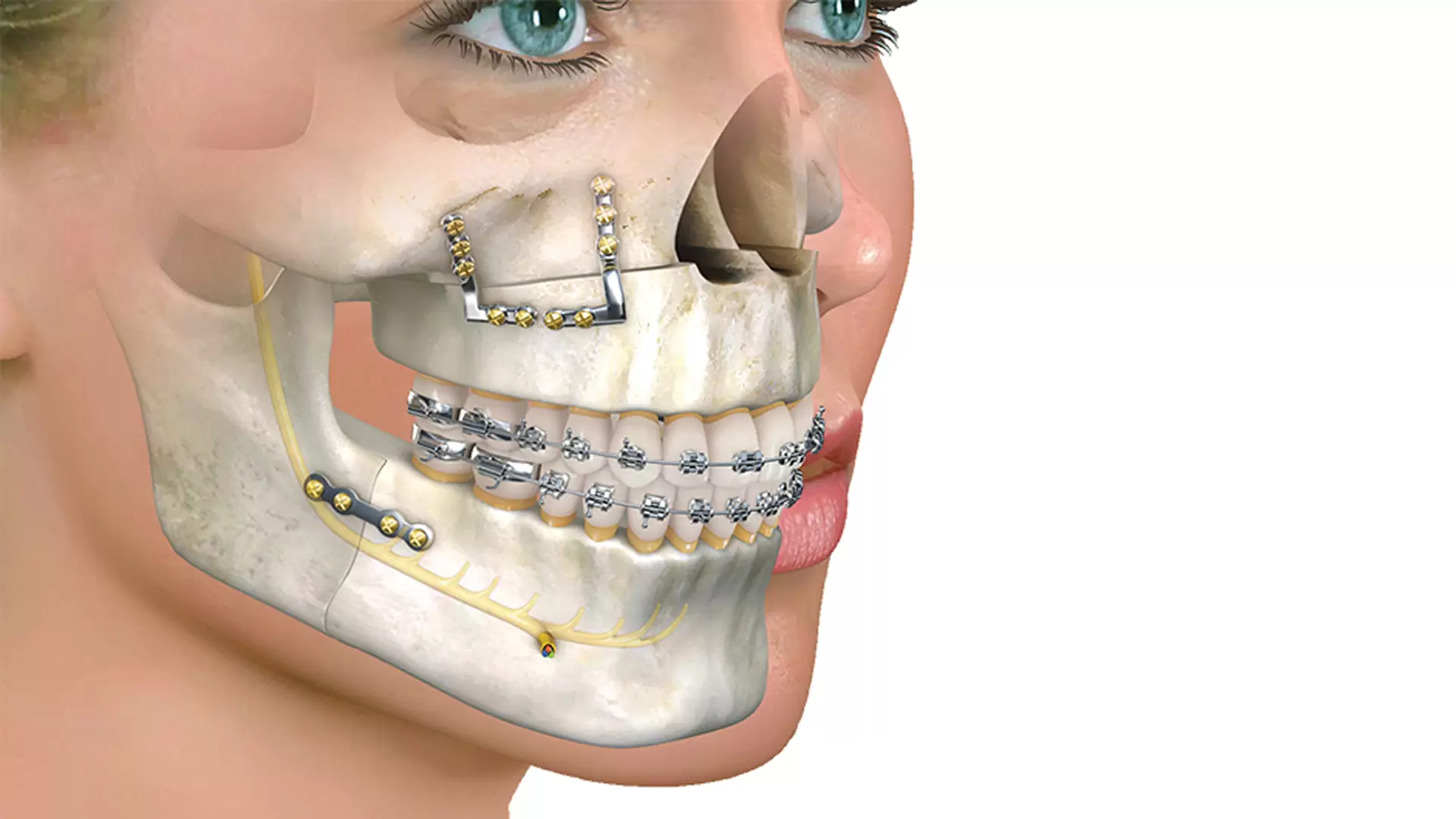
Orthognathic surgery is performed after a preparatory phase with braces. The operation is performed after the teeth are adjusted to the new bite after surgery. During the operation, the lower jawbone is cut in a controlled manner (osteotomy), brought to the planned new position, and fixed with titanium plates and screws. These plates and screws are biocompatible and can remain in the body for life.
Surgical Approaches to Mandibular Deflation and Protrusion
In mandibular deposition (Class II malocclusion), the jawbone is cut from both sides and shifted forward (BSSO technique). This procedure improves the profile and reduces the appearance of a double chin. In mandibular protrusion (Class III malocclusion), the jawbone is cut and moved backward. This procedure makes the face look softer and more proportionate and corrects the protrusion of the lower lip.
Surgical Treatment for Lower Jaw Asymmetries
Facial asymmetry is one of the conditions that most affects patients psychologically. A shift of the chin to one side disrupts the midline of the face. In surgical procedures, one side of the chin can be lengthened while the other is shortened, or the midline can be corrected with rotational movement. If necessary, chin tip aesthetics (genioplasty) can be added to perfect symmetry. Dentocare works with millimeter precision to ensure symmetry.
How is Lower Jaw Surgery Performed?
The surgery is performed entirely through the mouth, therefore no scars remain on the face. The most commonly used technique is the “Bilateral Sagittal Split Osteotomy” (BSSO) method. In this method, the jawbone is divided into two in the sagittal plane while protecting the nerve, and they are slid over each other to reach their new position. Plates and screws provide fixation until bone healing is complete.
How Long Does Lower Jaw Surgery Take?
The duration of the operation varies depending on the complexity of the procedure. Single jaw surgeries involving only the lower jaw take an average of 1.5 – 2.5 hours. If it is combined with chin aesthetics or upper jaw surgery (double jaw surgery), the duration may be longer. Dentocare’s experienced surgical team and modern operating room conditions ensure efficient use of time.
Is Lower Jaw Surgery Performed Under General Anesthesia?
Yes, this surgery is performed in a fully equipped hospital environment and under general anesthesia for the comfort and safety of the patient. Kahramanmaraş Dentocare conducts its operations in the most well-equipped hospitals in the region, with expert anesthesia teams. The patient feels and remembers nothing during the procedure.
Is Lower Jaw Surgery Painful?
Patients’ biggest fear is pain. However, contrary to popular belief, pain after lower jaw surgery is manageable. Temporary numbness of the nerves (paresthesia) during the operation creates a natural pain-relieving effect in the first few days after surgery. Prescribed painkillers and ice application ensure a comfortable recovery process.
Recovery Process After Mandibular Surgery
The recovery process varies from person to person, but generally it is as follows:
-
- First 3 Days: Swelling (edema) in the face reaches its maximum level. Ice application and keeping the head elevated are important.
- Week 1: Swelling begins to subside, the patient eats soft foods.
- Weeks 2-4: Bone fusion begins, jaw exercises are performed with splints.
Week 6: Week: Bone healing is largely complete, and the transition to normal eating begins.
Things to Consider After Mandibular Surgery
Oral hygiene is the most critical factor to prevent the risk of infection. Special mouthwashes and soft brushes should be used. Avoid blows to the jaw and do not neglect the use of the rubber (elastic) splint recommended by your doctor. Smoking is strictly prohibited as it impairs bone healing and blood flow.
Nutrition Process After Mandibular Surgery
The first week is entirely liquid nutrition (soup, fruit juice, protein)(shake) is applied. From the second week onwards, foods with a pureed consistency that do not require chewing (mashed potatoes, yogurt, custard) are introduced. Hard foods and biting should be avoided for approximately 4-6 weeks. Dentocare provides its patients with a detailed nutritional guide.
Who is Suitable for Mandibular Surgery?
It is suitable for individuals who have completed their growth and development, have skeletal jaw deformities, and whose general health condition is suitable for anesthesia. It is usually planned after the age of 18. However, in some syndromic conditions or severe respiratory problems, intervention can be performed at an earlier age.
Balance Between Aesthetics and Function in Mandibular Surgery
The success of this surgery depends on balancing aesthetics and function. Surgery performed solely for aesthetic reasons and impairing function is unsuccessful; similarly, a procedure that only corrects function but spoils facial aesthetics is insufficient. Dentocare Kahramanmaraş adopts the philosophy of “Face-Prioritized Orthodontics and Surgery,” maximizing both aspects.
Chewing and Speech Function with Jaw Surgery
Patients with jaw deformities cannot bite with their front teeth or fully chew food. This leads to digestive problems. When full contact between the teeth is achieved after surgery, chewing performance reaches 100%. Furthermore, since the position of the tongue in the mouth is corrected, some pronunciation difficulties also correct themselves.
Contribution of Jaw Surgery to Facial Aesthetics
Advancing the lower jaw accentuates the neckline, eliminates the double chin, and strengthens the facial profile. Retracting it corrects excessive protrusion of the lower lip, providing a more elegant expression. Correcting asymmetries balances both halves of the face and creates a photogenic appearance. These changes significantly increase the patient’s self-confidence.
Comparison of Treatment Results
| Condition | Before Surgery | After Surgery |
|---|---|---|
| Jaw Recession | Bird face, snoring, weak profile | Strong jawline, comfortable breathing, balanced profile |
| Jaw Protrusion | Coarse facial features, difficulty biting | Soft facial features, ideal bite |
| Asymmetry | Curve smile, midline deviation | Symmetrical face, smooth midline |
Modern Surgical Techniques in Mandibular Surgery
Technologies such as piezoelectric surgery (ultrasonic bone cutting) allow bone to be cut without damaging soft tissues and nerves. This technology reduces the risk of postoperative swelling and loss of sensation. In addition, personalized surgical guides (splints) produced with 3D printers ensure the jaw is placed in the planned position without error.
Long-Term Results After Mandibular Surgery
The result obtained after bone healing is complete is permanent. The jaw does not return to its original position. However, to maintain the result, the retention phase of orthodontic treatment (Retainer wires) must be adhered to. Dentocare monitors the stability of the result by following its patients for many years.
A Balanced and Healthy Facial Structure with Mandibular Surgery
The face you see when you look in the mirror is a reflection of your health and mood. Disharmony in your jaw structure doesn’t have to be your destiny. At Dentocare Kahramanmaraş, where science and art meet, we restore balance to your face with advanced surgical techniques. Discover the possibilities offered by mandibular surgery to breathe more easily, eat with pleasure, and smile with confidence. We are here with our professional solutions to help you achieve the golden ratio in your face and improve your quality of life.