
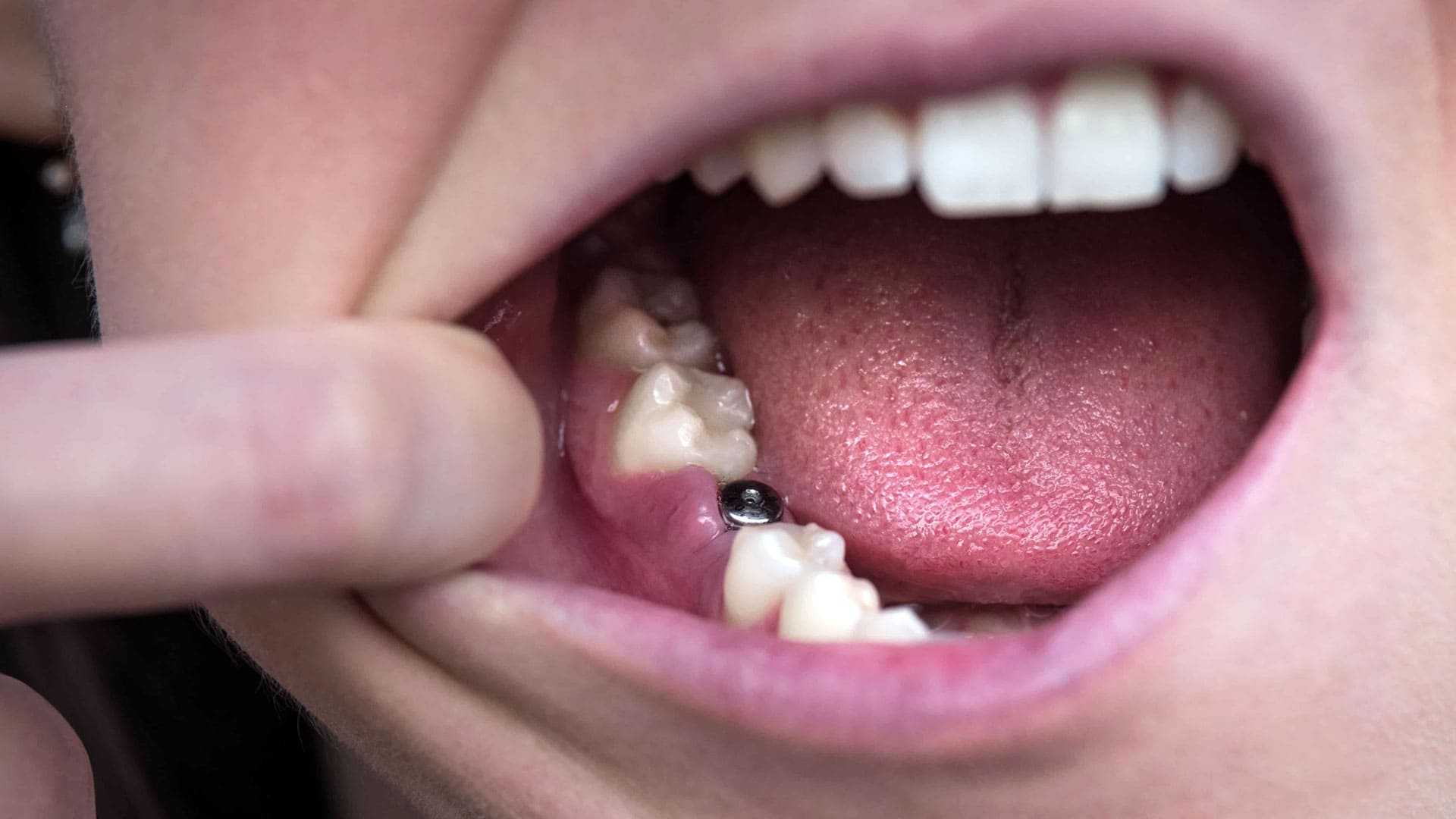
Single Tooth Implant Treatment: A Complete Smile and Flawless Function
Oral and dental health is a holistic structure that directly affects the overall quality of life, touching every aspect of life from nutrition to speech, from aesthetics to self-confidence. However, single tooth loss resulting from trauma, deep cavities, or gum diseases can disrupt this integrity, leading to both physical and psychological problems. Dentocare, offering modern solutions in the field of oral and dental health in Kahramanmaraş, provides its patients with the closest comfort to a natural tooth with implant applications, which are considered the “Gold Standard” in the treatment of single tooth deficiencies. Unlike traditional bridge prostheses, single tooth implant treatment, which is applied without damaging neighboring teeth, is a biological restoration that protects the jawbone and provides long-lasting results.
What is Single Tooth Implant Treatment?
Single tooth implant treatment is a procedure where an artificial root (implant) made of titanium alloy is placed inside the jawbone to mimic the root of a lost tooth, and a porcelain or zirconium crown is placed on top. This system is based on the principle of osseointegration, where titanium, which is fully compatible with the human body, fuses with bone tissue. While traditional methods require cutting the adjacent healthy teeth (bridge construction) to replace a missing tooth, implant treatment does not touch the adjacent teeth at all. This method, applied at Dentocare Kahramanmaraş clinic, only replaces the missing tooth and restores the natural balance in the mouth.
Why is a Single Tooth Missing Important?
Even the absence of a single tooth can create a domino effect in the mouth. Since chewing function does not occur in the area of the missing tooth, the jawbone in that area begins to erode (resorption) over time. Furthermore, the teeth next to the missing tooth tend to tilt towards the gap, and the tooth in the opposing jaw tends to erupt into the gap. This disrupts the tooth alignment, leads to bite problems, and can cause problems in the temporomandibular joint. From an aesthetic point of view, especially losses in the front area cause speech disorders and loss of self-confidence. Therefore, the loss of a single tooth is a serious health problem that should not be neglected.
What is the Purpose of a Single Tooth Implant?
The main purpose of the treatment is to restore both the aesthetic and functional functions of the lost tooth without damaging other teeth. When the implant is placed in the jawbone, it is surrounded by bone cells and stimulates the bone, preventing resorption. Thus, it contributes to the preservation of the facial profile and lip support. At Dentocare, the aim is to provide the patient with a result that feels “like their own tooth,” is resistant to chewing forces, and is visually indistinguishable from a natural tooth.
Who is Suitable for Single Tooth Implant Treatment?
Anyone with good general health, complete jawbone development (around 17-18 years old for women, 18-20 years old for men), and sufficient bone volume to support the implant is a candidate for this treatment. Special evaluations are required for those with uncontrolled diabetes, those undergoing active cancer treatment, or those who smoke heavily. However, thanks to modern techniques and bone grafting procedures, many patients who could not have implants in the past can now successfully receive implants.
In Which Cases is a Single Tooth Implant Preferred?
A single tooth implant is the ideal solution in the following scenarios:
- In cases where a single front tooth is lost due to accidents or trauma.
- To replace molars extracted due to deep decay or failed root canal treatment.
- In individuals with congenital tooth loss (agenesis).
- In cases where neighboring teeth are healthy and it is not desired to cut them.
Examination and Evaluation Before Single Tooth Implant Treatment
The foundation of a successful implant treatment is accurate diagnosis and planning. At Kahramanmaraş Dentocare clinic, the process begins with a detailed clinical examination. The patient’s general health history, medications used, and expectations are questioned. In the oral examination, gum health, the condition of neighboring teeth, and occlusion relationships are examined. Radiological examination is an indispensable part of the process.
The Effect of Bone Structure on Single Tooth Implants
For an implant to be long-lasting, a certain bone thickness and height are required. Using 3D Dental Tomography (CBCT), the bone volume, density, and anatomical relationships (nerve canals, sinus cavities) in the area where the implant will be placed are measured with millimeter precision. If there is insufficient bone, bone volume is increased with bone graft applications before or during the same session.
Planning Process in Single Tooth Implant Treatment
Thanks to digital dentistry technologies, the implant’s location is virtually determined in a computer environment before the surgery. The diameter, length, and angle of the implant are selected according to the aesthetics of the crown to be placed on it and biomechanical principles. This “Guided Implant Surgery” planning shortens the operation time.This minimizes the margin of error and makes the aesthetic result predictable.
How is a Single Tooth Implant Applied?
The application process is carried out in a sterile environment and with surgical discipline:
- Anesthesia: The area is completely numbed with local anesthesia.
- Socket Preparation: The bone is accessed by making a small incision in the gum or by a sutureless method (flapless). A socket is prepared in the bone where the implant will be placed using special drills.
- Implant Placement: The titanium implant is placed into the prepared socket with a precise torque value.
- Closure: The implant is covered with a cover screw or healing cap, and sutures are applied if necessary.
How Long Does Single Tooth Implant Treatment Take?
The placement of a single implant takes an average of 15-30 minutes, including the preparation phase. This time may be even shorter than a normal filling procedure. After the surgical procedure, a waiting period of 2-3 months is required for the implant to fuse with the bone (osseointegration) in the lower jaw, and 3-4 months in the upper jaw. This period may be longer if bone graft material is used. At the end of the waiting period, an impression is taken and the porcelain tooth is fitted within 1 week.
Is Single Tooth Implant Treatment Painful?
Patients’ biggest concern is pain. However, since the procedure is performed under local anesthesia, the patient feels no pain during the surgery. In fact, it can be said to be less traumatic than a tooth extraction. Mild discomfort or swelling that may occur after the operation is easily controlled with painkillers prescribed by the doctor and ice application. Dentocare patients generally state that they have a very comfortable experience during the process.
Implant Systems Used in Single Tooth Implants
There are hundreds of implant brands worldwide. Dentocare Kahramanmaraş prefers global implant brands with advanced surface technology, whose success has been proven by long-term scientific studies and which are FDA and CE approved. The surface properties of these implants allow bone cells to adhere to the implant faster and stronger, which increases the success of the treatment.
Healing Process After Single Tooth Implants
The healing process varies from person to person, but generally proceeds without problems. Slight bleeding or oozing is normal in the first 24 hours. There may be slight swelling in the face for the first 3 days. The stitches are usually removed after 7-10 days. During this process, paying attention to oral hygiene and using the mouthwashes recommended by the dentist is critical to preventing the risk of infection.
Temporary Teeth Applications After Single Tooth Implant
Especially in cases of missing front teeth, it is aesthetically unacceptable for the patient to be without teeth. On the day of the implant placement or the following day, aesthetic temporary teeth that do not put pressure on the implant can be made. In this way, the patient can continue their social life without going through the bone fusion process without teeth. In back teeth, the process is usually completed with a healing abutment.
Crown Options on Single Tooth Implants
The tooth (crown) to be placed on the implant is at least as important as the implant itself. Two main materials stand out:
* Zirconium Crown: Provides high aesthetics and durability. Its light transmittance is very close to natural teeth, and its compatibility with the gums is excellent. * Metal-Supported Porcelain: It is more economical but may not be as successful as zirconium in terms of aesthetics. It is generally preferred in back areas.
Aesthetic and Natural Appearance in Single Tooth Implants
A successful implant not only attaches to the bone but also emerges from the gum like a natural tooth. This aesthetic transition, called “Emergence Profile,” is achieved through gum shaping and proper prosthesis design. Dentocare avoids artificial appearances by perfectly mimicking the natural tooth form and color in implant-supported prostheses.
Comparison of Implant and Bridge Treatment
| Features | Single Tooth Implant | Traditional Bridge |
|---|---|---|
| Adjacent Teeth | Untouched, protected. | Cut and reduced in size. |
| Bone Protection | Protects the bone, prevents resorption. | Bone resorption continues in the extraction site. |
| Cleaning | With dental floss Easily cleaned. | Cleaning under the bridge is difficult. |
| Lifetime | Lifetime (with good care). | Average 10-15 years. |
Anterior Single Tooth Implant Treatment
The anterior region is called the “Aesthetic Region” and does not tolerate errors. Here, the angle, depth, and relationship of the implant with the gum must be micron-precise. Pink aesthetics (gum aesthetics) are critically important in this region. If necessary, the gum is thickened with connective tissue grafts to prevent the metal reflection of the implant and to obtain a natural gum appearance.
Posterior Single Tooth Implant Treatment
In the posterior region, “function” and “durability” are prioritized over aesthetics.The implant is located in the area where chewing forces are most intense. The diameter and length of the implant are chosen to withstand these forces. The contact points with adjacent teeth are adjusted to prevent food impaction.
Preserving Function in Single Tooth Implant Treatment
Since the implant replaces the natural tooth root, it transmits the chewing force directly to the bone. This allows the patient to perform functions such as biting an apple or chewing meat as comfortably as if they were doing it with their natural tooth. Problems such as loosening, impact, or decreased taste sensation, as in removable dentures, do not occur with implants.
Things to Consider After Single Tooth Implant Treatment
The lifespan of the implant depends on the patient’s care. Implants do not decay, but they can develop a gum disease called “peri-implantitis”. Therefore, cleaning the area around the implant is very important. Smoking is one of the biggest factors that reduces implant success and is absolutely not recommended during the healing period.
Durability and Longevity of Single Tooth Implants
Clinical studies show that the success rate of implants is around 95-98%. With good oral hygiene and regular check-ups, an implant can last a lifetime. Titanium material does not age biologically and is extremely resistant to fracture.
Success Rate in Single Tooth Implant Treatment
Success depends on the surgeon’s experience, the quality of the materials used, and the patient’s care. Kahramanmaraş Dentocare minimizes the risk of complications with its expert staff and sterilization protocols. Digital planning eliminates surprises during surgery.
Hygiene and Care in Single Tooth Implant Treatment
Porcelain teeth on implants should be brushed like natural teeth. Using dental floss and interdental brushes prevents plaque buildup around the implant neck. In addition, using an oral irrigator massages the gums around the implant, increasing blood circulation and facilitating cleaning. Check-ups with a dentist every 6 months are essential for the early detection of possible problems.
Modern Technologies in Single Tooth Implant Treatment
Dentocare closely follows technology. Thanks to surgical guides, implants can be placed in the bone without cutting the gum (flapless surgery). This method reduces swelling and pain and accelerates healing. In addition, digital scanners used for impression taking eliminate the gag reflex caused by traditional impression materials.
A Healthy and Aesthetic Smile with Single Tooth Implant Treatment
A missing tooth is like a puzzle piece that needs to be completed. As Dentocare in Kahramanmaraş, we replace this piece in the most natural, healthy, and aesthetic way with single tooth implant treatment. We offer a solution that you can use safely for a lifetime, without damaging your other teeth and preserving your bone structure. The possibilities offered by modern implantology to fill the gap in your smile and improve your quality of life await you at our clinic.