In Which Cases Is Orthognathic Surgery Necessary?
The jawbones, one of the most fundamental building blocks of the human face, not only determine aesthetic appearance but also play a central role in vital functions such as speaking, chewing, swallowing, and even breathing. The relationship between the upper and lower jaws and the base of the skull is critical for an ideal occlusion and facial harmony. However, in some cases, due to developmental disorders, genetic factors, or subsequent trauma, the jawbones may not be positioned as they should be. When such skeletal discrepancies are too severe to be corrected with orthodontics alone, “Orthognathic Surgery” comes into play.
With its advancements in healthcare services and the increase in its expert medical staff, Kahramanmaraş is becoming a center where such advanced surgical procedures can be planned and managed. For patients living in Kahramanmaraş who experience both aesthetic and functional problems due to jaw misalignment, orthognathic surgery offers a multidisciplinary treatment approach. This process is not just an “aesthetic surgery,” but a comprehensive reconstructive treatment that directly affects the patient’s quality of life, improves airway comfort, and protects temporomandibular joint health.
What is Orthognathic Surgery (Jaw Surgery)?
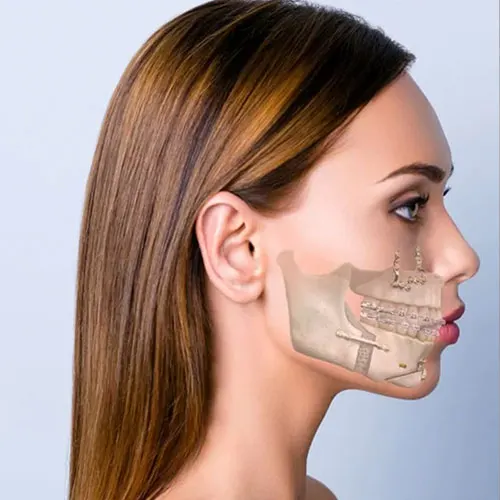
Orthognathic surgery, literally meaning “straight jaw,” is a surgical procedure that corrects the position, shape, and size of the lower jaw (mandible), upper jaw (maxilla), or both, bringing the teeth and jaw bones into an ideal occlusion relationship. This surgery is not a standalone procedure, but rather the most important part of a long-term process usually combined with orthodontic treatment (braces).
This process, which requires the coordinated work of Oral, Dental and Maxillofacial Surgery specialists and Orthodontics specialists in Kahramanmaraş, aims to; The goal is to improve the patient’s biting function, correct facial asymmetries, and optimize airway flow. If the problem is only related to the alignment of the teeth (dental malocclusion), orthodontic treatment alone is sufficient; however, if the problem is in the size or position of the bones (skeletal malocclusion), orthognathic surgery comes into play.
Primary Conditions Requiring Orthognathic Surgery
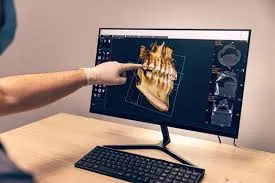
The decision for orthognathic surgery is made based on the patient’s complaints, radiological imaging (cephalometric analyses), and clinical examination. The following conditions are the main indications where surgical intervention may be necessary:
1. Mandibular Prognathism (Class 3)
This is a condition where the lower jaw is significantly ahead of the upper jaw, with the lower teeth covering the upper teeth. These patients usually cannot bite or tear with their front teeth. In the facial profile, the lower jaw is dominant and long. This condition, frequently encountered in Kahramanmaraş, can damage the temporomandibular joint if corrected only with orthodontic treatment (by camouflaging it). Surgically, the lower jaw is retracted or the upper jaw is brought forward.
2. Mandibular Retrognathia (Class 2)
This is a profile view where the lower jaw is significantly behind the upper jaw, often referred to as a “bird face.” In addition to aesthetic concerns, these patients face a very serious health risk: Sleep Apnea. A retracted lower jaw can cause the tongue to narrow the airway, leading to snoring and sleep apnea. Surgically, the lower jaw is brought forward, correcting both aesthetics and widening the airway.
3. Open Bite (Apertognathia)
This is a condition where the back teeth touch each other, but the front teeth do not, leaving a gap. These patients cannot bite into foods like sandwiches and toast with their front teeth. In skeletal-related open bites, surgical embedding of the posterior region of the upper jaw and forward rotation of the jaw may be necessary.
4. Facial Asymmetries
These are conditions where the chin is shifted to one side, creating noticeable differences between the right and left halves of the face. This can be developmental or develop as a result of trauma such as falling on the chin in childhood. Orthognathic surgery corrects the midline of the face, providing symmetry.
5. Smile Aesthetic Problems (Gummy Smile)
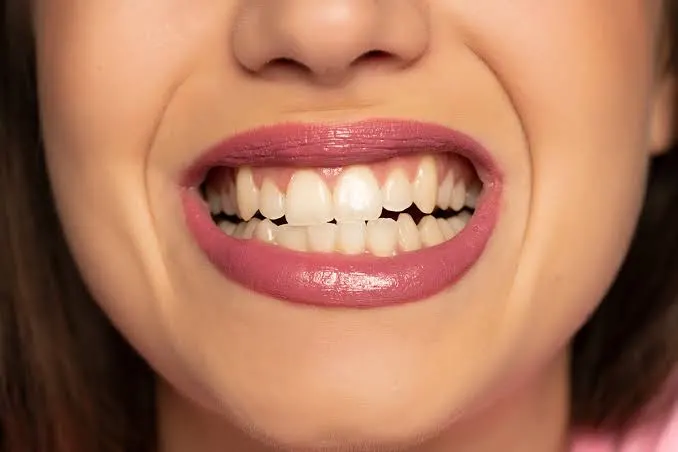
In cases where the gums are excessively visible when smiling and the upper jaw is excessively large vertically (maxillary excess), the upper jaw is surgically moved upwards to create a more balanced smile line.
Braces Only or Surgery?
The point where patients are most often confused is whether the problem can be solved with braces alone. The following table clarifies this distinction:
| Assessment Criteria | Orthodontics Only (Camouflage Treatment) | Orthognathic Surgery + Orthodontics |
|---|---|---|
| Source of the Problem | Only the alignment of the teeth is irregular. | The size/position of the jaw bones is irregular. |
| Facial Profile | Does not provide a significant improvement in the profile. | Provides a significant improvement in the facial profile (chin tip, lip support). |
| Treatment Duration | Average 1.5 – 2 Years. | Preparation + Surgery + Reinforcement (2 – 2.5 Years). |
| Age Limit | Can be performed at any age. | It is expected that growth and development will be complete (18+ years). |
| Airway | Effect on the airway It is limited. | It can permanently widen the airway (for sleep apnea). |
How Does the Treatment Process Proceed in Kahramanmaraş?
For a patient considering orthognathic surgery in Kahramanmaraş, the process requires meticulous planning. This is a “team effort”.
- Diagnosis and Analysis: The first step is the joint evaluation of the patient by the Orthodontist and Oral Surgeon. Panoramic X-rays, cephalometric films, and 3D CT scans (CBCT) are taken. Digital analyses are performed in well-equipped centers in Kahramanmaraş to create a surgical plan.
- Pre-operative Orthodontics (Braces): The teeth are straightened to make them suitable for the new bite after surgery. During this process, the teeth may appear to be “deforming” (decompensation), which is normal and is a preparation phase for surgery. It can take approximately 12-18 months.
- Surgery (Operation): When the teeth are ready, the surgery is performed under general anesthesia. The surgery is performed in a fully equipped hospital setting. In Kahramanmaraş, university hospitals or private hospitals with this infrastructure are preferred for these operations. The incisions and scars are entirely inside the mouth; no visible scars remain on the face.
- Post-Surgery Orthodontics: After the healing process (approximately 6 months), orthodontic treatment with braces continues for a while longer for the final detailing and fine adjustments of the teeth.
Age Factor: When Should It Be Done?
One of the most important criteria for orthognathic surgery is that the patient has completed their growth and development. If the surgery is performed while growth is still ongoing, the jaw may continue to grow, potentially disrupting the outcome.
Therefore, it is generally expected to be done at 17-18 years of age for women and 18-20 years and older for men. However, there is no “upper age limit”. Adults with good general health and suitable bone structure can also improve their quality of life by having this surgery in their 30s and 40s.
Post-Surgery Recovery Process
The part that patients fear most is the recovery process. Thanks to modern techniques and equipment (piezo surgery, etc.), the recovery process is much more comfortable than before.
– Hospital Stay: Usually 1-2 days.
– Swelling (Edema): There is significant swelling in the face for the first 3-4 days, which begins to subside after 1 week.
– Nutrition: Liquid nutrition is given in the first few weeks, followed by a transition to soft foods. The jaws are not completely wired and tied as before; It is supported by elastics, which allows the patient to open their mouth, speak, and eat.
– Loss of Sensation: Temporary numbness may occur in the lip area, which returns to normal over time as the nerves heal.
Result: The Meeting of Function and Aesthetics
In summary, the answer to the question “In what situations is orthognathic surgery necessary?” lies not only in aesthetic concerns seen when looking in the mirror, but also in the quality of basic life functions such as chewing, speaking, and breathing. Problems such as temporomandibular joint pain, premature tooth wear, or sleep apnea show that this surgery is not a luxury, but a health necessity.
Individuals living in Kahramanmaraş who have problems related to their jaw structure should, instead of exaggerating this process, consult with an expert orthodontist and oral surgeon to obtain scientific information. With proper planning and performed by expert hands, orthognathic surgery is a transformative treatment that opens a “new chapter” in the patient’s life, restoring their self-confidence and health.