
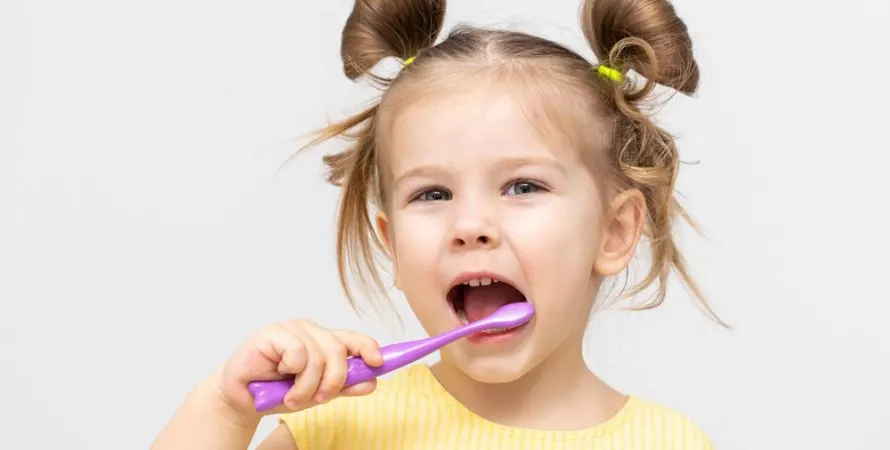
How Should Tooth Brushing Be Done According to Age Groups?
Oral and dental health is an integral part of overall body health and a lifelong journey. However, tooth brushing habits do not remain constant on this journey; they evolve according to the individual’s age, motor skills, and dentition period (milk teeth, mixed dentition, permanent teeth). There are significant differences between a baby’s gum care and an adult’s brushing technique, both in terms of the materials used and the application methods. One of the most common misconceptions is that tooth brushing should only begin after the teeth have erupted. However, oral hygiene is a process that begins from birth and needs to be carefully managed.
Correct habits acquired in early childhood play a key role in preventing cavities, gum diseases, and orthodontic problems that may occur in later years.
1. Infancy (0-2 Years): Laying the Foundation
The first steps in oral care should be taken even before the first tooth erupts. The aim during this period is to keep the oral flora clean and to accustom the baby to the feeling of oral care. 0-6 Months (Toothless Period)
Even if babies are fed only breast milk or formula, food particles can accumulate on their gums and tongues. These particles create a suitable environment for bacteria to multiply. Here’s what you should do during this period:
- After each feeding, gently wipe your baby’s gums with a clean, damp piece of gauze or muslin wrapped around your index finger.
- This process increases blood circulation in the gums and can help relieve itching during teething.
- Toothpaste is not used at this stage.
6-24 Months (Eruption of First Teeth)
With the appearance of the first baby tooth (usually the lower front incisor), the real “brushing” process begins. The risk of cavities increases during this period with a condition called “Early Childhood Caries” (Bottle Caries).
Brush Selection: Manual brushes with very small heads and extra soft bristles, suitable for the baby’s mouth structure, or silicone finger brushes worn on the parent’s finger should be preferred.
Toothpaste Use: The American Academy of Pediatric Dentistry (AAPD) and current guidelines recommend using a rice-grain-sized amount (in a smear form) of fluoride-containing children’s toothpaste starting with the eruption of the first tooth. However, the amount is very important because the swallowing reflex is not yet fully controlled.
2. Preschool Period (3-6 Years): Habit Formation
This period is a stage where children’s insistence on “I can do it myself” increases, but their motor skills (hand muscles) are not yet fully developed. Children can imitate brushing but cannot perform effective cleaning.
Parental Supervision is Essential
In the 3-6 age group, toothbrushing should be done with parent-child cooperation. The child brushes first, then the parent “goes over” to ensure all surfaces are cleaned. During this period, the chewing surfaces of the back molars are the most susceptible to decay.
Toothpaste Amount: From the age of 3, as spitting skills develop, the amount of toothpaste can be increased to the size of a “pea”. Care should be taken to prevent swallowing fluoride toothpaste.
Technique: Brush the front, back, and chewing surfaces of the teeth with circular motions (Fones technique). This technique is the most suitable method for children’s hand dexterity.
Important Tip
Making brushing a game is key to success in this age group. Motivation should be provided using brushes with their favorite cartoon characters, hourglasses, brushing songs, or reward charts. Brushing time should ideally be 2 minutes.
3. School Age Period (6-12 Years): Mixed Dentition and Critical Milestone
This age range is the “Mixed Dentition Period,” where both baby teeth fall out and permanent teeth begin to erupt. Especially at age 6, the “1st Molar” (6-year molar), which erupts at the very back of the mouth, is the most important chewing tooth that will remain in the mouth for life. However, parents often mistake this tooth for a baby tooth and leave it to decay.
Beginning of Interdental Cleaning
The areas where teeth touch each other (interdental spaces) are areas that the brush cannot reach and where decay begins insidiously. At this age, flossing should be started in addition to brushing. Initially, floss with a handle (toothpick floss) provides ease of use.
Motor Skills: After the age of 8-9, children generally reach the motor skills to write by hand. This means they can brush their teeth without assistance. However, it will still be beneficial for parents to check occasionally (using plaque-marking tablets).
4. Adolescence and Adulthood (12 Years and Older): Professional Care
At this stage, when permanent teeth have erupted, adult brushing techniques should be adopted. During adolescence, a period of intense hormonal changes, gum damage can occur.Soreness and bleeding (pubertal gingivitis) may occur. Therefore, brushing should not be stopped; on the contrary, it should be done more gently and effectively.
Correct Brushing Technique: Modified Bass Method
For adults and young people with developed dexterity, the most effective method is the “Modified Bass Technique,” where the brush bristles are placed at a 45-degree angle to the junction of the tooth and gum, and applied with small vibrations and a sweeping motion. This method is the most successful technique for cleaning plaque in the gum pocket.
Those Undergoing Orthodontic Treatment: Individuals undergoing braces should use special “interdental brushes” and “orthodontic brushes” to clean food particles that accumulate around the brackets.
Summary Table by Age Groups
The following table summarizes the needs and materials that vary by age:
| Age Group | Brush Type | Amount of Paste | Responsibility |
|---|---|---|---|
| 0-6 Months | Clean gauze / muslin | No Paste | Completely Parental |
| 6-36 Months | Soft, small-headed brush | Amount of Rice Grain | Completely Parental |
| 3-6 Years | Children’s Brush (Manual/Rechargeable) | Pea Size | Parental Supervision and Support |
| 6-12 Years | Medium Hardness Brush | Pea Size | Children’s (Parental Control) |
| 12+ Years | Adult Brush / Interdental Brush | 1-2 cm Strip | Individual |
Common Mistakes and Correct Practices
Regardless of age, some common mistakes made while brushing teeth can damage tooth enamel and gums:
- Brushing Hard: Brushing hard by pressing down on your teeth does not clean better; on the contrary, it erodes tooth enamel and causes gum recession. Gentle, “sweeping” movements are essential.
- Brushing Only the Front Surfaces: The back surfaces of the teeth (tongue and palate side) are the most neglected and where tartar accumulates the most.
- Wetting the Brush: Wetting the brush before use can soften the bristles excessively. It is more effective to start by applying toothpaste to a dry brush.
- Skipping Tongue Cleaning: A large portion of the bacteria that cause bad breath accumulate on the back of the tongue. The brushing routine should always end with brushing the tongue.
Conclusion
Toothbrushing is more than just simple mechanical cleaning; it is one of the greatest investments in health. An oral care routine supported by age-appropriate techniques, the right equipment, and regular dental check-ups from infancy ensures that an individual smiles healthily with their own teeth for life. It should be remembered that tooth decay is a preventable disease, and this prevention process begins in front of the bathroom mirror at home.







