How to Establish a Toothbrushing Routine for School-Aged Children?
School age, the period between 6 and 12 years old, is a stage where revolutionary changes occur in children’s physical and social development. During this period, children step from a family-centered world to a social world centered around school, teachers, and friends. Their sense of independence develops, motor skills increase, and their desire to make their own decisions strengthens. However, this process of liberation also brings with it the risk of decreased parental supervision, especially in matters requiring discipline such as oral and dental health. School canteens, friends’ eating habits, and demanding class schedules emerge as new factors threatening dental health.
At the same time, this period is a critical time in dentistry called the “Mixed Dentition Period,” where baby teeth fall out and permanent teeth, which will last a lifetime, begin to erupt. The correct brushing habits and hygiene awareness acquired during this period are the most important guarantee of an individual’s oral health in adulthood. So, how can this routine be established without getting lost in the school pace, without conflict, and without boredom?
Understanding the Mixed Dentition Period (6-12 Years)
To understand the importance of oral care in school-aged children, it is first necessary to know what is happening in the mouth. Around the age of 6, while the front baby teeth begin to loosen, the “1st Permanent Molars” (6-Year-Old Teeth) emerge silently from the back, without any baby teeth falling out. These teeth are the chewing center of the mouth and are the teeth most susceptible to decay.
Children often avoid brushing because they play with their loose teeth or because of eruption sensitivity in their gums. Also, the spaces in the tooth alignment and the different levels of the newly erupted teeth make it difficult for the brush to reach every surface. Therefore, brushing during this period is not just a “cleaning” but a strategic “protection” action.
Transfer of Responsibility: Controlled Freedom
In the preschool period (0-6 years), tooth brushing is almost entirely done through the physical intervention of the parent. However, this balance should change in school age. Until the age of 8-9, children’s hand-wrist motor skills (e.g., the ability to write neatly) are not fully developed, so they cannot perform fine, detailed brushing movements perfectly. Therefore, the approach should be as follows:
- 6-8 Years Old: The child brushes their own teeth, but the parent must perform “control brushing.” Particular attention should be paid to the back teeth and the gum line.
- 8-12 Years Old: The child can now brush completely on their own. The parent’s role is to be an “observer” and “reminder.” The effectiveness of cleaning can be checked occasionally using plaque staining tablets.
Integrating into School Routine
Children love routines because they give them a sense of security. Brushing teeth should be transformed from a “tedious chore” into a natural part of daily routine.
Morning Routine: After Breakfast or Before School?
Ideally, brushing should be done after breakfast. However, school bus times and morning rushes may not allow for this. If there isn’t time to brush immediately after breakfast, the child should brush as soon as they wake up (while washing their face). Cleaning the bacterial plaque that accumulates in the mouth overnight makes it harder for the sugar in breakfast to turn into acid.
Evening Routine: An Uncompromising Rule
If snacks have been eaten after coming home from school, water should definitely be drunk or the mouth rinsed. However, the most critical brushing is done right before bedtime. This brushing should be a “non-negotiable” rule. Excuses like “I’m too sleepy” or “I’ll brush tomorrow” should not be accepted.
Choosing the Right Equipment: Engaging and Effective
Schoolchildren no longer like “babyish” items. The toothbrush and toothpaste they use should make them feel grown up.
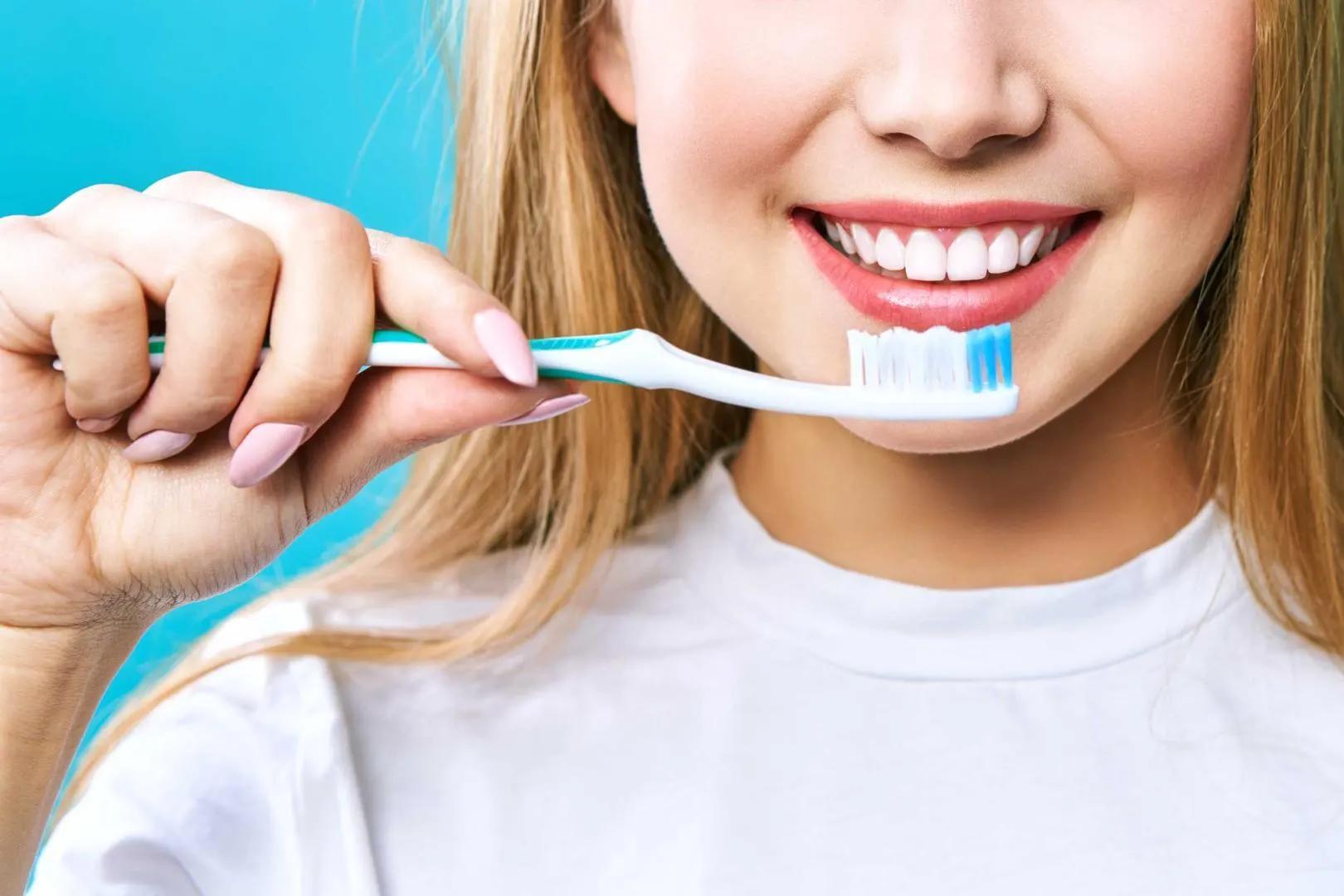
Toothbrush: For ages 6-12, toothbrushes designed with a slightly smaller head than an adult toothbrush, an ergonomic handle, and medium-soft bristles should be preferred. Rechargeable (electric) toothbrushes are a great source of motivation for this age group. Both their love of technology and the automatic movements of the brush compensating for their lack of motor skills are a great advantage.
Toothpaste: Now it’s time to switch from fruity baby toothpastes to minty or mildly flavored “teenager” toothpastes. The important thing is that the toothpaste contains 1450 ppm of fluoride. This level is necessary to strengthen the enamel of permanent teeth against acids.
Dental Flossing and Interdental Cleaning
As permanent teeth begin to touch each other (contact occurs), the bristles of the toothbrush can no longer reach between the teeth. Most cavities begin in these “interdental spaces.” School-age children should be taught to use dental floss. Initially, “handled dental floss” (toothpick floss), which is easier to use, can be preferred. Floss once in the evening.