Which Toothbrush Should Be Used at Which Age?
Every decision parents make regarding their children’s health directly affects their future quality of life. One of the most important, and perhaps the most overlooked, of these decisions is “choosing the right toothbrush,” the cornerstone of oral and dental health. A toothbrush is not just a simple plastic handle and bristles; it is a personal medical device designed to ensure oral hygiene. Just as you can’t put adult shoes on a baby, a toothbrush designed for adults cannot be used on the sensitive mouths of children.
The oral anatomy, number of teeth, dexterity, and gum sensitivity of children in their growth and development stages are constantly changing. The gum structure of a 6-month-old baby and the mixed dentition process of a 7-year-old school child create completely different needs. Choosing the wrong toothbrush not only leads to insufficient cleaning; it can also cause trauma to the gums, enamel erosion, and cause the child to dislike brushing.
0-6 Months: Pre-Tooth Period (Beginning of Oral Hygiene)
During this period, before teeth erupt, the use of a traditional toothbrush is not necessary. However, oral hygiene is essential. Breast milk and formula residues can accumulate on the tongue and palate, forming bacterial plaque.
Tools to Use:
- Clean Gauze / Muslin: Wrapped around the index finger, it is moistened and used to wipe the gums.
Finger Brushes (Silicone): These are food-grade silicone brushes with soft bumps that are worn on the parent’s finger. These brushes are ideal for massaging the gums and getting the baby used to having something in their mouth, rather than for cleaning.
6-24 Months: First Teeth and the First Real Brush
With the appearance of the first baby tooth (usually the lower front incisor), brush selection becomes critical. At this time, the baby’s mouth opening is very small and the gums are quite sensitive. Ideal Brush Features:
Head Size: The smallest possible head should be chosen. The brush head should be able to rotate comfortably in the baby’s mouth and reach between the cheek and teeth.
Bristle Structure: Extra Soft bristles should definitely be preferred. Hard bristles can cause bleeding in swollen gums during teething and can hurt the baby.
Handle Design: At this age, the brushing process is 100% done by the parent. Therefore, the handle of the toothbrush should be long enough and ergonomic to fit comfortably in the parent’s hand.
Safety Precaution: To prevent the risk of choking, some baby toothbrushes have protective shields (stoppers) that prevent the brush from falling into the throat. This feature is preferred for safety reasons. 2-4 Years: “I Can Do It Myself” Period
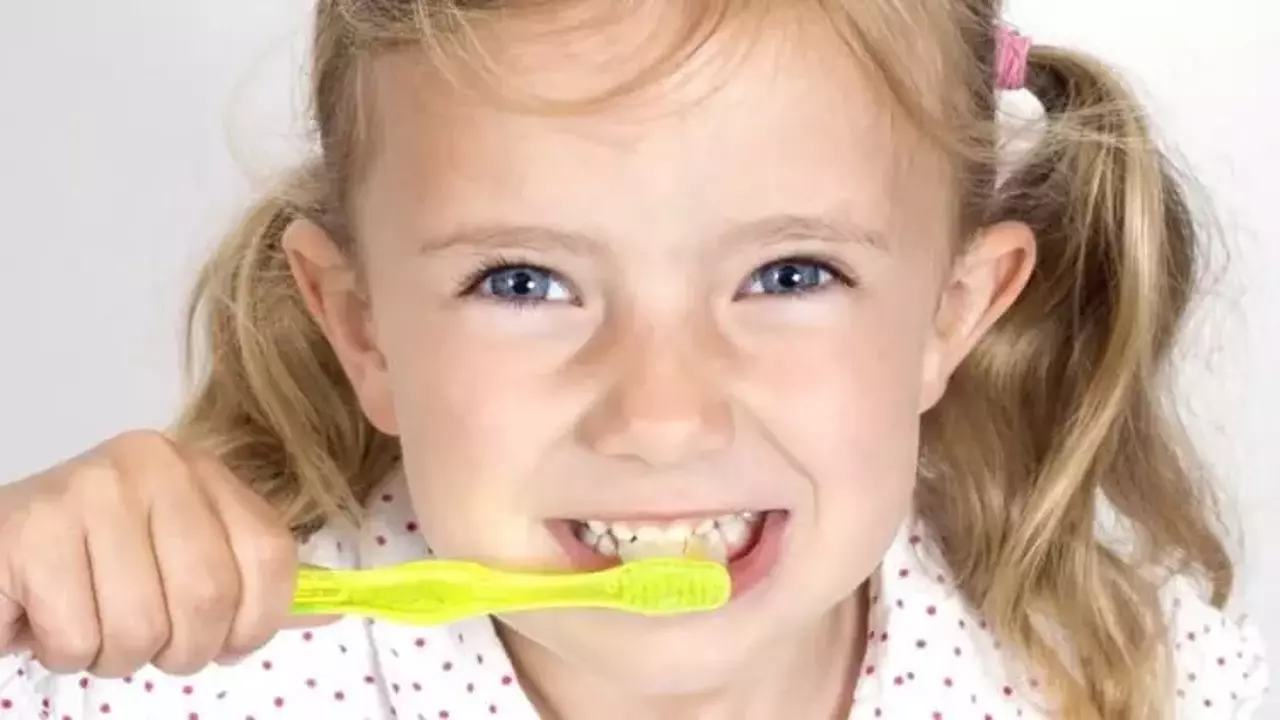
This age range is when children declare their independence and want to hold the toothbrush themselves. However, since their motor skills are not yet fully developed, they grip the brush with their palms, not like a pencil. Ideal Toothbrush Features:
Handle Thickness: The handle should be thick, full, and made of non-slip material (rubber coated) so that the child can comfortably grip it with their palm.
Bristle Structure: Since they still have baby teeth, “soft” bristles should be used. Rounded bristles prevent enamel scratches.
Motivational Design: To make brushing enjoyable for the child, brushes featuring their favorite cartoon characters, vibrant colors, or those with suction cups (that can stand upright) can be chosen.
5-8 Years: Mixed Dentition and Critical Molars
This period is the “Mixed Dentition” phase, where baby teeth fall out and permanent teeth begin to erupt, presenting both small baby teeth and large permanent teeth in the mouth. Also, the first molars, which erupt at the back of the mouth around age 6, are among the most difficult areas to reach with a brush.
Ideal Brush Features:
Head Structure: The brush head can be slightly larger, but it shouldn’t be as large as an adult brush. A tapered tip makes it easier to reach the back 6-year molars.
Bridge Arrangement: Brushes with bristles of varying heights (cross-action or leveled) offer the advantage of simultaneously cleaning both loose teeth that are about to fall out and newly erupted short teeth.
Handle Design: As the child’s dexterity increases, the handle may begin to taper, but the non-slip feature should remain.
8+ Years and Adolescence: Transition to Adulthood
Their oral structure and dexterity are now approaching adult levels. However, hormonal changes during adolescence can increase gum sensitivity (pubertal gingivitis).
Ideal Brush Characteristics:
Brushes designed for teenagers or adult brushes with small heads can be used. A transition to “Medium” brushes is possible, but if gum sensitivity persists, continue with a soft brush.If your child is undergoing orthodontic treatment (braces), “orthodontic brushes” (with a central indentation) and “interdental brushes” must be used.
Manual Brush or Rechargeable Brush?
With the advancement of technology, this is one of the most frequently asked questions by parents. Both types of brushes are effective when used correctly, but rechargeable brushes have some advantages for children.
| Features | Manual Toothbrush | Rechargeable (Electric) Toothbrush |
|---|---|---|
| Ease of Use | Requires dexterity and correct technique. | Tolerates motor skill deficiencies as it moves on its own. |
| Motivation | May be low. | High (Musical, light, and application models). |
| Time Control | Difficult (Hourglass) (It may be necessary). | Easy (It has built-in timers). |
| Cost | Economical. | High cost. |
| Recommended Age | All ages. | Generally 3 years and older. |
When Should Your Toothbrush Be Replaced?
A toothbrush is not a lifelong item. A toothbrush that has lost its effectiveness cannot clean plaque and becomes a breeding ground for bacteria. General rules for toothbrush replacement are as follows:
- Every 3-4 Months: It should be replaced for hygiene reasons even if the bristles are not worn out.
- When the Bristles Are Damaged: If the brush bristles are frayed, bent, or discolored, it should be replaced immediately, regardless of the time elapsed. Children can damage the bristles very quickly (sometimes in 2 weeks) by biting the brush.
- After Illness: The brush should be replaced after illnesses such as the flu, colds, throat infections, or thrush, as germs remaining on the brush can cause reinfection.
Golden Advice for Parents
The best toothbrush is the one your child loves to use and that suits their oral structure. Being expensive or having many features doesn’t always mean it’s the “best”. When choosing a toothbrush, consider the age indications on the packaging (0-2 years, 3-5 years, etc.), but your main criterion should be your child’s mouth size. If in doubt, your child’s pediatric dentist will provide the most accurate guidance.
Conclusion
Choosing the right toothbrush is the most important compass in your child’s oral and dental health journey. A brush suitable for their age, development, and needs will not only clean their teeth but also instill a lifelong self-care discipline. Remember, the brush is just a tool; the real miracle is in the hands that use that tool regularly twice a day.