
Why Shouldn’t Tooth Decay Treatment in Children Be Delayed?
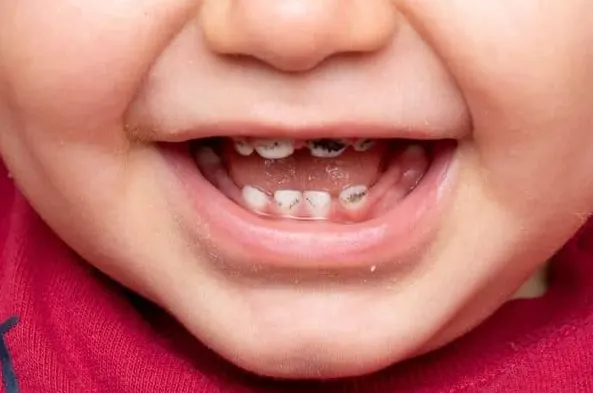
The journey of parenthood is a complex process where countless decisions and responsibilities intertwine. Perhaps one of the most frequently encountered dilemmas in this process concerns children’s oral and dental health. Especially when it comes to cavities in children under 6 or those in primary school, a misconception unfortunately still prevalent in society comes into play: “They’re just baby teeth, they’ll fall out and be replaced by new ones. Is there any need to tire the child by treating them?” This seemingly innocent thought can actually initiate a chain reaction that threatens not only the child’s immediate comfort but also their oral structure and overall health for the rest of their lives.
Modern Pedodontics (Pediatric Dentistry) has proven that baby teeth are not just temporary organs used for chewing, but rather biological structures of critical importance for the child’s growth and development. Leaving a small cavity in a baby tooth untreated and delaying its resolution can transform a problem that could be solved with a simple filling into complex surgical procedures requiring general anesthesia, orthodontic problems, and even systemic infections.
1. Anatomical Differences in Baby Teeth and the Rapid Progression of Cavities
The first and most important answer to why cavity treatment should not be delayed lies in the anatomy of baby teeth. Baby teeth have a very different structure compared to the permanent teeth of adults. The enamel layer, the protective armor of the tooth, is much thinner in baby teeth. Also, the “pulp chamber” (the living part of the tooth, where the blood vessels and nerves are located) is much closer to the surface in baby teeth.
This anatomical fact means that while it can take months or years for a cavity to reach the nerve from the enamel in an adult tooth, this process can happen within weeks in a baby tooth. The cavity that a parent sees as “a small black spot” may actually have already reached the nerve inside and started the infection. Therefore, the “let’s wait, we’ll get it checked when it grows” approach in children creates a breeding ground for decay to progress rapidly and render the tooth unsalvageable (necrosis).
2. Critical Impact on Pain and Nutrition
Untreated cavities inevitably cause pain. However, children, especially those in the younger age group, may not be able to express tooth pain as clearly as adults. Instead, they exhibit behaviors such as restlessness, sleep disturbances, crying spells, or refusal to eat. A child suffering from chronic tooth pain may not be able to chew hard foods, may swallow meat or vegetables without grinding them, or may prefer to eat only soft (usually carbohydrate-rich) foods.
This situation can restrict protein and vitamin intake in a child during their growth and development period, leading to delays in their physical development. Furthermore, toothaches that disrupt sleep at night can negatively affect the secretion of growth hormone. Therefore, treating cavities means protecting not only the tooth but also the child’s growth curve.
3. “Space Maintainer” Function and Orthodontic Problems
One of the most vital functions of baby teeth is to guide the permanent teeth that will follow. Each baby tooth is a natural “space maintainer” that protects the space where the permanent tooth underneath will erupt. If a baby tooth has to be extracted prematurely due to decay, the balance in the mouth is disrupted.
- Space Loss: The adjacent teeth begin to shift (tilt) into the space left by the extracted tooth.
- Impacted Teeth: Because the space closes, the permanent tooth trying to erupt from below cannot find space and remains impacted within the jawbone or erupts from a different location (cheek/palate).
- Need for Orthodontic Treatment: These crowdings resulting from early tooth loss cause the child to undergo years of costly orthodontic treatment with braces.
However, if that tooth could be kept in the mouth with a simple filling or root canal treatment done in time, all these complex processes would not be necessary.
4. Effect on the Health of Permanent Teeth (Turner Hypoplasia)
The roots of baby teeth are very close to the developing permanent tooth follicles underneath them. If decay in a baby tooth is left untreated, bacteria can spread through the root canal into the bone, causing an infection (abscess/inflammation). This inflammation disrupts the enamel development of the permanent tooth immediately beneath it.
As a result, when that permanent tooth erupts, it will have permanent yellow/brown stains, pits, or structural defects. This is called “Turner Hypoplasia.” In other words, neglecting a “temporary” baby tooth can cause lifelong damage to the “permanent” tooth.
5. Systemic Health and Infection Risk
The mouth is the gateway to the body. An untreated, abscessed, and infected tooth is a constant source of bacteria (focal infection) for the body. These bacteria can enter the bloodstream and reach other parts of the body. This is especially true for heart valve disorders, rheumatoid arthritis, and other related conditions.In children with mental health issues or immune system problems, dental infections can pose serious systemic risks. A simple tooth decay can weaken a child’s overall immunity, making them more prone to frequent illnesses.
The Cost of Delay: A Comparison of Treatment and Outcomes
The following table compares the outcomes of intervention performed immediately upon detection of decay with delayed intervention:
| Treatment Timing | Procedure Performed | Child’s Experience | Long-Term Outcome |
|---|---|---|---|
| Early Intervention | Simple Filling or Protective Application | Short-term, painless, comfortable. | The tooth remains in the mouth, function continues. |
| Medium-Term Delay | Amputation (Partial Root Canal) or Root Canal Treatment | Longer procedure, anesthesia required. | The tooth is saved but may be structurally weakened. |
| Severe Neglect | Tooth Extraction and Space Maintainer Placement | Can be traumatic, tooth loss occurs. | Risk of orthodontic problems, loss of chewing ability. |
6. Psychological and Social Effects
Children value aesthetic appearance as much as adults. Especially for school-aged children, black cavities in the front teeth or bad breath create a risk of peer bullying (being teased). This can lead to the child being hesitant to smile, speaking with their mouth closed, and social isolation. Furthermore, school absenteeism or inability to focus on lessons due to toothache indirectly affects academic success. A healthy smile is just as important for a child’s self-confidence as academic success.
The “It Will Pass with Time” Misconception
Tooth decay is not a disease that the body can heal on its own, like the flu or a cold. Tooth tissue cannot regenerate itself. Once decay begins, it will only “progress” unless treated. It will not stop or regress. A tooth that can be saved with a small filling today may have to be extracted tomorrow; it’s only a matter of time.
Conclusion: The Responsibility of Parents
Treating decayed teeth in children is not a choice, but an unavoidable health necessity. Ignoring it as just a “baby tooth” can leave irreversible damage on a child’s future oral and dental health map. For a pain-free childhood, healthy eating, proper speech, and a confident smile, regular visits to a Pedodontist (Children’s Dentist) at the first sign of decay, or even better, before any decay develops, are vital. Remember, early diagnosis doesn’t just save lives; it saves teeth, time, and your child’s smile.







