Do Baby Tooth Fillings Affect Permanent Teeth?
One of the biggest concerns parents have about their children’s dental treatments is whether the procedures performed will harm the permanent (adult) teeth that will emerge in the future. Caught between the perception of “baby teeth will fall out anyway” and the preventive treatments offered by modern medicine, families often ask the following question: “Doctor, if we place a filling in a baby tooth, will we harm the tooth underneath? Will the filling material prevent the permanent tooth from coming in?” These questions are entirely understandable and valid concerns. Because baby teeth are not just temporary tools for chewing; they are also the protectors and guides of the permanent tooth buds quietly developing beneath them.
The main goal of Pedodontics (Pediatric Dentistry) is not only to relieve a child’s pain by treating baby teeth, but also to protect the health of the permanent teeth that will come in underneath.
Understanding the Anatomical Relationship: The Proximity of Baby and Permanent Teeth
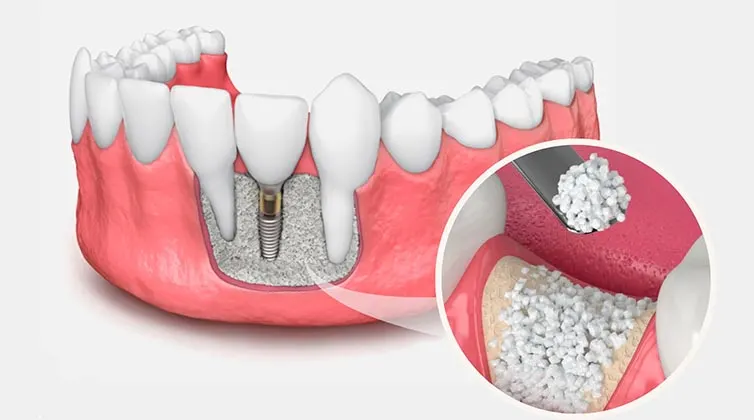
To understand the impact of baby tooth fillings, it is first necessary to grasp the anatomical structure inside the mouth. Just beneath the baby teeth visible in a child’s mouth are the “permanent tooth buds” developing inside the jawbone. These buds are protected within a sac (follicle) and, when the time comes, they move upward by resorbing the roots of the baby teeth. There is a very close neighborhood relationship between the root tips of baby teeth and the permanent tooth bud.
This proximity is like a double-edged sword: while an infection in a baby tooth can easily spread to the permanent tooth, a correct treatment performed on the baby tooth also protects the permanent tooth.
Can Filling Material Harm the Permanent Tooth?
The short and clear answer: No, it cannot. On the contrary, a filling protects the permanent tooth. The reasons are as follows:
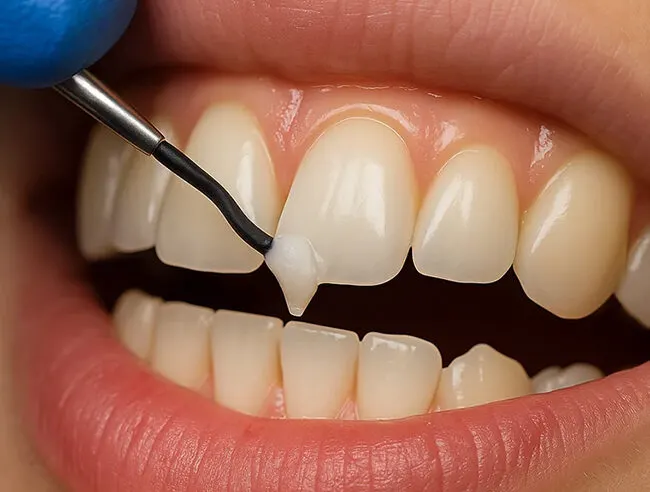
- Mechanical Barrier: A filling closes the cavity formed by decay and prevents bacteria from entering the root canal and reaching the bone (and therefore the permanent tooth bud underneath).
- Biocompatible Materials: Filling materials used in pediatric dentistry (compomers, glass ionomers) are compatible with tooth tissues and are safe materials. These materials do not dissolve over time and mix into the body, nor do they seep into the tooth underneath.
- Compatibility with the Shedding Process: When the time comes for a baby tooth to fall out, its roots resorb and the tooth loosens and sheds. The filling falls out together with the tooth. A filling does not prevent or delay the tooth from shedding.
The Real Danger: Untreated Baby Tooth Cavities
What parents should truly be concerned about is not the filling, but the absence of a filling. An untreated cavity in a baby tooth is a serious threat to permanent teeth. Here are the chain reactions caused by neglected decay:
1. Turner Hypoplasia (Stains and Defects in the Permanent Tooth)
If decay in a baby tooth is not treated, bacteria reach the tooth’s nerve and create an infection (abscess/inflammation) at the root tip. This inflamed fluid comes into contact with the “enamel organ” of the permanent tooth bud located directly underneath. If the permanent tooth’s enamel is still in the calcification stage and is exposed to this acidic and infected environment, its structure becomes impaired.
As a result, when that permanent tooth erupts years later, permanent yellow/brown stains, pits, or enamel defects may be seen on its surface. This is called “Turner Hypoplasia.” In other words, not placing a filling in a baby tooth can cause the permanent tooth to remain damaged for life.
2. Space Loss and Orthodontic Problems
Baby teeth act as “space maintainers” for permanent teeth. If a baby tooth becomes untreatable due to decay and is extracted prematurely, the neighboring teeth drift toward the empty space. The space for the permanent tooth coming from underneath narrows or completely closes. This may cause the permanent tooth to remain impacted or erupt crooked. Losing a tooth that could have been maintained in the mouth with a simple filling can make orthodontic treatments (braces) that last for years unavoidable in the future.
3. Jaw Development and Chewing Function
A baby tooth that hurts due to decay causes the child to avoid using that side. One-sided chewing can lead to asymmetric development of the jaw muscles and bones. A tooth whose function is restored with a filling supports balanced jaw development.
Baby Tooth Filling and “Permanent Tooth Health” Comparison
You can clearly see the effects of treated and untreated baby teeth on permanent teeth in the table below:
| Situation | Effect on the Baby Tooth | Effect on the Permanent Tooth Underneath |
|---|---|---|
| Placing a Filling in the Baby Tooth | Pain resolves, infection is prevented, and the tooth remains in the mouth until its natural shedding age. | Positive: Protected from infection, space is preserved, and healthy eruption guidance is ensured. |
| Neglecting the Cavity | Pain, abscess, risk of early extraction. | Negative: Risk of Turner hypoplasia (stains/defects), risk of impaction, crowding. |
| Early Tooth Extraction | Toothlessness, difficulty chewing. | Negative: Orthodontic problems due to space loss. |
Frequently Asked Questions from Parents
Does a baby tooth with a filling not fall out?
No, a filling does not prevent a tooth from falling out. The shedding of a baby tooth is a biological event that occurs as the roots resorb due to pressure from the permanent tooth coming from underneath. The filling on the crown (upper part) of the tooth does not affect this process. When the time comes, the tooth loosens and falls out together with its filling.
Does root canal treatment in a baby tooth harm the tooth underneath?
Root canal treatment in baby teeth is different from root canal treatment in permanent teeth. The filling materials used (pastes) are special materials that can dissolve naturally as the roots resorb. This procedure is performed to protect the tooth underneath by drying out the infection. So it does not harm; on the contrary, it protects.
Are Filling Materials Safe?
Filling materials used in pediatric dentistry (Compomers, Glass Ionomers, Composites) are safe materials that have passed biocompatibility tests and are approved by international health authorities. These materials adhere to tooth structure chemically or mechanically and complete their function without causing any toxic effect. In fact, many of them help prevent cavity formation by gradually releasing fluoride into the tooth over time.
In Summary: Protect, Don’t Postpone
Every intervention performed on a baby tooth is actually an investment in permanent teeth. The mindset of “it will be replaced anyway” can open the door to irreversible damage. Baby tooth fillings do not negatively affect permanent teeth; on the contrary, they act as a shield that protects them from the destructive effects of infection and the orthodontic problems caused by space loss.
Conclusion
Every baby tooth in your child’s mouth is the architect of their future smile. Treating a decayed baby tooth (placing a filling) is the most guaranteed way to ensure that the permanent tooth underneath erupts healthy, stain-free, and properly aligned. As a parent, by setting aside your concerns and taking early action under the guidance of your pedodontist (pediatric dentist), you can secure the health of the teeth your child will use for a lifetime starting today.