How Implants Are Done: Kahramanmaraş
In dental practice, implant applications are a multi-stage treatment protocol aimed at restoring the chewing function, phonation (speech), and aesthetic appearance that patients have lost. While patients usually imagine the result, that is, the “new tooth,” the real success for physicians is the quality of the biological bond that the implant establishes with the bone, called “osseointegration.”
Stage 1: Diagnosis, Radiological Analysis, and Treatment Planning
The foundation of a successful implant treatment rests on flawless planning. In modern clinics in Kahramanmaraş, the process begins not the moment the patient sits in the chair, but the moment the radiological images are examined. While panoramic X-rays provide a general idea, the “gold standard” in implant surgery is now the use of 3D Dental Volumetric Tomography (CBCT).
Thanks to tomography, the physician can measure the height, width, and most importantly, the bone quality (density) of the jawbone in millimeter detail. Furthermore, the distance of the nerve canals (mandibular canal) in the lower jaw and the sinus cavities in the upper jaw to the implant site is precisely determined. At this stage, the following questions are addressed:
- Is the patient’s bone volume sufficient to support the implant?
- Are additional surgical procedures (sinus lifting or bone grafting/powder addition) needed?
- Does the patient have a systemic disease (uncontrolled diabetes, advanced osteoporosis, etc.)?
- What diameter and length of implant should be used?
Stage 2: Surgical Operation and Implant Placement
After planning is complete, the operation date is determined. The answer to the question of how implants are placed in Kahramanmaraş lies in a surgical environment where the sterilization chain is not broken. The procedure begins with local anesthesia applied to prevent the patient from feeling pain. For most patients, local anesthesia is sufficient, and only slight vibration and pressure are felt during the procedure; no pain is felt.
Details of Surgical Steps
After the anesthesia takes effect, the surgical procedure proceeds as follows:
- Incision (Gum Opening): The gum is carefully opened with a scalpel to visualize the bone area where the implant will be placed. In some cases, if the “Flapless” technique is suitable, the procedure can be performed directly without opening the gum.
- Socket Preparation (Drilling): The socket where the implant will be placed is gradually opened with special drill sets. First, the direction is determined with a thin guide drill, then the drill diameters are gradually increased until the appropriate width for the implant diameter is reached. During this process, continuous cooling with saline solution is performed to prevent overheating of the bone (eliminating the risk of osteonecrosis).
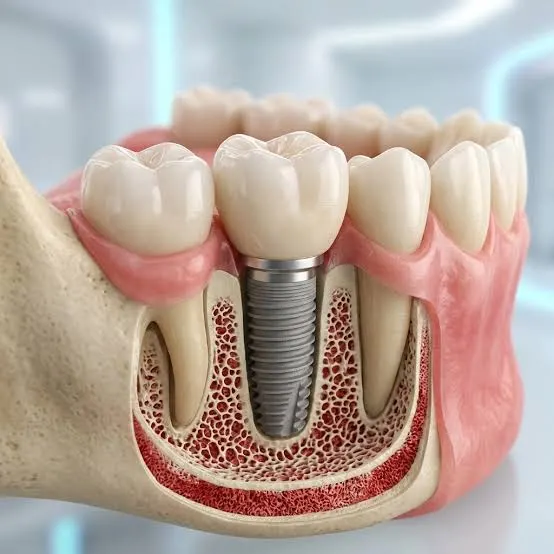
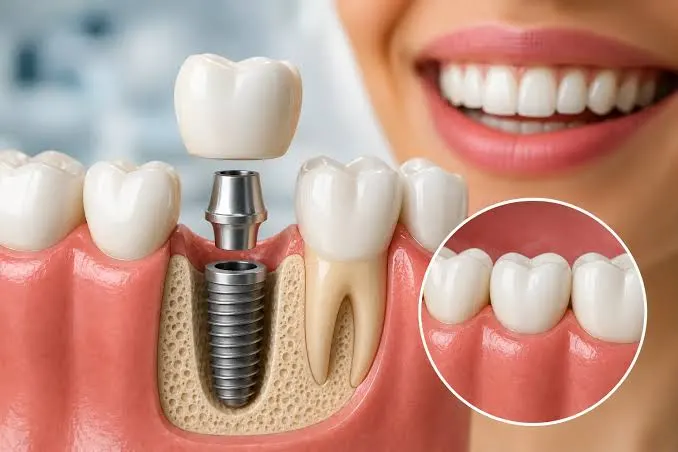
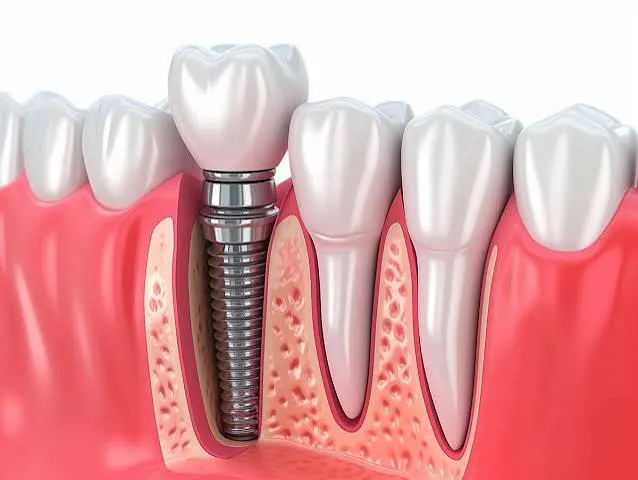
- Implant Placement: The titanium implant is screwed into the prepared socket with a specific torque (force) value. This torque value indicates how firmly the implant is attached to the bone (primary stability) and is a critical data point for the course of treatment.
- Closure: After the implant is placed, a “closure screw” is attached, and the gum is closed again and sutured. Thus, the implant is isolated from the external environment and left to heal within the bone.
Biological Process: What is Osseointegration?
The period after implant placement, called the “waiting period,” is not a passive waiting but an active biological process. The titanium surface and living bone cells (osteoblasts) interlock at a microscopic level. This fusion process can take an average of 2-3 months in the lower jaw and 3-4 months in the upper jaw due to the more spongy bone structure.
3. Stage: Healing Abutment and Prosthetic Stage
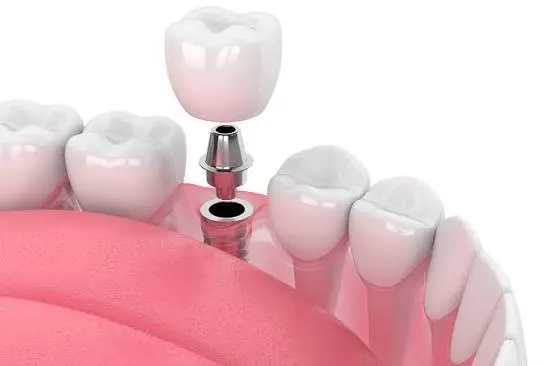
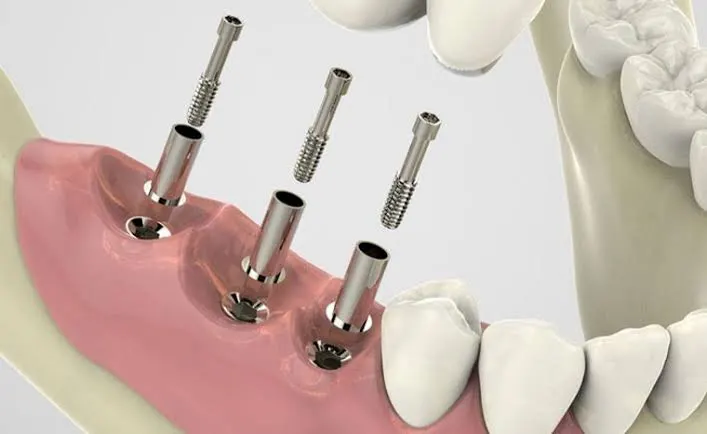
After the osseointegration process is successfully completed, a small procedure is performed to expose the implant and shape the gum tissue. A piece called a “healing abutment” (gingiva former) is attached to the implant. This piece allows the gum tissue to heal around the implant, creating a natural tooth eruption profile. After approximately 7-10 days, the prosthetic stage begins.
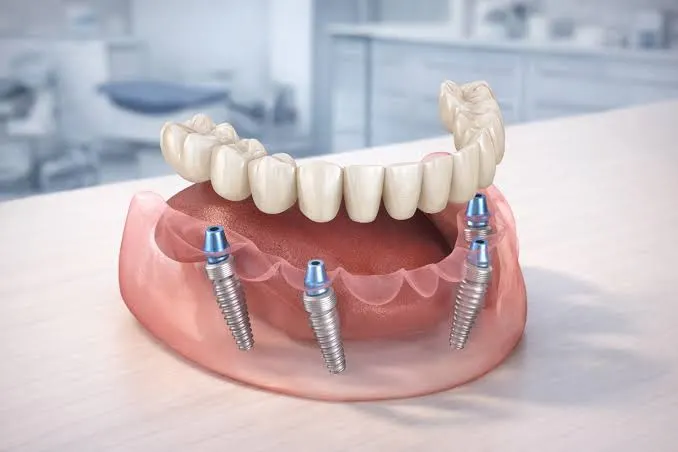
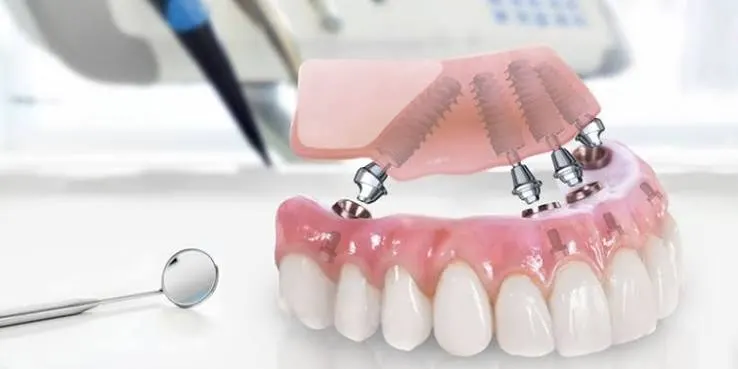
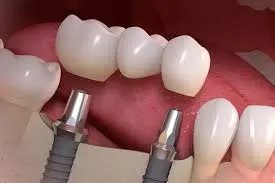
In Kahramanmaraş, during the prosthetic stage, a precise copy of the patient’s oral structure is transferred to the laboratory using digital or traditional impression methods. In the laboratory, permanent teeth are produced in Zirconium, Metal-Supported Porcelain, or Monolithic structures in a color and form that matches the patient’s neighboring teeth. After the final trials, the tooth is fixed onto the implant by screwing or bonding.
Implant Types
Comparison of Loading and Implantation Protocols
Each case is unique, and the protocol to be applied varies according to bone quality. The following table technically compares the two basic loading protocols used in implant surgery.
This is the method with the highest success rate.The patient has to wait 2-4 months to receive their prosthetic tooth.
| Protocol Type | Application Conditions | Advantage | Risk Factor |
|---|---|---|---|
| Delayed Loading (Classic Method) | Preferred in most standard cases. Cases where bone quality is average. | A risk-free period is allowed for the implant to fuse with the bone. | |
| Immediate Loading | Only in cases where bone quality is excellent and the implant is placed with very high torque (35-45 Ncm). | The patient receives their temporary fixed teeth on the same day or within 48 hours. | Early loading on the implant can lead to implant loss if not planned correctly. |
Post-Treatment Considerations
Mild swelling and pain that may occur after implant surgery can be controlled with analgesics and antibiotics prescribed by your doctor. Applying intermittent ice compresses to the area (to reduce swelling) and avoiding hot foods within the first 24 hours is standard procedure.
The most important thing patients should know after implant treatment in Kahramanmaraş is that implants, like natural teeth, require care. A condition called “peri-implantitis,” which begins with inflammation of the gums around the implant, can lead to implant loss due to inadequate oral hygiene. Therefore, brushing twice a day, flossing, and most importantly, using an oral irrigator are fundamental factors in ensuring the implant remains in the mouth for life.
In conclusion, implant treatment is a serious medical procedure that combines biology and engineering and directly improves quality of life. For patients in the Kahramanmaraş region who wish to access this treatment, the process is shaped by the triangle of correct diagnosis, sterile surgery, and informed care. Following your doctor’s recommendations and scientific treatment protocols is the key to achieving a healthy smile.