Should You Choose Zirconia or Porcelain Crowns for Dental Implants?
This question marks an important turning point that directly affects both the aesthetic outcome and the cost of your treatment. Although both options look like teeth from the outside, they differ significantly in how they reflect light, their biological compatibility with your gums, and their biomechanical strength. Should you choose the flawless aesthetics of zirconia or the time-tested durability of porcelain? As the Dentocare family in Kahramanmaraş, we explain the advantages and disadvantages of both materials in clear language to help you make the right decision.
What Is a Porcelain-Fused-to-Metal Crown?
Porcelain-fused-to-metal crowns are a traditional, well-established option that has been used reliably in dentistry for decades. To prevent the porcelain placed over the implant from breaking, a strong metal alloy, usually cobalt-chromium or a nickel-based alloy, is incorporated into its inner, hidden structure. The outer surface of the tooth is completely covered with white porcelain fired in a dental furnace.
- Advantages: The internal metal framework provides exceptional resistance to chewing forces. The risk of fracture is particularly low when replacing long spans of missing teeth with bridges supported by multiple implants. It also offers a more economical solution than zirconia.
- Disadvantages: The metal framework is opaque and does not transmit light. This can make the tooth appear dull and slightly artificial in sunlight or flash photography. Its greatest disadvantage is that, over time, a purple or gray metallic reflection may become visible where the gums thin, compromising “pink aesthetics.”
What Is a Zirconia Crown?
Zirconia (zirconium dioxide) is a naturally occurring white element described as having strength equivalent to diamond. This material, which revolutionized dentistry, has replaced the gray metal framework inside porcelain restorations. Both its internal framework and its outer surface are white and translucent.
- Advantages: It refracts and reflects light like natural tooth enamel, making it almost impossible to distinguish from your natural teeth. Because it contains no black or gray metal, it never creates darkening or a purple line along the gum margin. It is tissue-friendly and biocompatible and does not cause allergic reactions in the gums.
- Disadvantages: Manufacturing costs are higher than those of porcelain-fused-to-metal crowns. Although advances such as monolithic zirconia have improved its strength, it is less flexible than metal and may occasionally carry a risk of fracture in very long posterior bridges.
Which Material Should Be Used in Each Area? (Decision Table)
The most important criterion when choosing a material should be the tooth’s position in your mouth. The table below outlines the general guidance our dentists provide to patients at our clinic:
| Evaluation Criterion | Porcelain Fused to Metal | Zirconia Crown |
|---|---|---|
| Aesthetics and Natural Appearance (Translucency) | Low (Appears opaque and dull) | Very high (Translucent and lifelike) |
| Gum Compatibility (Pink Aesthetics) | May create a gray or purple reflection over time. | Fully compatible with the gums and does not cause darkening. |
| Use for Front Teeth | Not recommended because of aesthetic concerns. | Definitely the first choice. |
| Use for Back Molars | Ideal and reliable under heavy chewing loads. | Can be used safely in its monolithic zirconia form. |
| Cost Profile | More economical | Higher cost (Premium category) |
Dentocare Kahramanmaraş: Our Approach
Every patient has different physiological characteristics, expectations, and financial circumstances. At our Dentocare clinic in Kahramanmaraş, we follow the principle of identifying the option that best meets your needs, rather than assuming that the most expensive option is the best. If implants have been placed in your front incisors or premolars that are clearly visible when you smile, we always recommend zirconia frameworks to maintain aesthetic harmony. Even a slight metallic reflection in this area can undermine the aesthetic success of the entire surgical process.
For the backmost areas, where aesthetics are less of a priority, several teeth are missing, and chewing forces are high, we also regularly and confidently use high-quality porcelain-fused-to-metal restorations to help manage costs. The data transferred to the laboratory through our digital impression systems guarantees a flawless result that fits your mouth with millimeter-level precision, whichever material you choose.
Frequently Asked Questions (FAQ)
Is zirconia or porcelain used in full-mouth implant treatments such as All-on-4 and All-on-6?
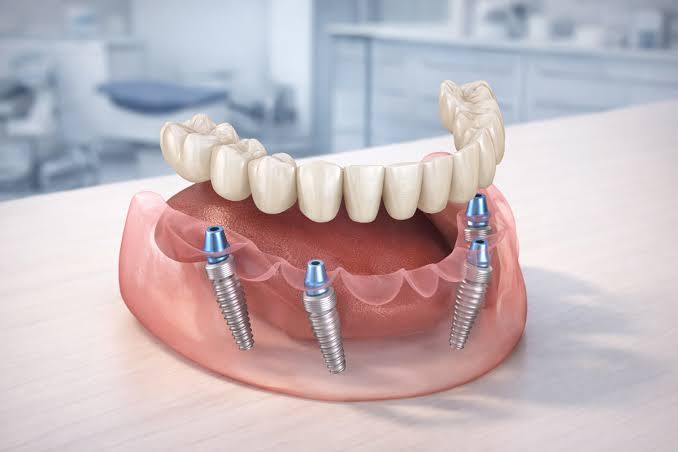
Both options are possible for full-mouth restorations. However, in full-arch treatment, the flexibility and strength provided by a metal framework make porcelain restorations more resistant in long-span bridges. Zirconia offers excellent aesthetics, but in very long, single-piece bridges, it is somewhat more brittle than metal. Your dentist will recommend the most suitable option based on your bite force.
Will my zirconia teeth turn yellow or develop coffee stains over time?
No. Because zirconia and porcelain surfaces are glazed and fired at high temperatures in the laboratory, they have no microscopic surface irregularities. This smooth, glass-like structure prevents substances from tea, coffee, or smoking from penetrating the tooth and causing yellowing. With proper brushing, they retain their original color.
Can zirconia and porcelain-fused-to-metal restorations be used in the same mouth?
Yes. This is a hybrid approach that we use quite frequently. We can place zirconia crowns on implants replacing the front teeth within your smile line while using porcelain-fused-to-metal restorations on the backmost chewing teeth, where appearance is less of a concern, to balance the overall cost.
Conclusion: The Right Choice for Lasting Satisfaction
Implant surgery is the unseen foundation of your treatment; the crown is its visible face, smiling back at you in the mirror each day and helping you connect with the world. Zirconia represents the pinnacle of modern dentistry with its flawless natural appearance and biocompatibility, while porcelain-fused-to-metal restorations remain a strong option thanks to their durability and affordability. Whatever your choice, both materials can serve you successfully for years when combined with skilled laboratory craftsmanship and experienced dental care. We welcome you to the warm and friendly environment of our Dentocare clinic in Kahramanmaraş for a coffee and a detailed examination, so that we can redesign your smile and choose the material that best meets your expectations together.