Advanced Implant Treatment in Kahramanmaraş
In dentistry, standard implant applications are considered a routine procedure when sufficient bone volume and appropriate gum structure are present. However, standard methods may be insufficient for patients who experience significant bone resorption in the jaw due to long-term edentulism, trauma, cyst operations, or periodontal diseases. At this point, protocols called “Advanced Implant Treatment,” which include reconstructive surgical techniques, come into play. In the Kahramanmaraş region, with the development of health tourism and medical infrastructure, these complex cases can now be managed with advanced surgical techniques without the need to refer them to larger cities.
What is Advanced Implant Surgery and Who is it Applied To?
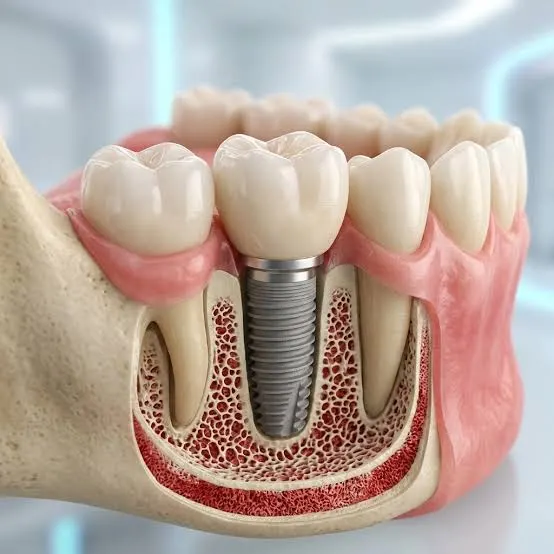
Advanced implant surgery encompasses all additional surgical procedures performed to make the bone tissue capable of supporting the implant when the bone tissue where the implant will be placed is insufficient in terms of volume or quality. The success of an implant depends on the biological bond it forms with the bone (osseointegration). If there is insufficient bone to surround the implant, its long-term success cannot be guaranteed.
Patient profiles seeking advanced implant treatment in Kahramanmaraş generally include:
- Patients with severe jawbone resorption due to long-term use of removable dentures (palate).
- Individuals with sagging sinus cavities and reduced bone distance in the posterior region of the upper jaw.
- Cases with jawbone defects resulting from accidents or tumor surgery.
- Patients experiencing both hard and soft tissue loss in the aesthetic area (front teeth).
Basic Advanced Surgical Techniques
The main techniques used to address bone deficiency and prepare a suitable environment for implants are:
1. Sinus Lifting Surgery
In the upper jaw, just above the molars, there are air spaces called maxillary sinuses. When teeth are extracted, these spaces sag downwards over time, reducing bone height. Sinus lifting is a procedure where the base of this space is surgically lifted and the resulting gap is filled with bone graft (bone powder).
Two types of sinus lifting are performed:
Closed Sinus Lifting: This is a less traumatic procedure performed by entering through the implant socket when the bone distance is 4-5 mm. Implants can usually be placed in the same session.
Open Sinus Lifting: This is a more comprehensive procedure performed by opening a window in the side wall of the sinus when the bone height is very small, such as 1-3 mm. Bone formation usually takes 6 months, after which the implant is placed. Bone Augmentation (Grafting / Bone Powder Addition)
In cases where the width (thickness) of the jawbone is insufficient, the implant threads may be exposed. To prevent this, bone volume is increased using bone powders from the patient’s own bone (autogenous), human-derived (allogeneic), or bovine-derived (xenograft). Special barrier membranes are placed on the graft to prevent it from dispersing during this process.
3. Box Technique and Block Grafts
In cases of very severe bone loss, powdered grafts may not be sufficient. In these cases, block bone fragments taken from another area of the patient’s jaw (usually the chin or wisdom tooth area) are fixed to the missing area with screws. This technique allows for the 3D reconstruction of the bone.
In advanced implant surgeries, standard panoramic X-rays are insufficient. In Kahramanmaraş, the use of “Dental Volumetric Tomography” (3D CBCT) is mandatory in clinics that provide these treatments. Thanks to tomography, the location of nerve canals and sinus anatomy are visualized with millimeter precision, thus minimizing surgical risks.
Comparison of Standard and Advanced Implant Treatment
The following table clarifies the differences between a routine implant procedure and a procedure requiring advanced surgery:
ir.Requires expertise in Oral and Maxillofacial Surgery and advanced implantology.
| Features | Standard Implant Treatment | Advanced Implant Treatment |
|---|---|---|
| Bone Condition | Sufficient volume and density are present. | Insufficient vertical or horizontal bone volume is present. |
| Surgical Process | Single-stage surgery is usually That’s enough. | Additional surgeries such as grafting or sinus lifting are required. |
| Treatment Duration | Average 3-4 months. | May take 6-9 months as bone formation is awaited. |
| Cost Factors | Only implant and prosthesis cost. | Implant + Graft materials + Membrane costs are added. |
| Specialization Requirement | Applicable in general dentistry practice. |
All-on-4 and All-on-6 Concepts
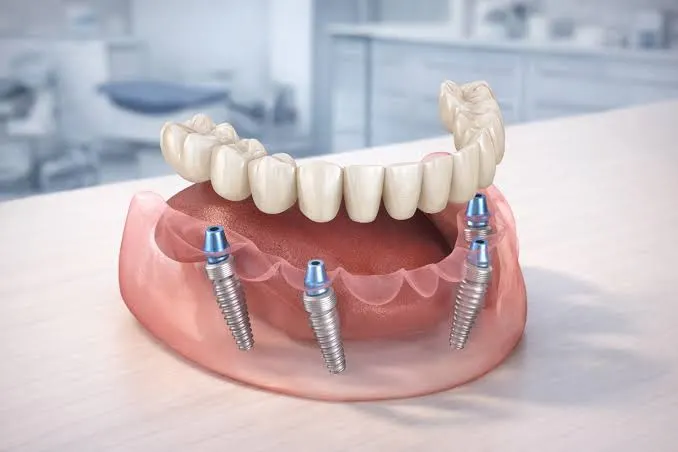
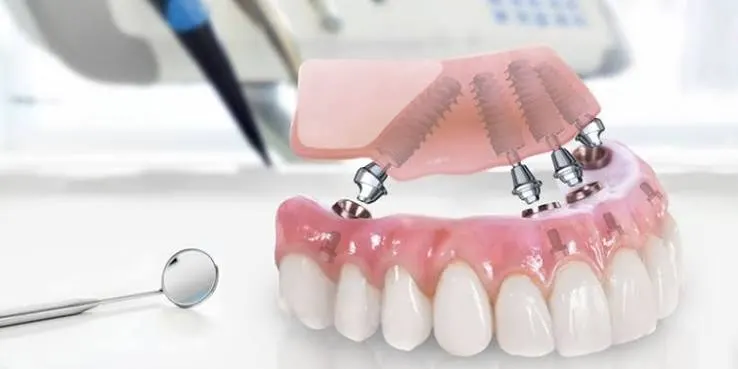
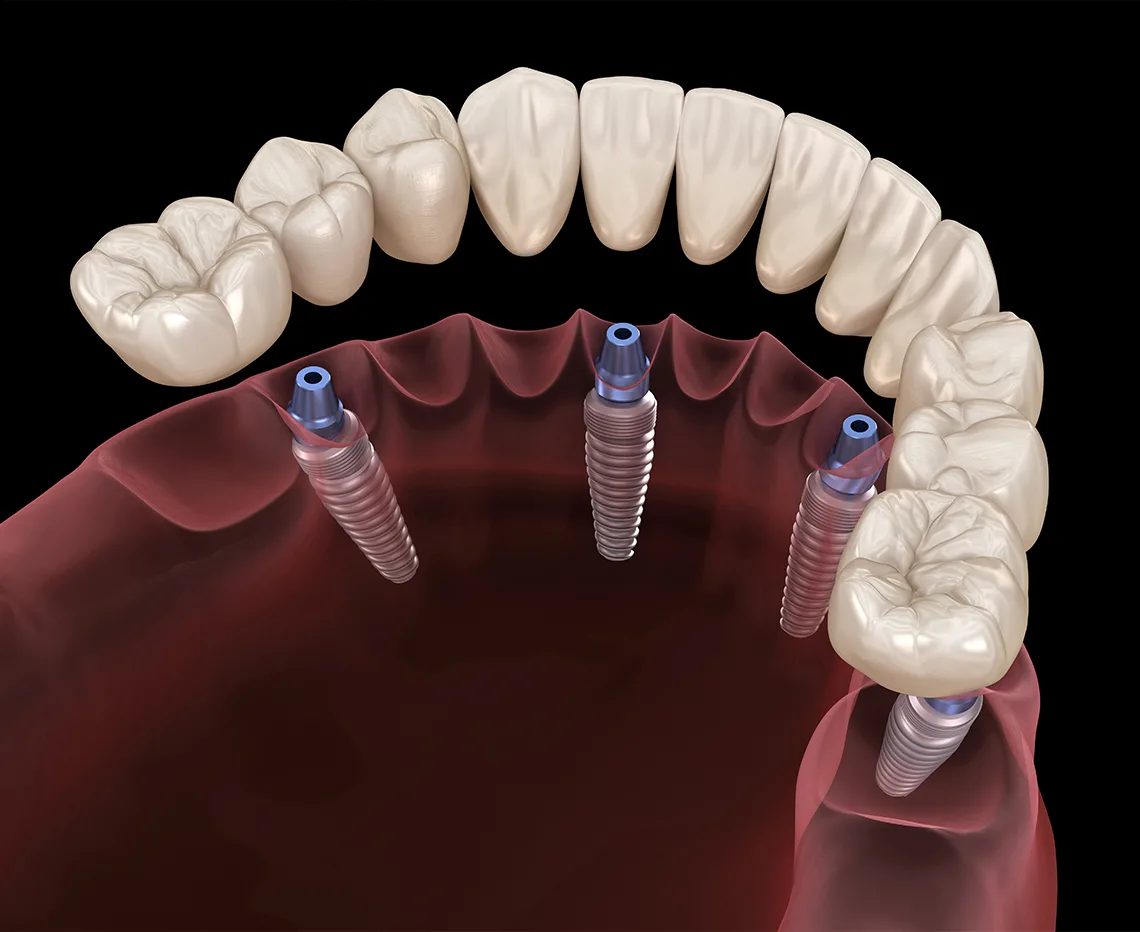
In cases of complete edentulism, if there is significant bone loss in the posterior regions and advanced surgeries such as sinus lifting are not suitable for the patient (advanced age, systemic diseases, etc.), the “All-on-4” technique emerges as an alternative. In this technique:
- Only 4 or 6 implants are placed in the jaw.
- Two implants in the anterior region are placed straight, and two implants in the posterior region are placed at an angle of 30-45 degrees.
- Thanks to this angulation, maximum support is obtained from the existing bone without touching the sinus cavities and nerve canals.
- A fixed temporary prosthesis can be made on the same day or within a short time without the need for bone grafting.
Post-Treatment Process and Success Criteria
In advanced implant treatment processes in Kahramanmaraş, 50% of the success depends on the surgeon’s competence, while the other 50% depends on the patient’s care and biological healing. Edema (swelling) and slight bruising after advanced surgical procedures are a natural reaction of the body and are part of the healing process. Regular use of antibiotics and mouthwashes prescribed by the doctor, application of ice compresses, and most importantly, avoiding smoking are vital. Smoking is the biggest risk factor that severely impairs new bone formation (osteogenesis).