Implant or Bridge in Kahramanmaraş?
Tooth loss is a serious health problem that directly affects not only the aesthetics of a smile but also the chewing function, which is the beginning of the digestive system, and the ability to speak (phonation). The most fundamental question that occupies the minds of patients who apply to dental clinics in the Kahramanmaraş region is the choice of treatment method: “Should I get a traditional dental bridge or should I opt for dental implant treatment?” This dilemma is not only a cost-focused decision but also a biological choice that affects long-term oral health and bone structure.
To make the right decision, it is necessary to first understand the working principle of both methods and their effect on oral tissues in depth. The answer to the question of whether to get an implant or a bridge in Kahramanmaraş is actually hidden in the patient’s bone structure, the condition of the adjacent teeth, and the general health profile.
Traditional Dental Bridge: Method and Mechanism of Action
Dental bridges are a treatment method that has been used in dentistry for many years and whose reliability has been proven. The logic is quite simple: To fill the missing tooth gap, support is taken from the healthy teeth on either side of the gap. Just like the abutments of a bridge, these supporting teeth (support teeth) are reduced in size (prepared) to a certain extent, and porcelain structures in blocks of three or more, including the missing tooth, are placed on them.
The Biological Cost of Bridge Treatment
The biggest drawback of bridge prostheses is the need for “support.” To compensate for a missing tooth, it is often necessary to abrade the enamel of two healthy teeth that are not decayed or have any problems. This can contradict the principles of preventive dentistry (the principle of preserving healthy tissue). In addition, the jawbone under the bridge body, i.e., the edentulous area, tends to resorb over time because it does not receive direct chewing pressure. This can lead to aesthetic problems or food accumulation under the bridge after many years.
Dental Implant: Biological Mimicry and Bone Preservation
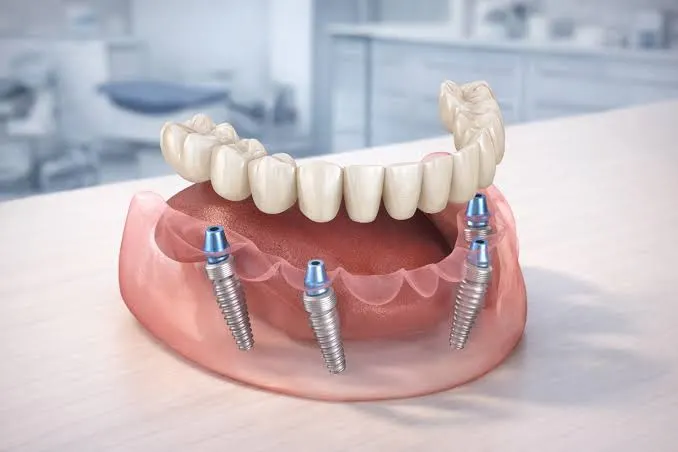
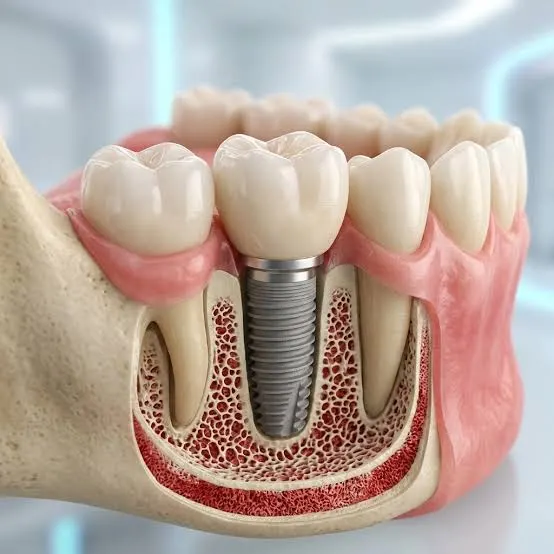
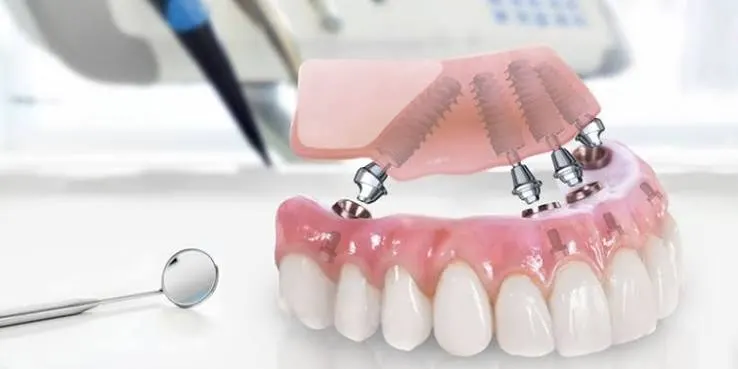
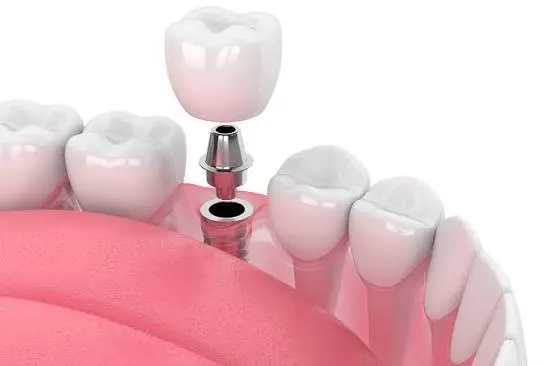
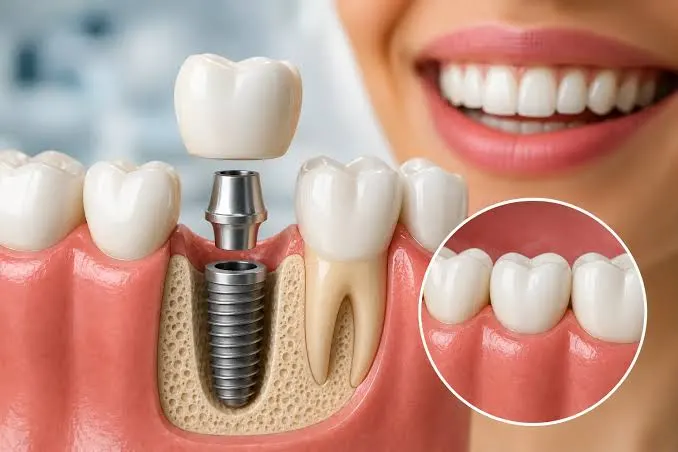
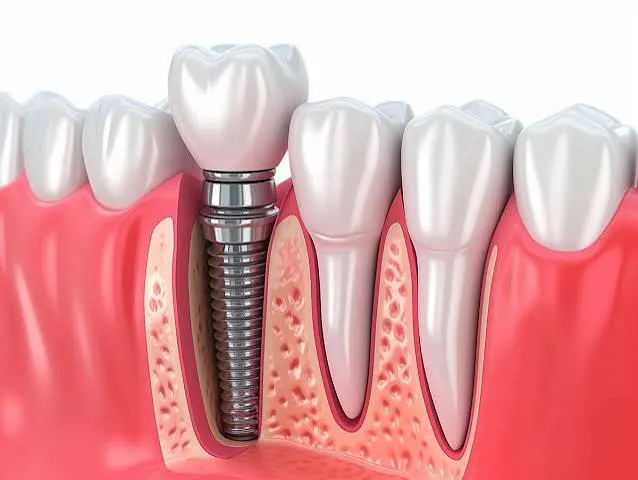
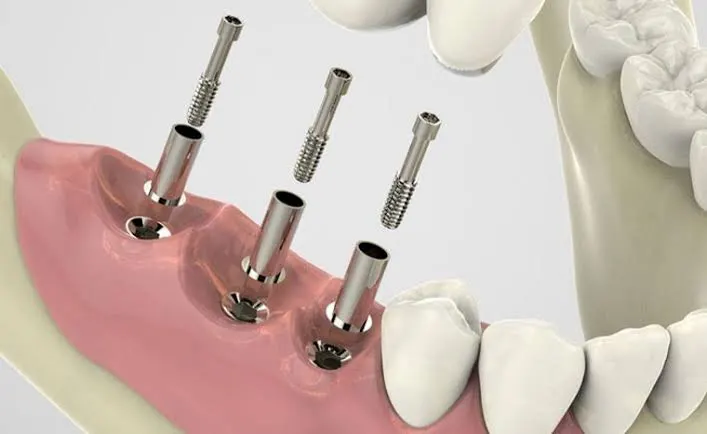
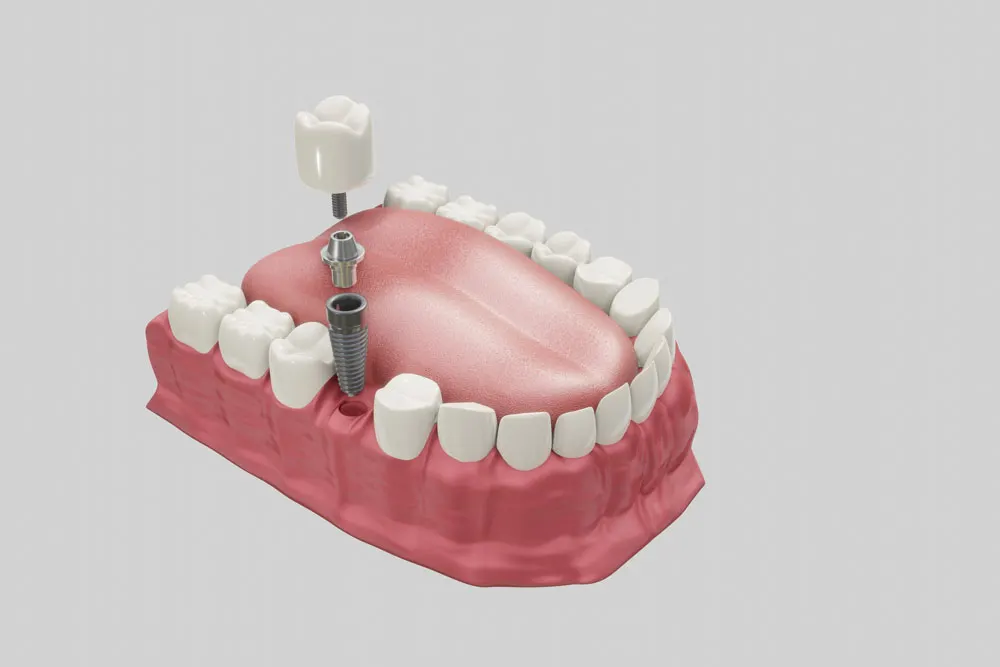
Dental implants are titanium screws that mimic not only the crown (visible part) but also the root of a missing tooth. Placed in the jawbone through a surgical procedure, the implant fuses with the bone (osseointegration) and acts as an artificial root. The biggest difference is that the implant does not require support from neighboring teeth. It is placed in the bone in the gap and carries the load alone.
Physiological Advantage of Implants
The main reason why doctors in Kahramanmaraş prioritize this method in implant treatment is “Bone Preservation”. The implant transmits the chewing force directly to the jawbone. This mechanical stimulation keeps bone cells alive and stops or significantly slows down bone loss seen after tooth extraction. Furthermore, since neighboring teeth are not touched, the integrity of healthy teeth is preserved.
Detailed Comparative Analysis
To facilitate patients’ decision-making process, we compared two treatment methods based on critical parameters. The following table has been prepared in light of scientific data:
| Comparison Criterion | Dental Implant Treatment | Traditional Bridge Prosthesis |
|---|---|---|
| Effect on Adjacent Teeth | Does not come into contact with or harm adjacent teeth. | Reduction (cutting) of adjacent teeth is necessary. |
| Jawbone Health | Protects bone, prevents resorption. | Has no effect in preventing bone resorption. |
| Treatment Duration | 3-6 months (Bone healing is expected). | 1-2 weeks (Completed in a short time). |
| Hygiene and Care | Can be cleaned individually with dental floss, close to natural. | Special bridge flosses are required for cleaning the underside of the body. |
| Long-Term Cost | Initial cost is high, but the lifespan is very long. | Initial cost is low, but replacement may be needed. |
Evaluation of Kahramanmaraş Region and Patient Profile
Regional factors and patient habits should also be considered in treatment selection. The structure of Kahramanmaraş cuisine (hard and fibrous foods, meat products, etc.) requires strong chewing performance.
- Chewing Force: Implants offer the closest chewing force to natural teeth because they are supported by bone. They are more advantageous and comfortable than bridges when consuming hard foods.
- Systemic Health Status: Implantation is a surgical procedure. For Kahramanmaraş patients with uncontrolled diabetes, advanced bone loss, or systemic diseases that prevent surgery, bridge prostheses may be a less risky and safer option.
Aesthetic Expectations: In cases of missing front teeth, the gumsPreserving the natural emergence profile is more possible with implants. Bridges can cause gum recession and metal reflection risks (in metal-supported porcelain) over time.
Which Should Be Chosen in Which Situation? If you have large fillings in your neighboring teeth, significant substance loss, or have undergone root canal treatment; covering these teeth will protect them, making a BRIDGE a logical option.
However; if your neighboring teeth are completely healthy, have no cavities, and your bone structure is suitable, IMPLANT is definitely the more medically correct approach to avoid touching healthy teeth.
Conclusion: Personalized Treatment Plan
In conclusion; there is no single, universally valid answer to the question “Implant or bridge?”. Although implants have superior biological and preventive dentistry features, they may not be applicable or necessary for every case. Bridge prostheses, when performed with the correct indication, are also successful restorations that serve for many years.