
Children’s Dental Check-up in Kahramanmaraş
Health is a holistic approach, and oral health is one of the most important parts of this whole. Especially when it comes to children in their developmental years, the condition of teeth is not just an aesthetic matter; it is a fundamental indicator of health directly linked to nutrition, speech, physical development, and psychological self-confidence. Conscious parents living in Kahramanmaraş should include oral and dental health check-ups in their routine while meticulously following their children’s vaccination schedules and general health check-ups. “Children’s dental check-up in Kahramanmaraş” is not just a doctor’s visit, but a preventive health service that determines the child’s quality of life.
Why is Routine Dental Check-up Essential?
Dental caries is one of the most common chronic diseases in children worldwide and in our country. However, caries does not develop overnight; it is a process that progresses over time. The primary goal of routine checkups is not to “solve problems after they arise” (curative medicine), but to “prevent problems before they occur” (preventive medicine).
Thanks to regular check-ups:
- Early Diagnosis: Invisible caries at the initial stage are detected and can be stopped even without the need for fillings.
- Developmental Monitoring: By monitoring the growth of jaw bones and the eruption sequence of teeth, possible orthodontic problems (malocclusion) can be predicted in advance.
- Habit Management: Habits that disrupt jaw structure, such as thumb sucking, nail biting, or long-term pacifier use, can be identified and addressed.
- Education: Correct tooth brushing techniques are demonstrated to the child and parent.
Kahramanmaraş Region and Risk Analysis
Each region has its own unique nutritional culture, and this culture directly affects oral health. Kahramanmaraş has a rich cuisine in terms of ice cream, sherbet-based desserts, tarhana, and local snacks. Frequent consumption of these foods is a risk factor that needs to be managed in terms of children’s dental health.
Especially sticky and sugary foods adhere to the tooth surface, providing a long-term environment for bacteria to produce acid. During pedodontic (child dentistry) check-ups, the dentist analyzes the child’s eating habits (“cariogenic,” i.e., cavity-causing foods) and provides the parent with a nutrition/hygiene plan appropriate to regional risks. The goal is not to ban, but to manage consumption correctly.
Examination Process: What is Done Step by Step?
In pediatric dentistry, the examination begins with a psychological preparation process, unlike in adults. The standard protocol applied in clinics in Kahramanmaraş generally includes the following stages:
1. Getting to Know Each Other and Building Trust
The first step is for the child to get to know the dentist and the environment. The instruments to be used are introduced to the child through play using the “Tell-Show-Do” technique. For example, the air-blowing instrument can be called a “wind machine.” This stage is critical for the child to overcome their fears (preventing the development of dental phobia).
2. Clinical Examination
The dentist checks all tooth surfaces, gums, tongue, and the inside of the cheeks with the help of a mirror and light. During this process:
– Existing cavities,
– Gum diseases (Gingivitis),
– Tartar,
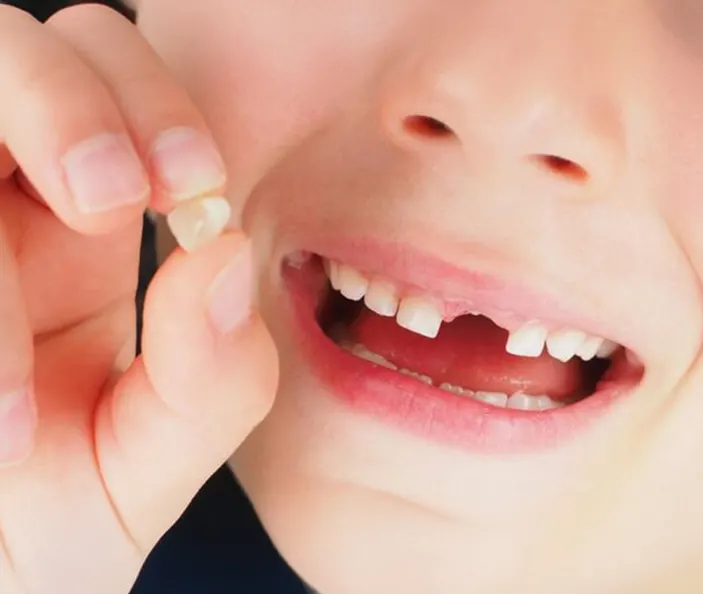
– The loosening of baby teeth are examined.
3. Radiological Evaluation (If Necessary)
Some cavities are hidden at the interdental spaces (the point where two teeth touch) and are not visible to the naked eye. In these cases, low-dose digital X-rays are used to check for hidden cavities and the condition of the permanent teeth underneath.
4. Risk Analysis and Planning
Based on the data obtained, the child’s “Cavity Risk Group” (Low, Medium, High) is determined. The next check-up appointment and preventive treatments (fluoride, fissure sealants, etc.) are planned according to this risk group.
The Difference Between Home Care and Professional Check-ups
Many parents may think, “We brush our teeth at home, there’s no need for check-ups.” However, there are significant differences between a professional assessment and home care:
| Assessment Criteria | Parental Supervision at Home | Pedodontist Supervision at the Clinic |
|---|---|---|
| Field of View | Only the front and chewing surfaces of the teeth are seen. | The back, inner, and interproximal surfaces are seen in detail with a mirror and light. |
| Caries Detection | Only large cavities are noticed. | Lesions at the initial stage (white spot) are detected. |
| Development Follow-up | The eruption of teeth is observed. | The position of permanent teeth within the bone is seen with X-rays. |
| Intervention Possibilities | Only brushing can be done. | Protective medical procedures such as fluoride varnish and fissure sealants are performed. |
Important Advice for Parents:
Your childDon’t wait for your child’s tooth to ache before taking them to the dentist. Pain is usually a sign that the problem has progressed and reached a nerve. A child who has a painful first experience with the dentist may develop a lifelong fear of dentists. Routine checkups (painless visits) help the child see the dentist as a “friend.”
How Often Should Checkups Be?
As a general rule, it is recommended that children visit the dentist every six months. However, this period is not standard; Depending on the child’s caries risk group, check-ups can vary:
- Low Risk Group: Children with good oral hygiene and no cavities (every 6-12 months).
- High Risk Group: Children with active cavities, inadequate brushing, or sugary diets (every 3 months).
Conclusion: Continuity for Healthy Smiles
Children’s dental check-ups in Kahramanmaraş are not a one-off solution, but an ongoing health monitoring process. Thanks to these check-ups, problems that can be solved with simple measures are prevented from turning into major and costly treatments (root canal treatment, early extraction, orthodontics) in the future. Taking your child’s hand and introducing them to a dentist is one of the most valuable health investments you can make for them.







