
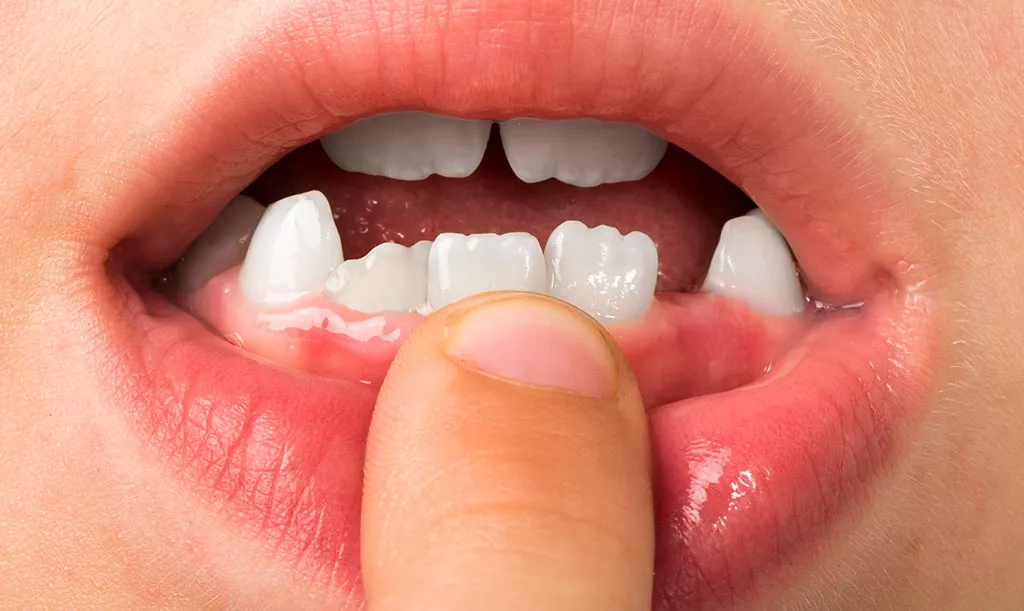
Root Canal Treatment in Children in Kahramanmaraş
One of the treatments that parents fear most in the dentist’s chair is “root canal treatment.” This concern increases even more when it comes to their children. Questions frequently asked among families living in Kahramanmaraş, such as “Can root canal treatment be done on a baby tooth?”, “Since it will fall out anyway, couldn’t we just pull it out?”, are actually legitimate concerns stemming from a lack of information. However, in modern pediatric dentistry (pedodontics), treating an infected baby tooth instead of extracting it and keeping it in the mouth is one of the most critical investments made for the child’s future oral health. Baby teeth are not only a means of chewing, but also the motor of jaw development and the guide of permanent teeth.
Anatomy and Infection Risk of Baby Teeth
The structure of baby teeth shows significant differences compared to adult (permanent) teeth. The enamel layer of baby teeth is thinner, and the “pulp chamber,” located in the center of the tooth and containing the nerve and blood vessel bundle, is much larger. This anatomical feature makes baby teeth more vulnerable to decay.
While it can take months for decay to reach the nerve in an adult tooth, this process can occur within weeks in baby teeth. When decay reaches the nerve, the child begins to experience sensitivity to hot and cold, pain while eating, and most notably, a throbbing pain that wakes them from sleep at night. This is the point where the filling limit is exceeded and root canal treatment (or amputation) becomes necessary.
Root Canal Treatment (Endodontics) or Amputation?
In pediatric dentistry, two main treatment methods are applied for decay that reaches the nerve of the tooth. The dentist decides which method to choose based on the depth of the infection and the vitality of the tooth.
1. 1. Amputation (Partial Root Canal Treatment)
If the decay has reached the nerve, but the infection only affects the nerve tissue in the upper part (crown) of the tooth, and the nerves in the roots are still healthy and alive, “Amputation” is performed. In this procedure, only the infected nerve in the upper part is removed. The living tissue in the roots is not touched and is covered with special medications. The aim is to preserve the vitality of the tooth and allow it to remain in the mouth until its natural shedding time. It is a shorter and more comfortable procedure for the child.
If the infection has progressed to the root canals, if an abscess has formed at the root tip, or if the tooth has completely lost its vitality (necrosis), “Root Canal Treatment” is applied. In this procedure, all the nerve tissue in both the upper part and the root canals is cleaned. The canals are disinfected and filled with special “absorbable” filling materials.
Differences Between Adult and Child Root Canal Treatment
Parents’ biggest fear is that the treatment will be as difficult as in adults. However, root canal treatment in baby teeth is technically different. The following table summarizes these differences:
| Feature | Adult Root Canal Treatment | Child (Primary Tooth) Root Canal Treatment |
|---|---|---|
| Root Canal Filling Material | Lifetime, non-dissolving materials (Gutta-percha). | Biocompatible explosives that dissolve with the primary tooth root. |
| Treatment Duration | Usually longer and sometimes multiple sessions. | Since children have little patience, it is usually finished in a single session. |
| The Tooth Outcome | The tooth remains in the mouth for life. | The tooth will loosen and fall out when the permanent tooth comes in. Root canal filling does not prevent this. |
| Need for Anesthesia | Deep anesthesia may be required. | Less anesthetic solution is usually sufficient for baby teeth. |
Why Root Canal Treatment Instead of Extraction?
The most frequent question that pedodontists in clinics in Kahramanmaraş encounter is: “Doctor, it will fall out anyway, why are we torturing the child by doing a root canal, couldn’t we just extract it?” The answer to this question lies in the “Space Maintainer” function of the baby tooth.
- Natural Space Maintainer: A baby tooth protects the developing permanent tooth between its roots and guides it to erupt. If a baby tooth is extracted prematurely, this guide is lost.
- Space Loss and Crowding: When a baby tooth is extracted, the teeth behind and in front tilt into the resulting space. The space for the permanent tooth underneath is blocked. This situation causes the child to undergo costly “Orthodontic Treatment” for years to come.
- Jaw Development: Bone loss begins in the edentulous area, and jaw development slows down because chewing function decreases.
TreatmentThe Treatment Process and Child Preparation
Kahramanmaraş pediatric dental clinics are designed to manage the treatment process “without trauma”. The steps are as follows:
First, the gums are numbed with fruit-flavored gels so that the child does not feel the pain of the needle. Then, local anesthesia is applied. Decayed and infected nerve tissues are cleaned. After amputation or root canal treatment, the top of the tooth is covered with a filling. If the tooth has lost too much substance, it is restored with a “Stainless Steel Crown” (Metal veneer) as a filling will not hold. Things to Consider After Treatment
The child’s pain is immediately relieved after root canal treatment. However, care should be taken to prevent them from biting their lip and cheek until the numbness wears off (approximately 2 hours). Mild sensitivity on the first day after the procedure is normal. Parents should not neglect the care (brushing) of the treated tooth. Because there is no rule that a tooth that has undergone root canal treatment will not decay again; new decay may start around the tooth.
Conclusion: Pain-Free Smiles, Healthy Future
Waking up at night with your child’s pain or facial swelling can be frightening. However, thanks to the possibilities of modern medicine and the approaches of expert physicians in Kahramanmaraş, it is possible to treat these teeth instead of extracting them. Every baby tooth preserved in the mouth through root canal treatment is a guarantee of your child’s future proper tooth alignment and healthy chewing function.







