Preventive Dental Treatments in Kahramanmaraş
In the traditional understanding of dentistry, patients generally tended to visit clinics only when their teeth ached or when cavities formed. However, modern medicine is shaped by the principle of “prevention” rather than “treatment”. Preventive dental treatments in Kahramanmaraş are a discipline that aims to eliminate risk factors and strengthen tissues before oral and dental health deteriorates. This approach is a sustainable health model that covers not only children but also adults and protects both biological tissue and economic resources in the long term.
What is Preventive Dentistry?
Preventive dentistry encompasses all procedures performed to prevent the formation of disease-causing agents (bacterial plaque, tartar, acid attacks) in the oral cavity or to prevent these agents from damaging the teeth. These protocols, applied in dental clinics in Kahramanmaraş, begin with individual risk analyses. Because each individual’s saliva composition, tooth alignment, and dietary habits are different, the preventive treatment plan should also be personalized.
Kahramanmaraş Region and Dietary Risks
Kahramanmaraş is known for its ice cream, desserts, and rich, carbohydrate-heavy cuisine. However, from an oral health perspective, frequent consumption of sticky and sugary foods is a factor that increases the “cavity risk group.” Ice cream, fruit leather, and syrupy desserts, which are frequently consumed, especially by children, stick to the tooth surface, creating a long-term breeding ground for bacteria to produce acid. The importance of preventive treatments in this region lies precisely in balancing the risk created by these dietary habits.
Basic Preventive Applications
The basic procedures applied to prevent tooth decay and gum disease are as follows:
1. Fissure Sealant
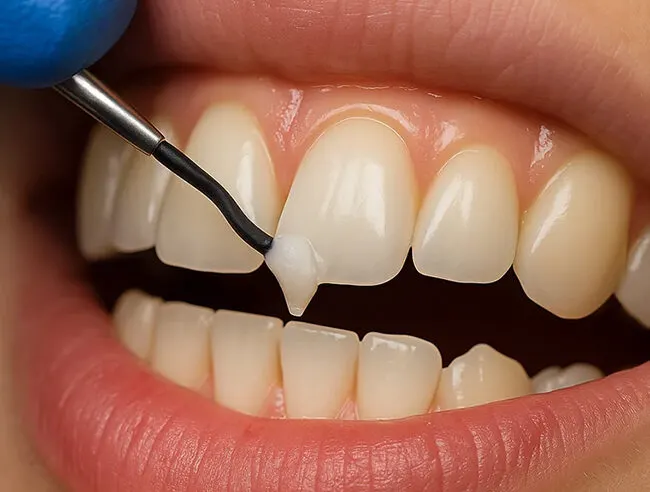
The deep grooves (fissures) on the chewing surfaces of molars are too narrow for toothbrush bristles to reach. Bacteria settle here, forming “hidden cavities.” In fissure sealing, these grooves are sealed with a fluid and protective filling material without removing any material from the tooth surface (no drilling). This physically prevents food accumulation.
2. Professional Fluoride Applications
Fluoride strengthens the hydroxyapatite crystals, the building blocks of tooth enamel, transforming them into “fluoroapatite” crystals that are more resistant to acid. Fluoride varnishes or gels, applied at specific intervals (every 3 or 6 months) under the supervision of a dentist, protect the tooth enamel like armor and can stop early-stage cavities (white spot lesions).
3. Space Maintainers
Baby teeth hold space for the permanent teeth that will erupt underneath. If a baby tooth is extracted prematurely, a “space maintainer” should be placed to preserve this space. This is the most important protective orthodontic procedure that prevents future crowding and the need for braces.
4. Detartration (Dental Tartar Removal)
Dental calculus is hardened bacterial plaque and cannot be removed by brushing. It can occur not only in adults but also in children. Removing dental calculus with ultrasonic devices is the most fundamental procedure to prevent gum recession and bone loss (periodontitis).
Comparison of Preventive and Restorative Treatment
To understand why preventive treatments should be prioritized, it is important to compare them with interventions performed after the disease has developed:
| Criteria | Preventive Treatments (e.g., Fissure Sealant) | Restorative Treatments (e.g., Filling/Root Canal) |
|---|---|---|
| Tissue Loss | No substance is removed from the tooth, tissue is preserved. | The tooth is scraped to clean the decayed tissue. |
| Pain and Anesthesia | It is painless, Does not require needles (anesthesia). | Requires anesthesia, post-procedure sensitivity may occur. |
| Cost and Time | More economical, the procedure is very short. | More expensive, treatment sessions may be longer. |
| Psychological Impact | Does not create fear, establishes a relationship of trust with the doctor. | May cause anxiety (phobia) in children. |
A Medical Fact:
Tooth decay is a contagious disease. Decay-causing bacteria (Mutans Streptococci) can be transmitted from parents to children through shared spoons or kisses. Therefore, preventive medicine is an awareness process that encompasses not only the child but the entire family. Without improving the oral health of the parents, complete protection for the child cannot be ensured.
Personalized Preventive Programs
In modern dental clinics in Kahramanmaraş, “Caries Risk Assessment” is performed. Instead of applying a standard procedure to each individual, it is tailored to factors such as salivary flow rate, frequency of feeding, number of existing fillings, and oral hygiene habits.An individual protection plan is developed.
High Risk Group: Check-ups every 3 months and intensive fluoride application.
Low Risk Group: Check-ups every 6-12 months and standard hygiene training.
Conclusion: The Most Valuable Investment in Health
Preventive dental treatments in Kahramanmaraş represent the most humane and biological face of dentistry. It is possible to ensure that teeth remain in the mouth for a lifetime by strengthening their natural structure without cutting them, fillings, or root canal treatment. Remember that even the best filling or the best implant cannot be as biocompatible and valuable as a person’s own natural tooth tissue. Regular check-ups and preventive applications are the key to a healthy future.