
Tooth Extraction Treatment Process in Kahramanmaraş: Your Biological Healing Journey from Start to Finish with Dentocare Clinic
In dental practice, tooth extraction, which is generally perceived by patients as a single and momentary event, is actually only the first step of a comprehensive treatment process that lasts for weeks or even months, during which the body’s remarkable biological repair mechanisms are activated. This journey begins with the removal of a tooth that is painful, infected, or has caused structural damage in the jawbone; it continues with wound closure, the shaping of the soft tissue (gum), and finally ends when the jawbone rebuilds that empty space with its own cellular structure. Dentocare Clinic, which applies advanced treatment protocols in oral and maxillofacial surgery in the Kahramanmaraş region, approaches the tooth extraction procedure not merely as “removing the tooth,” but as a clinical healing schedule that must be meticulously managed from beginning to end.
The success of a tooth extraction treatment process begins with the diagnosis made on the very first day you step into the clinic and continues until the empty space left by that tooth is ultimately restored with a successful implant or prosthetic treatment. No matter how flawless the atraumatic (damage-free) surgical technique applied by the dentist may be, the key to getting through this process without complications is for the patient to understand what is happening in their body during the postoperative stages and to follow the dentist’s instructions exactly. In order to eliminate the patient anxieties caused by the “uncertainty of the process,” the specialist dentists at Dentocare Clinic plan and manage with full transparency everything that awaits you, from the pre-operative preparation stage to the long-term bone regeneration phase after the procedure.
Where Does the Treatment Process Begin? The Pre-Operative Preparation Stage
At Dentocare Clinic, the tooth extraction treatment process begins not at the moment the surgical instruments are arranged on the table, but at the moment the patient’s medical history and oral condition are analyzed in detail. In the extraction of impacted wisdom teeth, cystic lesions, or severely abscessed teeth, rather than following a “let’s pull it out immediately” approach, the essential principle is to prepare the body for the surgical procedure. If there is an acute (active) infection in the tooth and noticeable swelling on the face, the acidic environment in the region may prevent local anesthesia from taking effect properly (numbing), while also increasing the risk of bacteria entering the bloodstream.
In such cases, our dentist prepares a personalized antibiotic and anti-inflammatory (swelling-reducing) prescription for you as the first step of the treatment process. Your extraction appointment is then scheduled after a 3-to-5-day suppression period during which you take your medication regularly. In addition, for patients with heart conditions, high blood pressure, or diabetes, blood values and blood-thinner dosage are coordinated with the patient’s own physician (consultation) and adjusted to make surgery as safe as possible.
The Surgical Stage: Removal of the Tooth and Laying the Biological Foundation
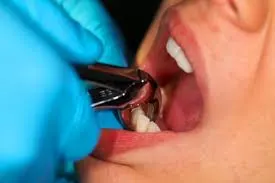
When the day of the procedure arrives, the surgical stage begins with our pain-free anesthesia protocol. After our dentist loosens the ligaments around the tooth and removes it from the jawbone, the process moves on to the stage that truly determines the treatment outcome: Socket Management (cleaning the extraction site). The socket (alveolar socket) from which the tooth is removed is thoroughly cleared of infected tissue using special surgical curettes. Healthy bleeding is then initiated in the area to support the formation of the valuable blood clot that signals the body’s healing response.
In complicated extractions where necessary (such as impacted tooth surgeries or areas with vertical bone loss), the extraction socket is not left completely open. Instead, the wound edges are brought closer together with dissolvable aesthetic sutures (primary closure), or PRF (stem-cell-supported blood clot) is placed in the area in order to accelerate the healing process at the cellular level right at the surgical table.
Dentocare Clinic Healing Timeline: What Is Happening in Your Body?
Once you leave the dental chair and return home, your body initiates an extraordinary cellular reconstruction process to close that empty space. To help you understand whether the process is progressing normally or whether there is a problem, we have summarized the scientific healing timeline for you in the table below:
| Timeline | Biological Healing Phase (Cellular Condition) | What the Patient Feels and What to Pay Attention To |
|---|---|---|
| First 24 Hours | Hemostasis (Clotting) Phase: Bleeding stops, and a dark red, gel-like protective fibrin (clot) network forms inside the extraction socket. | Tasting a slight oozing of blood is normal. Not spitting, not using a straw, and avoiding hot foods are essential to protect the clot. |
| Days 1–3 | Inflammation (Swelling) Phase: Repair cells (leukocytes) flood the area. As blood flow increases, mild swelling begins in the tissues. | Especially after impacted tooth extractions, swelling in the cheek reaches its maximum. Regular ice compresses and the painkillers prescribed by the dentist help make this stage more comfortable. |
| Weeks 1–2 | Granulation and Epithelialization: The clot is replaced by new pinkish-white tissue (granulation), and the gum surface begins to close slowly. | Pain and swelling completely subside. If sutures were placed (and they are of the non-dissolvable type), they are removed painlessly at Dentocare Clinic. Normal chewing can be resumed. |
| Months 3–6 | Bone Formation (Re-ossification): The gum has fully closed. Beneath the extraction site, the jawbone rebuilds the area by forming its own cellular network (osteoblasts) and calcifying the space. | The patient may completely forget that a tooth was ever extracted there. Since the jawbone has fully hardened, this stage is the most ideal period for placing a dental implant. |
Complications That Can Disrupt the Treatment Process and Our Solutions
Although the post-extraction process usually progresses smoothly, complications may rarely develop due to failure to follow care instructions or because of systemic factors. At Dentocare Clinic, you are not alone throughout your treatment process; our expert team is ready to intervene in any unfavorable scenario.
- Alveolitis (Dry Socket): Usually occurs within the first 3 days as a result of smoking or spitting, which dislodges the blood clot. Since the bone becomes exposed, it causes severe pain radiating to the ear. When you visit our clinic, the area is irrigated and special soothing dressings are placed to relieve the pain immediately.
- Persistent Swelling and Infection: If, 4–5 days after the procedure, the swelling increases instead of decreasing and turns into fever and difficulty swallowing, this indicates a secondary infection. In such cases, the antibiotic protocol at our clinic is updated and the area is thoroughly cleaned.
- Trismus (Jaw Locking): Especially after difficult wisdom tooth surgeries, muscle spasm (trismus) may develop because the jaw has been held open for a long time. This condition is overcome in a short time with the warm compresses and muscle-relaxation exercises recommended by our dentist.
The Final Link in the Process: Replacing the Missing Tooth
In Dentocare Clinic’s philosophy, the tooth extraction treatment process does not end when the wound closes; it ends when the lost function, phonetics (speech), and aesthetics are restored to the patient. If the space left by an extracted tooth is left empty for months or years, the body perceives the jawbone in that area as “no longer useful,” and the bone begins to resorb both horizontally and vertically. The neighboring teeth tip into the gap, while the tooth in the opposing jaw grows toward that space, disrupting the entire balance of your jaw closure (TMJ).
For this reason, the final destination of your healing timeline is the rehabilitation of that area. Once the bone formation phase has been completed in a healthy way (or, in suitable cases, during the same session as the extraction), our clinic’s implantology specialists step in. By planning biocompatible titanium implants that mimic the root of your missing tooth, or highly aesthetic zirconia bridges, the missing puzzle piece in your smile is completed perfectly.
The Right Place Where Patience and Professionalism Meet
The tooth extraction process is not just a single “moment”; it is the whole of correct decisions, atraumatic surgery, and a healing schedule that respects the patient’s body. Going through this process not with hearsay information, but with scientific facts and under the supervision of specialist dentists, is the best investment you can make for the future of your oral health.
If you have a tooth that cannot be saved and you are avoiding treatment because of concerns such as “What will happen after it is extracted, and how will it heal?”, it is time to get through this difficult process with a reliable guide. Kahramanmaraş Dentocare Clinic accompanies you every step of your healing journey with transparent treatment protocols, advanced clinical infrastructure, and a team of specialist dentists who are always by your side. Contact us now for a safe surgical process and flawless restoration planning, and let us begin the journey to your healthy smile today.







