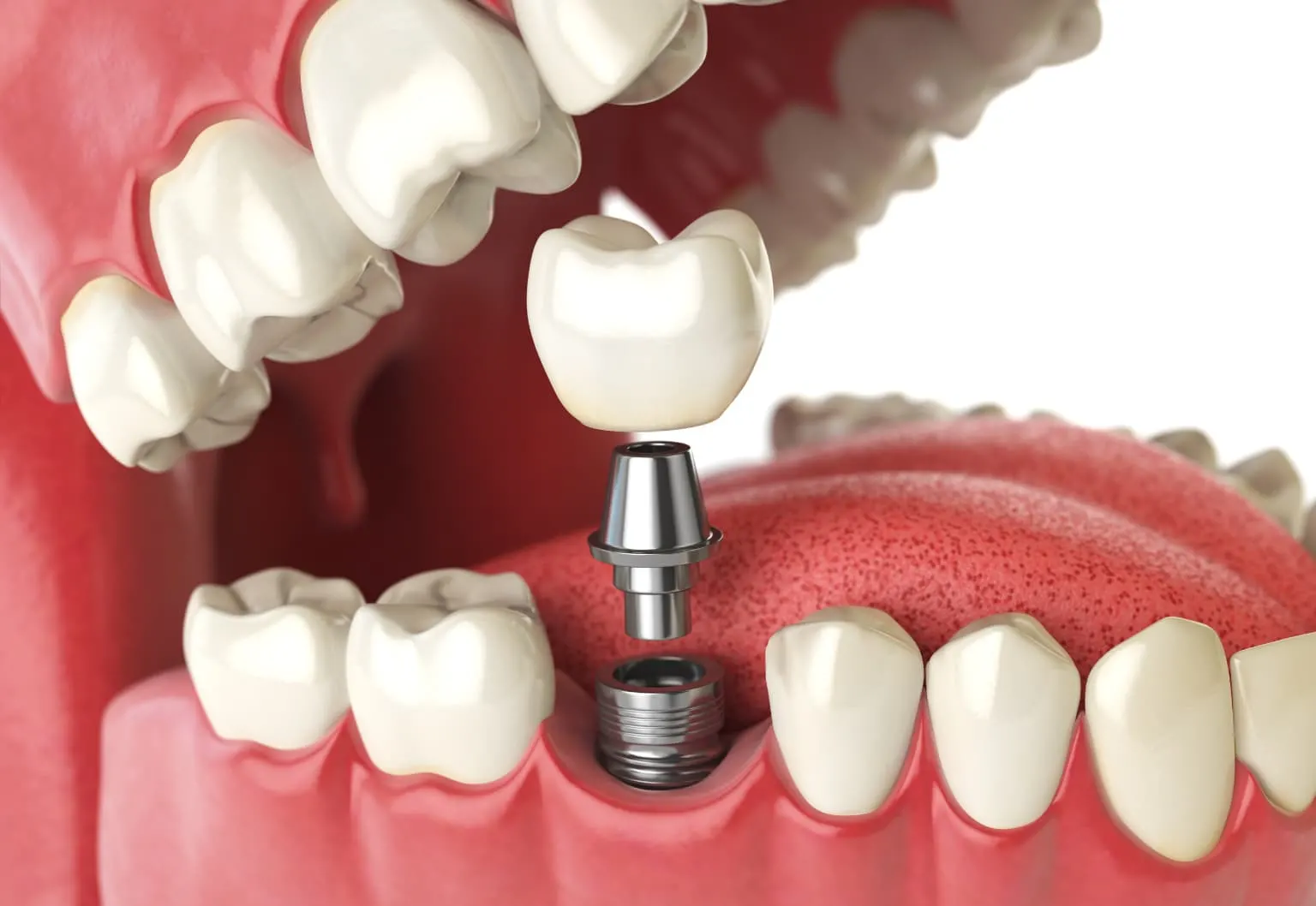
The answer to how implant measurements are taken has two stages. Before surgery, the bone measurements are obtained with 3D tomography and an oral examination, and the diameter, length and location of the implant are planned. After the implants have fused with the bone, an intraoral impression or a traditional impression is taken for the prosthesis.
Short answer: how measurement and planning are done
Measurement and planning are done by the dentist imaging your bone and choosing the implant accordingly. The process generally moves forward in this order:
- Examination and evaluation inside the mouth
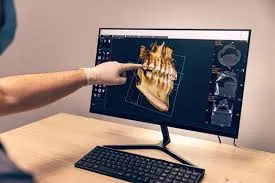
- Examining bone height, thickness and the position of the nerve and sinus with tomography
- Planning the number, diameter and length of the implants
- Surgery and the healing period
- Taking the impression for the prosthesis and placing the prosthesis
For details of the tests, you can look at our article on tomography and examination before an implant.
Diameter and length are determined with tomography
The diameter and length of the implant are chosen according to the bone structure seen on the 3D tomography. Because every mouth and every tooth area is different, there is no ready-made measurement.
During planning, the dentist looks at these points:
- The height and thickness of the bone
- The distance to the nerve canal in the lower jaw
- The position of the sinus cavity in the upper jaw
- The relationship with neighboring teeth and the opposing jaw
- The type of prosthesis to be made on top of the implant
The aim is to place the implant so that it stands firmly in the bone but does not harm neighboring structures. For this reason, the diameter and length decision can only be given after the examination and imaging.
The difference between intraoral and traditional impressions
In a traditional impression, a mold of the teeth and implants is taken with a tray filled with impression material, while in an intraoral impression a scanner records the teeth and the implant position as an image. The aim of both is the same: to make the prosthesis fit exactly on the implant and the opposing teeth.
Because no impression material is used in intraoral scanning, some people find the process easier. The digital record is easily stored on a computer and used in the design of the prosthesis. A traditional impression, on the other hand, is a method the dentist may prefer in some situations, for example in wide and complex cases. Which one is suitable is decided by the dentist according to the structure of the case.
When the impression is taken at the prosthesis stage
The prosthesis impression is taken after it is confirmed that the implant has fused with the bone. This fusion process varies from person to person and with the condition of the bone, so the dentist determines the suitable time at a check-up.
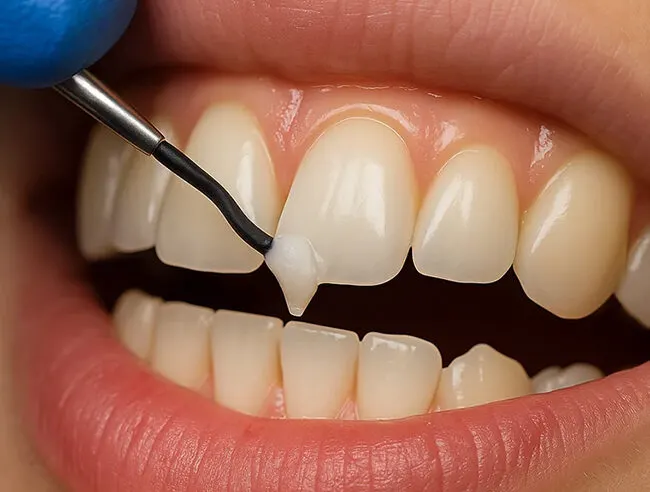
After the impression is taken, the prosthesis is prepared in the laboratory or in a digital environment, then a try-in is done. At the try-in, fit, color, shape and bite are checked; if needed, corrections are made and then the prosthesis is placed. The article on the stages of implant treatment may be useful for the options of covering material.
What determines how many implants a jaw needs
The number of implants needed varies with the number of missing teeth, the quality of the bone and the chosen type of prosthesis. A fixed number does not apply to everyone.
The main determining factors are as follows:
- Whether the missing teeth are a single tooth, a few or all teeth
- The amount and hardness of the bone
- The different bone structure of the lower and upper jaw; in the upper jaw the bone is generally more porous, so the plan may be different
- Whether the prosthesis is fixed or removable
- Chewing force and habits such as clenching the teeth
One implant generally replaces one tooth. Where a few teeth are missing, fewer implants can sometimes be used with a bridge structure. For a full jaw there are methods such as All-on-4 and All-on-6; take a look at the article on the difference between All-on-4 and All-on-6 for their differences.
How planning changes in thin bone
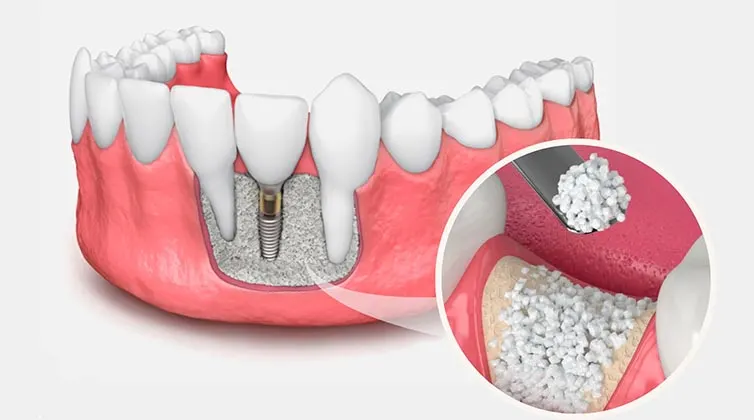
If the bone is thin, the plan changes toward strengthening the bone or choosing an implant that suits the existing bone. Tomography is the basis of this decision.
Depending on the situation, the dentist may consider increasing bone volume with a bone graft, sinus lifting in the upper jaw or using a thinner-diameter implant. Which one is suitable depends on the thickness of the bone and the area. For the importance of the jawbone, you can look at the article the jawbone and implants.
How planning is done for a patient with no teeth at all
For a patient with no teeth at all, the plan is made by evaluating the bone condition of the whole jaw with tomography and choosing a type of prosthesis that suits the patient’s expectations. There are various options: fixed prostheses (such as All-on-4 and All-on-6) and an implant-retained removable prosthesis (overdenture). The number and placement are calculated separately for each jaw according to the bone structure.
If the bone is insufficient, bone reinforcement may be needed first. The decision is given after the dentist’s examination.
Frequently asked questions
How are implant measurements taken?
First the bone measurements are obtained with tomography and examination and the implants are planned; after the implants have fused with the bone, an intraoral scan or a traditional impression is taken for the prosthesis.
How are implant diameter and length chosen?
They are chosen by the dentist, taking into account the bone height, thickness, the position of the nerve and sinus seen on the tomography, and the prosthesis plan. These values differ from person to person.
How many implants are placed in a jaw?
The number is determined by the number of missing teeth, the bone quality and the type of prosthesis. While one implant may be enough for a single tooth, methods such as All-on-4 or All-on-6 can be used in full-jaw plans.
Can an implant be placed in someone with no teeth at all?
Yes, it can be done if the bone is sufficient. If the bone is insufficient, it can be supported with a bone graft; fixed prosthesis or implant-retained removable prosthesis options are evaluated.
Can an implant be placed in thin bone?
In most cases it can. The dentist considers strengthening the bone with a bone graft, sinus lifting or a thinner implant suited to the bone; the decision is made with tomography.
If you would like to learn the right plan for your own mouth, you can set up an appointment with Dentocare Klinik through our contact page.