Porcelain veneers are often discussed as a way to change the colour and shape of front teeth. However, not every cosmetic goal can be met with veneers, and not every tooth is suitable for them. That is why the question of who is not a candidate for veneers matters just as much as who is. In some cases veneers may not be appropriate at all; in others, another problem needs to be treated first. In this article we look at the situations where veneers are unsuitable or should be postponed, the reasons behind them and the alternatives your dentist may consider instead.
Why are veneers not suitable for every tooth?
A veneer is a thin ceramic shell, usually 0.3-0.7 millimetres thick, bonded only to the front surface of a tooth. This thinness is an aesthetic advantage, but it also brings some limits:
- Veneers rely largely on bonding to enamel. If there is not enough enamel, the bond is weaker.
- Because they are thin, they can crack or come off under excessive forces.
- They cover only the front surface, so they do not strengthen a structurally weak tooth.
- They are not expected to achieve large changes in shape or position on their own.
So the decision is based not only on appearance but also on the structure of the teeth, the bite and personal habits. You can find general information about porcelain veneer treatment on the related treatment page.
Who is not a candidate for veneers? The main situations
In many cases veneers are not considered the first option when there is:
- Insufficient enamel: teeth whose enamel has become very thin through acid erosion, aggressive brushing or advanced wear may not hold a veneer well over time.
- Large fillings or fractures: if a significant part of the tooth is filling material or there is an extensive fracture, a crown that covers the whole tooth may protect it better.
- Weakened root-canal-treated teeth: these teeth can be more prone to fracture and often darken; a veneer may fall short both in masking the colour and in protecting the tooth.
- Very dark discolouration: a thin layer cannot always fully mask a severely darkened tooth.
- Significant crowding or bite problems: if teeth are very crowded, protruding or set back, trying to correct this with veneers can mean removing too much tooth structure.
- Bites where the lower teeth press firmly against the upper teeth: in situations such as a deep bite, veneers may be placed under excessive load.
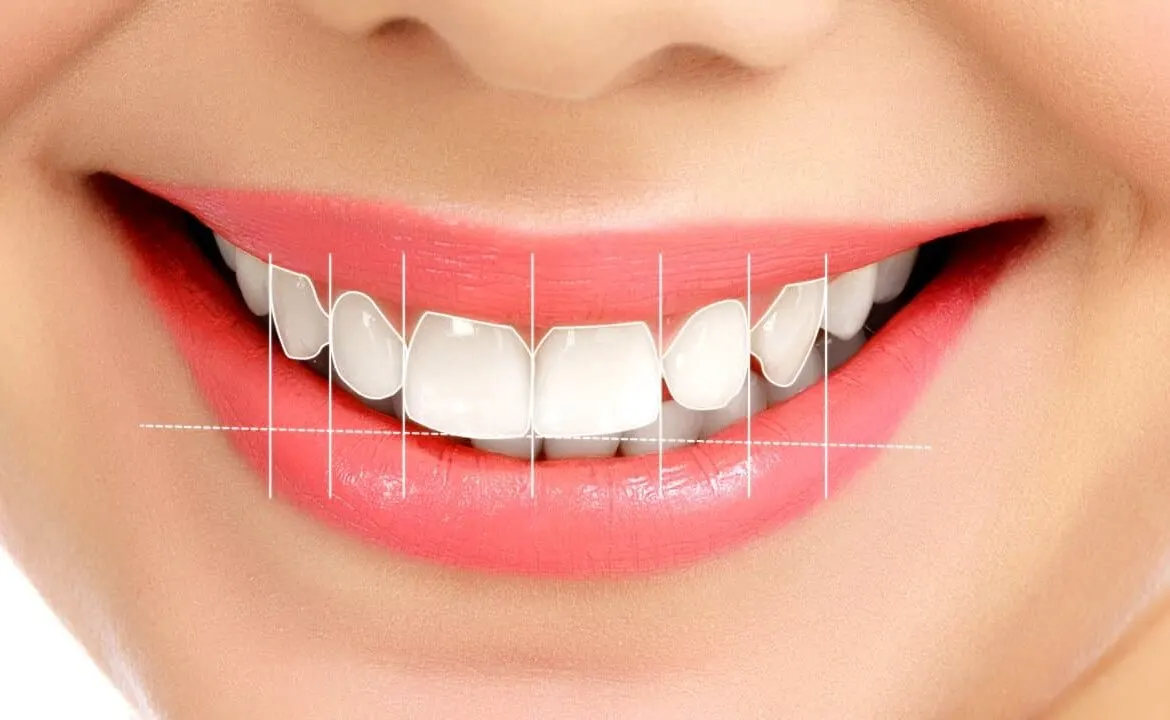
These conditions are identified during the examination. Your dentist assesses each tooth, checks enamel thickness and the size of existing fillings, evaluates the bite and requests X-rays if needed. In some cases photographs and a digital design are used to show how much change veneers could realistically achieve. After this assessment veneers may not be advised, or they may be suggested for only some teeth; it is also possible to plan veneers on some teeth and a different restoration on others in the same mouth.
Conditions that need treatment first
Some conditions do not rule out veneers permanently but need to be addressed before treatment:
- Gum disease: bleeding, inflamed gums or periodontitis are treated first. Unhealthy gums affect both bonding and the cosmetic result.
- Active decay: any decay in the teeth to be veneered, or in neighbouring teeth, is treated beforehand.
- Clenching and grinding (bruxism): heavy grinding increases the risk of veneers breaking. In mild, controlled cases veneers may be planned with a night guard; in severe cases another approach may be suggested.
- Poor oral hygiene: without regular brushing and cleaning between the teeth, decay and gum problems can develop around veneer edges.
Age, habits and expectations
Veneers are generally not recommended for children and teenagers whose teeth and gums are still developing, because the gum level and tooth position can change over time. There is no strict age cut-off, but dentists want to be sure that development is complete.
Certain habits can also shorten the life of veneers:
- Biting nails, pens or glasses arms
- Opening packaging or bottle caps with your teeth
- Cracking hard shells with your front teeth
- Playing contact sports without a mouthguard
If these habits cannot be stopped, veneers may not be suitable. Smoking is another topic worth discussing at the examination, as it can contribute to staining along veneer edges and to gum problems. Realistic expectations matter too. A wish for very white, uniform teeth, or the idea that veneers will solve every problem, should be talked through openly.
What are the alternatives if veneers are not suitable?
If veneers are not a good fit, your dentist may suggest other options depending on the problem:
- Teeth whitening: may be the first step if the only concern is colour.
- Composite bonding: a less invasive option for small chips and gaps, although it can stain over time and may need renewing.
- Orthodontic treatment: corrects tooth position in cases of crowding or bite problems; cosmetic treatment can be planned afterwards if needed.
- Zirconia crowns: for teeth with large fillings, fractures or root canal treatment, zirconia crowns that cover the whole tooth may be more suitable.
Each option has its own advantages and limits. For an overview of how these options fit into wider planning, see the page on smile design. The final decision is made by weighing the condition of your teeth together with your expectations.
Frequently asked questions
Can people who grind their teeth get veneers?
In mild cases of grinding that can be controlled with a night guard, veneers may still be planned. With severe bruxism, the risk of veneers chipping or coming off increases. In that case your dentist may first focus on managing the grinding or suggest a different type of restoration.
Can a veneer be placed on a root-canal-treated tooth?
It may be possible on some root-canal-treated teeth that have kept most of their structure and have not darkened much. However, these teeth are often weakened and discoloured, so a crown that covers the whole tooth, such as a zirconia crown, is usually considered. The decision depends on how much healthy tooth remains.
Can veneers fix crooked teeth?
Veneers can improve the appearance of mildly crooked teeth. With significant crowding, correcting the position with veneers may require removing too much tooth structure. For that reason, orthodontic treatment is often suggested first.
Is there an age limit for veneers?
There is no strict upper age limit; if the teeth and gums are healthy, veneers can be considered later in life too. At the younger end, development of the teeth and gums should be complete. This is why veneers are generally not recommended for children and teenagers.
Veneers can be a suitable option for many people, but the structure of your teeth, the health of your gums and your habits all play a direct role. A dental examination in Kahramanmaraş, or wherever you live, is a good first step to find out whether veneers suit you and to discuss alternatives if needed.
This article is for general information only; the right treatment for you is decided by your dentist after an examination and any necessary tests.