Whether a smile looks natural and balanced does not depend only on how white the teeth are. The length and width of the teeth, how they relate to one another, how they sit with the lips and gums, and the overall structure of the face all work together. Smile design proportions help the dentist plan this balance, but they are guides adapted to each person rather than fixed templates. In this article we look at which proportions dentists consider in smile design, how the lip line and facial harmony are assessed, how this information is recorded and where its limits lie.
Facial harmony: the frame of the smile
In smile design, assessment starts with the face rather than the teeth. The dentist first looks at the general lines of the face and then tries to fit the teeth into that frame.
The main reference points are:
- Facial midline: An imaginary line running from the forehead through the tip of the nose to the chin. A midline between the upper front teeth that sits close to this line and runs vertically is generally perceived as harmonious. Small deviations of a few millimetres go unnoticed in most people.
- Interpupillary line: The horizontal line joining the pupils is used as a reference for the tilt of the front teeth’s biting edges and the gum level.
- Face shape and profile: The length and width of the face and how it looks from the side give clues about how prominent the teeth should be.
- Age and individual features: In younger people the front teeth usually look longer and more prominent, while with age the teeth wear and lip tone decreases. These differences are taken into account for a natural result.
Older ideas that the shape of the face strictly dictates tooth shape are now interpreted more flexibly; the face is a guiding reference only.
The lip line and smile line
The lips act like the curtain of the smile: they determine how much of the teeth and gums will show. That is why assessing the lips is central to planning.
- Tooth display at rest: With the lips slightly parted, it is considered natural for around 1 to 4 millimetres of the upper front teeth to show. This amount tends to decrease with age.
- Smile line: Depending on where the upper lip sits when you smile, dentists describe a low, medium or high smile line. With a medium smile line, most of the teeth and a small amount of gum are visible.
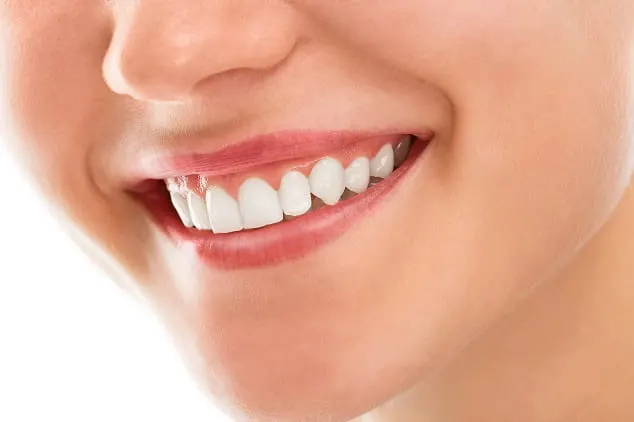
- Smile arc: When the curve formed by the biting edges of the upper front teeth follows the curve of the lower lip, the smile generally looks more youthful and balanced.
- Buccal corridors: The dark space between the back teeth and the cheeks when smiling. Corridors that are very wide, or absent altogether, can affect how natural the smile looks.
- Appearance during speech: The contact of the front teeth with the lower lip on “f” and “v” sounds helps determine where the biting edges should be.
How smile design proportions and tooth measurements are planned
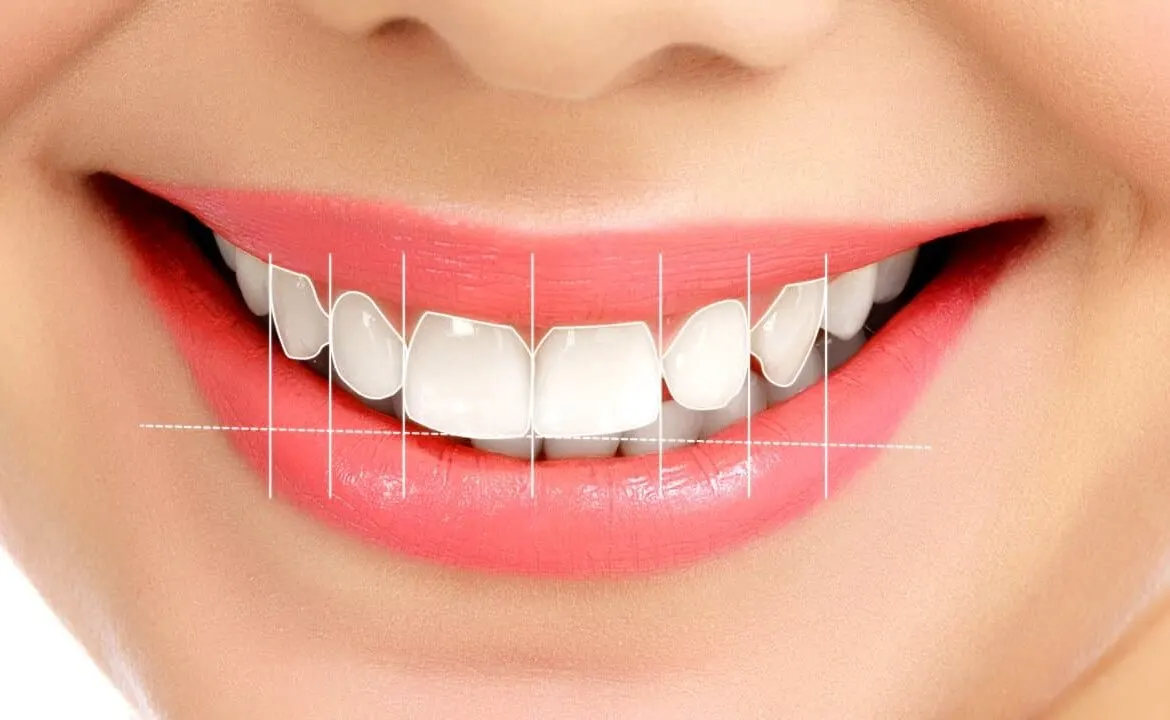
The proportions of each tooth and how teeth relate to one another are important factors in how harmonious a smile looks.
- Width-to-length ratio: In many studies, an upper central incisor whose width is roughly 75 to 85 per cent of its length is found to look balanced. Very square or very long teeth may fall outside this range.
- Proportions between teeth: Viewed from the front, a gradual decrease is expected in the visible widths of the central incisor, lateral incisor and canine. Mathematical ratios such as the golden proportion can be used as a starting point, but many natural smiles are known not to follow them exactly.
- Dominance of the central incisors: It is usually preferred that the upper central incisors are prominent in the smile and symmetrical with each other.
- Axial inclination: A slight tilt of the long axes of the front teeth towards the midline gives a natural look.
- Contact points and embrasures: Contact points that rise gradually from the midline outwards, and small V-shaped spaces between the biting edges, give the smile a natural character.
These measurements are assessed together with the shape and colour of the teeth. For an overview of the whole planning process, see this step-by-step guide to smile design.
Gum level and pink aesthetics
The gums frame the teeth and directly affect how proportions are perceived. The dentist assesses:
- Gum display when smiling: Showing around 0 to 2 millimetres of gum is generally considered balanced. More than this may be described as a gummy smile, and its cause (short teeth, upper lip movement, jaw structure) is investigated.
- Gum symmetry: It matters that the gum levels on the right and left sides are close to each other.
- Gingival zeniths: The position of the highest point of each tooth’s gum margin is assessed together with the tooth’s length and tilt.
Uneven gum levels can sometimes be corrected with gum aesthetics treatments. Not every gummy smile can be resolved this way, however; depending on the cause, orthodontic or other approaches may be needed.
How proportions are recorded, and their limits
These assessments start with observations at the examination and are supported by various records:
- Photographs of the face and smile from different angles, and videos of speaking and smiling
- Intraoral scans or impressions to create models of the teeth
- Measurements and designs carried out digitally
- A temporary trial (mock-up) in the mouth to test the planned shape
Digital smile design and aesthetic planning helps share these criteria visually and discuss expectations.
There are limits to be aware of. Most faces are not perfectly symmetrical, and slight asymmetries add character to a smile; the aim is a balanced, natural appearance rather than exact symmetry. The bite, tooth roots and bone, gum thickness and the amount of remaining tooth structure can all limit which proportions can be achieved. Trials and digital designs are a guide, but the final result may vary with the material, tissue healing and individual conditions.
Frequently asked questions
Is the golden ratio required in smile design?
No. The golden ratio is a historical reference that can be used for the width relationship between teeth. Research shows that many smiles considered natural and attractive do not match it exactly. Your dentist uses such ratios flexibly, according to your face and teeth.
Can a gummy smile be corrected with smile design?
It depends on the cause. Where teeth look short, gum contouring and restorations can help. Where it relates to upper lip movement or jaw structure, different treatments or planning together with other specialties may be needed.
Does everyone get the same tooth shape?
No. The shape, length and colour of the teeth are planned according to facial structure, age, lip movement and personal expectations. Even when the same criteria are used, the result is different for each person. The aim is a natural-looking smile that suits the individual face.
Can I see the planned smile before treatment?
A digital design and an in-mouth trial can show the approximate shape of the planned teeth. This is a useful tool for discussing proportions and expectations together. However, the final result may differ from the trial depending on the condition of the teeth, the material and healing.
Planning the right proportions together
A balanced smile is planned by interpreting measurements in light of your face, your lips and your oral health. If you are considering a change to your smile in Kahramanmaraş, a dental examination that assesses facial and lip analysis, tooth proportions and gum condition together can help you calmly plan the options that suit you.
This article is for general information only; the right treatment for you is decided by your dentist after an examination and any necessary tests.