Oral and Maxillofacial Surgeon in Kahramanmaraş
Oral and dental health is an integral part of overall body health. However, dental practices are not limited to treating cavities or tartar removal. Pathological conditions affecting the jaw bones, joints, salivary glands, and soft tissues of the mouth may require advanced surgical interventions. At this point, “Oral and Maxillofacial Surgery” comes into play, one of the most comprehensive specialties of dentistry. Kahramanmaraş is a city where high-quality health services are provided in this field, both with its university hospitals and its developed private clinic infrastructure. For citizens searching for an “oral and maxillofacial surgeon in Kahramanmaraş,” knowing when to consult this specialty is vital for receiving the correct treatment.
Who is an Oral, Dental and Maxillofacial Surgeon?
In order for a dentist to obtain the title of “Maxillofacial Surgeon,” they must successfully complete a 5-year Dental Faculty education, pass the Dental Specialization Examination (DUS), and complete a 4-5 year specialization training in the “Oral, Dental and Maxillofacial Surgery” department of universities. During this challenging training process, resident physicians gain competence in managing complex cases in the face and jaw region by undergoing rotations in advanced surgical techniques, anesthesia, pathology, otolaryngology, and plastic surgery. Therefore, not every dentist is an maxillofacial surgeon.
Treatments within the Specialization Area
The most frequently performed treatments in the clinical practice of oral, dental and maxillofacial surgeons working in Kahramanmaraş are as follows:
1. Impacted Tooth Surgery
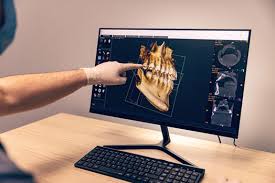
Wisdom teeth (third molars), canines (cuspid teeth), or premolars that fail to erupt due to a narrow jaw arch or malposition of the tooth require surgical extraction. Impacted teeth can lead to serious problems such as pain, infection, cyst formation, or resorption of the roots of adjacent teeth. The oral surgeon analyzes the proximity of the tooth to the nerve using 3D tomography and applies atraumatic surgical techniques that minimize the risk of nerve damage.
2. Dental Implant Surgery and Advanced Bone Surgery
The placement of implants used in the treatment of missing teeth into the jawbone is a surgical procedure. However, in cases where bone volume is insufficient (bone resorption), standard implant application is not possible. In this case, oral surgeons apply the following advanced techniques:
- Sinus Lifting: This is the procedure of lifting the sagging sinus floor in the posterior region of the upper jaw and adding bone graft material.
- Bone Augmentation (Grafting): This is the procedure of thickening and raising the jawbone with bone grafts obtained from the patient’s own bone (autogenous) or biomaterials.
- Box Technique and Split Osteotomy: This is the surgical widening of severely thinned jawbones.
3. Cyst and Tumor Surgery
Cysts and tumors of dental or non-dental origin can develop in the jawbones and oral soft tissues. These lesions usually have an insidious course and are detected incidentally during routine radiological examinations. Oral surgeons surgically remove (enucleation/resection) these pathological tissues and send them for pathological examination. Early intervention is critical to preserving the integrity of the jawbone.
4. Temporomandibular Joint (TMJ) Disorders
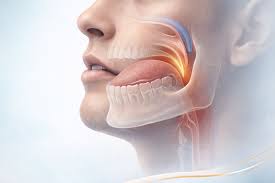
Problems such as clicking in the jaw joint, limited mouth opening, pain in front of the ear, and jaw locking are TMJ disorders. Treatment methods such as arthrocentesis (joint irrigation), Botox applications, splint therapy, or open joint surgery are applied by oral surgeons.
Differences Between a General Dentist and an Oral Surgeon
Patients knowing who to consult in which situation increases the success of treatment. The following table clarifies this distinction:
| Treatment Area | General Dentist | Oral and Maxillofacial Surgeon |
|---|---|---|
| Tooth Extraction | Extraction of normally erupted teeth. | Extraction of impacted, fractured rooted, and risky teeth close to nerves. |
| Implant | Standard implant application if sufficient bone is available. | Cases with advanced bone loss, sinus lifting, whole jaw rehabilitation. |
| Pathology | Drainage of simple abscesses. | Cyst and tumor resection, biopsy. |
| Temporomandibular Joint | Simple night guard fabrication. | Joint lavage (arthrocentesis), joint surgery, Botox. |
| Anesthesia | Local anesthesia. | Competence in working under local anesthesia, sedation, and general anesthesia. |
Surgical Treatment Process in Kahramanmaraş
In surgical clinics in Kahramanmaraş, the treatment process begins with a detailed radiological analysis. In addition to panoramic X-rays, “Dental Volumetric Tomography” (CBCT) devices, which show the bone structure in 3D, are the most important aids for surgeons. Thanks to tomography, the location of nerve channels, bone thickness, and the boundaries of the cyst are measured in millimeters. This technological infrastructure minimizes the risk of complications that may occur during the operation.
Post-Surgical Recovery and Care
The complement to a successful surgical procedure is proper post-operative care. Oral surgeons give the following advice to their patients after surgery:
- Bleeding Control: The inserted tampon should be bitten down on for 30-45 minutes; it should not be spit out. Spitting disrupts the clot and increases bleeding.
- Cold Application: Applying ice compresses intermittently externally (apply for 10 minutes, rest for 10 minutes) for the first 24 hours will reduce swelling (edema) and bruising that may occur on the face.
- Nutrition: In the first few days, warm, soft foods without particles should be consumed. Very hot drinks can delay wound healing.
- Oral Hygiene: Do not brush your teeth on the first day; from the next day onwards, brush your teeth except for the wound area and use the mouthwash recommended by your doctor.
- Smoking: Smoking impairs blood flow to the wound area, causing a very painful condition called “Alveolitis” (dry socket). It should absolutely not be smoked for the first 48-72 hours.
Conclusion: Entrust Your Health to Expert Hands
The search for an oral and maxillofacial surgeon in Kahramanmaraş is not a search for simple dental treatment, but a search for expertise for a surgical procedure. Maxillofacial surgery is a serious field requiring knowledge, experience, and technological equipment. For problems in the face, jaw, and mouth area, consulting expert physicians with documented competence will protect you from possible complications and help you regain your health as soon as possible.