
Common Misconceptions About Digital Dentistry
Myth 1: “Digital Dentistry is Only for Aesthetics”
The general belief is that digital technologies are only used in aesthetic procedures such as “Smile Design” or “Hollywood Smile”. It is thought that CAD/CAM devices are only used to produce porcelain veneers.
Reality: Digitalization at Every Stage of Treatment
Digital dentistry is at the heart of not only aesthetic but also functional and surgical treatments.
– Implant Surgery: 3D tomography and intraoral scanning data are combined to produce “Surgical Guides”. Thanks to this, the implant can be placed into the bone with millimeter precision, without sutures or incisions.
– Orthodontics: Clear aligner treatments (braceless treatment) are entirely based on digital planning and 3D printing technology.
– Filling Treatments: In teeth with extensive substance loss, instead of filling in the mouth, porcelain fillings (Inlay/Onlay) can be designed and produced using digital measurements.
Therefore, in a clinic in Kahramanmaraş, digital methods are used in a wide spectrum, from root canal treatment to oral surgery.
Myth 2: “Digital Methods Are Much More Expensive”
The concern that costs will skyrocket with the introduction of technology may push patients towards traditional methods. The perception that “computerized treatment is a luxury” is widespread.
Fact: Long-Term Cost and Time Savings
Although unit costs may appear different compared to traditional methods at first glance, the situation changes when a “total benefit” analysis is performed.
Time Cost: A veneer treatment that takes 3-4 sessions and spans weeks with the traditional method can be completed in a single session or 24 hours with the digital method. For a patient coming from the districts of Kahramanmaraş (for example, Elbistan or Afşin) to the center, travel expenses and time loss are minimized.
Error and Rework Cost: The margin of error in digital measurements is at the micron level. Risks such as the prosthesis not fitting or needing to be remade are very low. The absence of repeated appointments is an economic advantage for both the patient and the dentist.
Myth 3: “A Quickly Made Tooth Isn’t Strong”
The fact that the traditional porcelain veneer making process takes days has led patients to associate it with “labor and strength.” The fact that digital systems can produce the same tooth in 1-2 hours (One Day Dentistry) might lead to the prejudice that “it’s rushed, it will be fragile.”
The Truth: The Durability of Industrial Blocks
Porcelains used in digital dentistry are not made by hand with a mixture of powder and liquid. “Prefabricated Blocks” are used, compressed under high pressure and heat in a factory environment. These blocks have a much denser, more homogeneous, and flawless structure than what the human hand can produce.
The CAD/CAM device produces the tooth by milling these extremely hard blocks with diamond tips. Therefore, a digital porcelain crown fitted the same day in modern clinics in Kahramanmaraş is generally more durable and resistant to breakage than those made using traditional methods. Speed is not a compromise on quality, but rather the efficiency brought about by technology.
Myth 4: “The Machine is Replacing the Doctor”
Some patients may think that everything is done by the computer, the doctor’s role is diminished, and therefore the treatment will be “soulless” or “mechanical”.
Reality: Technology is Just a Tool
Digital dentistry does not eliminate the doctor; on the contrary, it enhances the doctor’s capabilities. The doctor is still the one who designs, defines the boundaries, makes aesthetic decisions, and applies the produced tooth to the mouth. The computer only serves as a “perfect assistant”.
Having an autopilot on an airplane is like having a pilotThis doesn’t mean there’s no need for it. Similarly, dentists in Kahramanmaraş use digital systems to make diagnoses and treatment plans more precise, but aesthetic vision and medical knowledge depend on the doctor’s experience.
Myth 5: “Digital X-rays Emit a Lot of Radiation”
The technological appearance of digital imaging devices (RVG, Panoramic, Tomography) can create a fear in some that “stronger beams mean more radiation.”
Fact: 80-90% Less Radiation
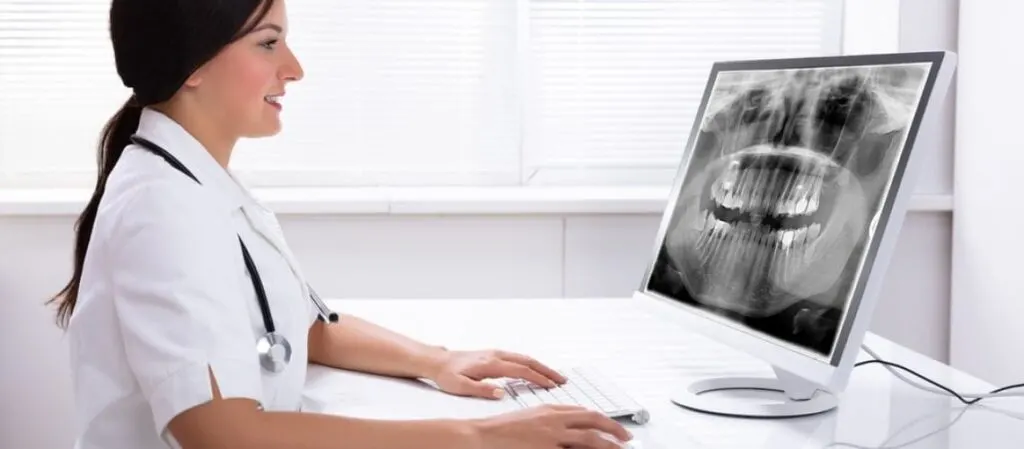
Digital radiography sensors are much more sensitive to X-rays than older types of X-ray films. Thanks to this, the radiation dose required to obtain a quality image has been reduced by 80-90% compared to traditional methods. Furthermore, the absence of chemicals like developing solutions offers an environmentally friendly approach.
Digital Dentistry: Myths vs. Facts
We have summarized the frequently encountered misconceptions in society and their scientific truths in the table below:
| Common Misconception (Myth) | Scientific Fact | Advantage for the Patient |
|---|---|---|
| “A spoon and toothpaste are essential for taking impressions.” | Digital impressions are taken with intraoral scanners (cameras). | There is no gag reflex, it is comfortable. |
| “Digital teeth look artificial.” | Multilayer blocks mimic the transparency of natural teeth. | Extremely natural and aesthetic Results. |
| “If the treatment time is short, the quality is low.” | Industrial blocks are more robust than manual ones. | Fast and long-lasting treatment. |
| “Only young physicians can use it.” | The best results are obtained when experience and technology are combined. | Error-free and predictable treatment. |
| “The same result is obtained in every clinic.” | Even if the device is the same, the vision of the physician who designed it makes a difference. | Personalized smile design. |
Digital Measurement and Comfort in Kahramanmaraş
In the traditional measurement method The metal spoons and dough-like substances used can cause gag reflexes and choking sensations in many patients. In Kahramanmaraş, clinics using digital dentistry are eliminating this problem.
A small camera called an “Intraoral Scanner” is moved around inside the mouth, transferring a 3D model of the teeth to a computer in seconds. This method:
– It is hygienic: No impression material residue is created.
– It is accurate: The dentist can instantly see and correct errors by magnifying the impression 20 times on the screen.
– It is fast: The impression does not need to be shipped to a laboratory; it reaches the technician via the internet in seconds.
Conclusion: The Technology of the Future in Kahramanmaraş
In short; “Common Misconceptions About Digital Dentistry” are generally the result of a natural resistance to innovation and a lack of information. Digitalization is not a tool that mechanizes dentistry, but rather one that eliminates human error, prioritizes patient comfort, and increases treatment success.
For individuals considering oral and dental health services in Kahramanmaraş, choosing clinics with technological infrastructure is important not only for aesthetic results but also for long-lasting and healthy outcomes. Acting on scientific facts, not fears and prejudices, is the shortest path to a healthy smile.







