Kahramanmaraş Dental Implants
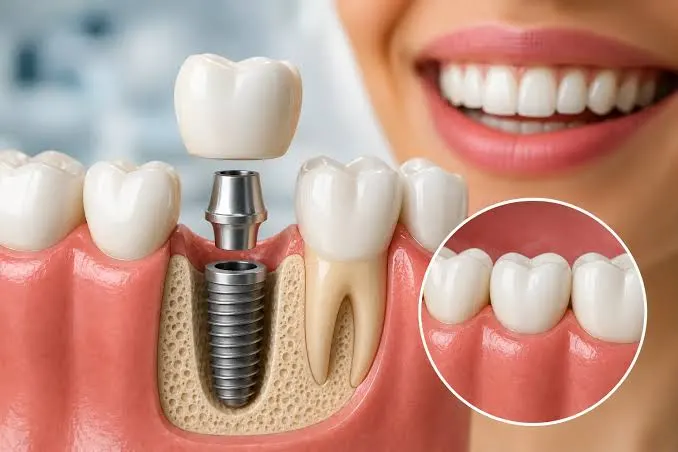
Tooth loss is a serious pathology that directly affects not only the aesthetic appearance of an individual but also the chewing function, which is the beginning of the digestive system, speech ability (phonation), and temporomandibular joint (TMJ) health, thus reducing the quality of life. Long-term edentulism can lead to resorption (melting) in the jawbone, causing aging effects in the facial profile and loss of soft tissue support. Unlike traditional bridges and removable dentures, dental implants are a modern treatment method that mimics the lost tooth root, preserves the jawbone, distributes mechanical stress within physiological limits, and offers the closest performance to a natural tooth. In recent years, Kahramanmaraş has become a significant center for implantology in the region thanks to investments in healthcare, the academic leadership of Sütçü İmam University Faculty of Dentistry, and its well-equipped private clinics. Dental implant applications in Kahramanmaraş are not merely the process of placing a material into the bone; they are a multidisciplinary medical discipline aimed at managing the patient’s systemic health, preserving bone volume, meeting aesthetic expectations, and maintaining long-term oral health.
1. Biomechanics and Osseointegration Process of Dental Implants
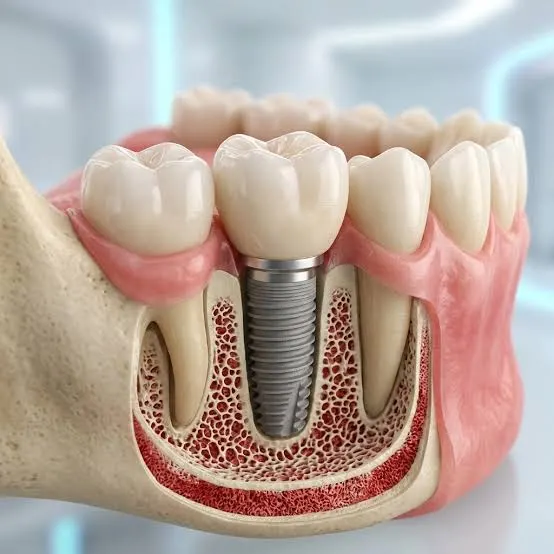
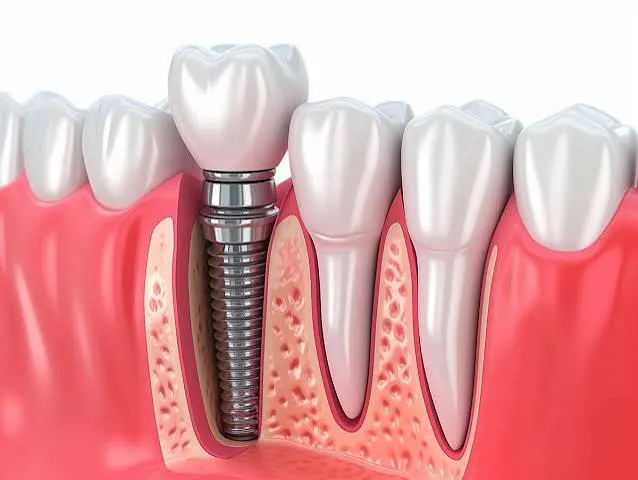
The success of implant treatment relies on a biological phenomenon called “Osseointegration,” defined in the 1960s by Prof. Dr. Per-Ingvar Brånemark. This concept refers to the structural and functional fusion that occurs at the microscopic level between living bone tissue and a load-bearing implant surface.
Implants are generally made from Titanium (Grade 4 or Grade 5) or Zirconium elements. Titanium exhibits excellent biocompatibility with body fluids and tissues, and the risk of allergic reactions is extremely low. When the implant is placed in the jawbone, the body does not perceive and reject this material as a foreign body (tissue rejection does not occur); on the contrary, bone cells (osteoblasts) migrate to the implant surface, forming a strong bond and making the implant a part of the bone. The implant systems used in modern clinics in Kahramanmaraş are FDA and CE approved products with improved surface properties (SLA, sandblasting, etching, hydrophilic surfaces) that accelerate the osseointegration process and increase the success rate. For successful implant treatment, the quality of the material used and the patient’s bone healing potential are as crucial as the perfection of the surgical technique. Patient Evaluation and Radiological Analysis
Not every patient with missing teeth may be a suitable candidate for implant treatment. The treatment decision is made based on a detailed clinical examination, anamnesis (patient history), and advanced radiological analysis (3D Dental Tomography – CBCT).
Bone Volume and Quality: Sufficient jawbone height, width, and density are required for implant stability (primary stability). Tomography measures the bone structure, the location of nerve channels (especially the alveolar nerve in the mandible), and sinus cavities in millimeter detail.
Systemic Diseases: In patients with uncontrolled diabetes, implant success may decrease due to healing problems and infection risk. However, in patients with controlled HbA1c levels, it can be safely applied with physician consultation. Special protocols are applied in osteoporosis patients using bisphosphonate drugs or individuals who have undergone radiotherapy to the head and neck region.
Smoking: Smoking is the most important modifiable risk factor negatively affecting osseointegration by disrupting blood circulation (microcirculation) in the gum and bone tissue. Specialist physicians in Kahramanmaraş require patients to quit or reduce smoking before and after surgery for successful treatment.
3. Advanced Surgical Techniques: Sinus Lifting and Bone Augmentation
One of the most important competencies of centers offering implant dental services in Kahramanmaraş is the “Advanced Implant Surgery” techniques applied in cases with bone deficiency. Regenerative solutions are available for many cases where patients are told “my bone has resorbed, implants cannot be placed” due to long-term edentulism.
Sinus Lifting (Sinus Lifting): This is the surgical lifting of the maxillary sinus cavity, which sags in the posterior region of the upper jaw due to tooth extraction, and filling the resulting space with bone powder (graft). This creates a vertical bone space where implants can be placed.It is gained.
Bone Augmentation (Bone Grafting): In areas where the bone is thin (knife-edge crests), bone volume is increased using bone powders and barrier membranes from the patient’s own bone (autogenous), human-derived (allogeneic), or bovine-derived (xenograft) bone.
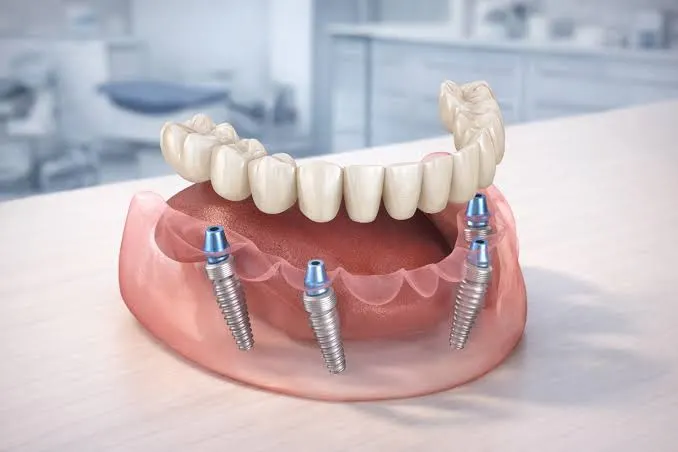
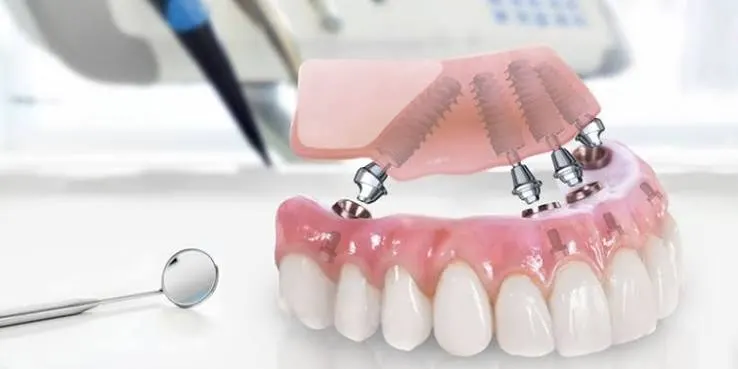
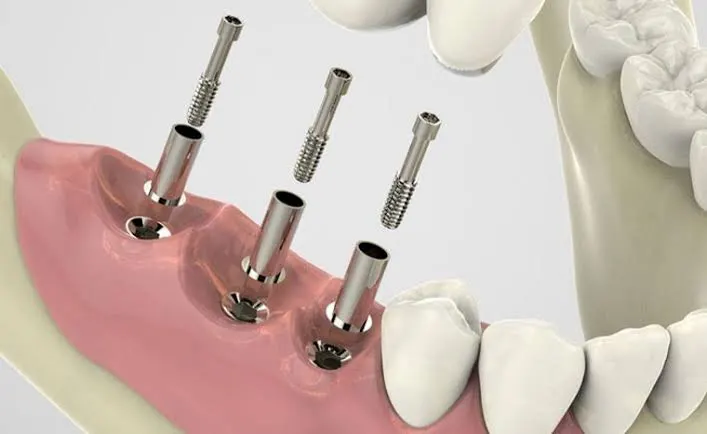
All-on-Four / All-on-Six Concept: In patients with complete edentulism, this technique involves placing 4 or 6 implants at specific angles and creating a fixed temporary prosthesis on the same day. This method offers patients a quick fixed tooth option without the need for advanced surgeries such as sinus lifting, avoiding anatomical gaps. 4. Comparison of Implants and Traditional Prostheses
The most common dilemma patients face is whether to address tooth loss with implants or with traditional bridge/denture prostheses. The following table compares these treatment methods from a medical and functional perspective.
| Features | Traditional Bridge Prosthesis | Dental Implant Treatment |
|---|---|---|
| Adjacent Teeth | Preparation of healthy adjacent teeth is necessary. | Adjacent teeth are not touched, they are protected. |
| Bone Resorption | Bone loss continues in the area of the extracted tooth. | Stops bone loss and preserves bone volume. |
| Chewing Performance | Lower than natural teeth (60-70%). | Provides the closest chewing force to natural teeth (90%+). |
| Hygiene and Care | Cleaning the underside of the body is difficult, there is a risk of decay. | Brush and floss like natural teeth. |
| Lifespan | Average 10-15 years (Bridge replacement may be necessary). | With good care, it can last a lifetime. |
5. Operation Process and Clinical Stages
Implant treatment in Kahramanmaraş is a disciplined process that should not be rushed and progresses step by step.
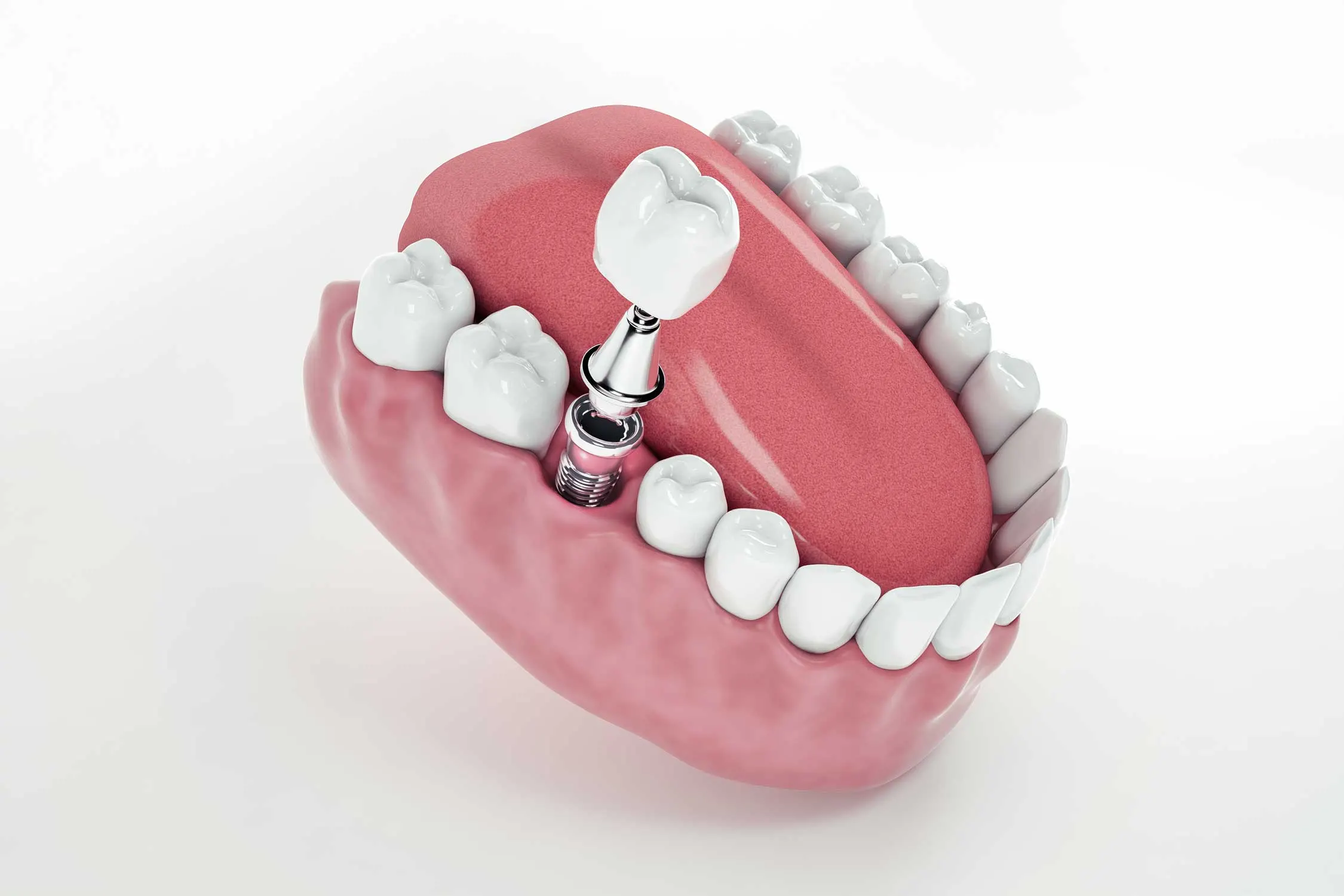
- Surgical Stage: Under local anesthesia, in sterile operating room conditions, the implant socket is prepared by opening the gum or using a sutureless method (flapless surgery) and a titanium screw is placed. The procedure time varies between 20 minutes and 2 hours depending on the number of implants. The patient does not feel pain during the procedure.
- Healing (Osseointegration): It takes an average of 2-3 months in the lower jaw and 3-4 months in the upper jaw for the implant to fuse with the bone. If bone powder was used, this period can be extended up to 6 months.
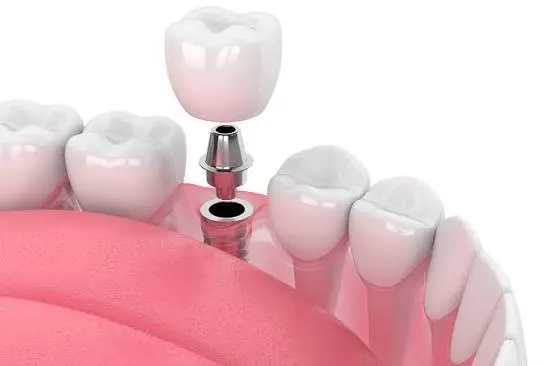
- Gingiva Shaping: Once bone formation is complete, a “healing abutment” is placed on the implant to shape the gum and create a natural tooth eruption profile, and a waiting period of 1-2 weeks is observed.
- Prosthetic Phase: Zirconium or Metal-Supported Porcelain crowns, prepared in the laboratory based on impressions, are fixed onto the implant by screwing or bonding, and function is restored.
6. Post-Implant Care and Regional Nutritional Habits
Considering Kahramanmaraş’s rich culinary culture (hard meat dishes, consumption of nuts, etc.), there are points that implant patients should pay attention to during the process of adapting to their prostheses. Since implants are metal, they do not decay, but a condition called “Peri-implantitis,” which is inflammation of the gum and bone around the implant, can occur. This is the biggest cause of implant loss.
Patients undergoing implant treatment require more meticulous care than they would their natural teeth. In addition to brushing, the use of dental floss, interdental brushes, and oral irrigators (water flosser) is essential to clean bacterial plaque that accumulates around the implant neck. Furthermore, dentists in Kahramanmaraş recommend that implant patients come for regular check-ups every 6 months and have their bone level monitored with panoramic X-rays. Early diagnosed gum problems are treatable, but advanced bone loss is difficult to reverse.
Conclusion: Scientific and Reliable Treatment in Kahramanmaraş
In conclusion; Kahramanmaraş Dental Implant applications are a strong treatment option supported by scientific data, standing at the intersection of aesthetic concerns and functional needs. Without the need for taboo words, commercial promises, or unscientific methods; implants, performed with accurate diagnosis, quality materials, and expert surgery, are the healthiest and longest-lasting solution to replace lost teeth. Kahramanmaraş continues to be a reliable center for oral and dental health in the region with its competent healthcare professionals in this field.