How is a Dental Implant Done in Kahramanmaraş?
Oral and dental health is a highly critical function that forms the general integrity of the human body, the beginning of the digestive system, and the foundation of self-confidence in social communication. Tooth loss experienced as a result of advancing age, traumas, advanced decay, or periodontal (gum) diseases not only creates an aesthetic deficiency; it also leads to bone loss (resorption) in the jawbone, the tipping of adjacent teeth into the gap, and the complete disruption of chewing dynamics. While traditional dentistry tries to fill these gaps with bridge prostheses or removable dentures, the method that most perfectly mimics biology in today’s modern medical world is “dental implant” treatment. Implants, produced from tissue-friendly materials like titanium and artificially compensating for the root of the missing tooth, aim to provide the mechanical resistance offered by a natural tooth by establishing a structural and functional bond (osseointegration) with the jawbone. For individuals researching Kahramanmaraş dental implants and wishing to make a permanent investment in their health, it is of great importance to understand how this process progresses, which biological stages it goes through, and the importance of the technological infrastructure.
Anatomy of a Dental Implant and the Principle of Biocompatibility
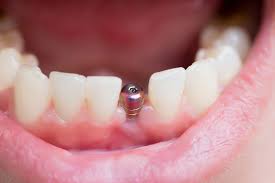
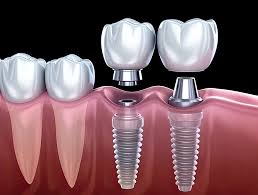
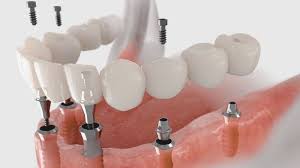
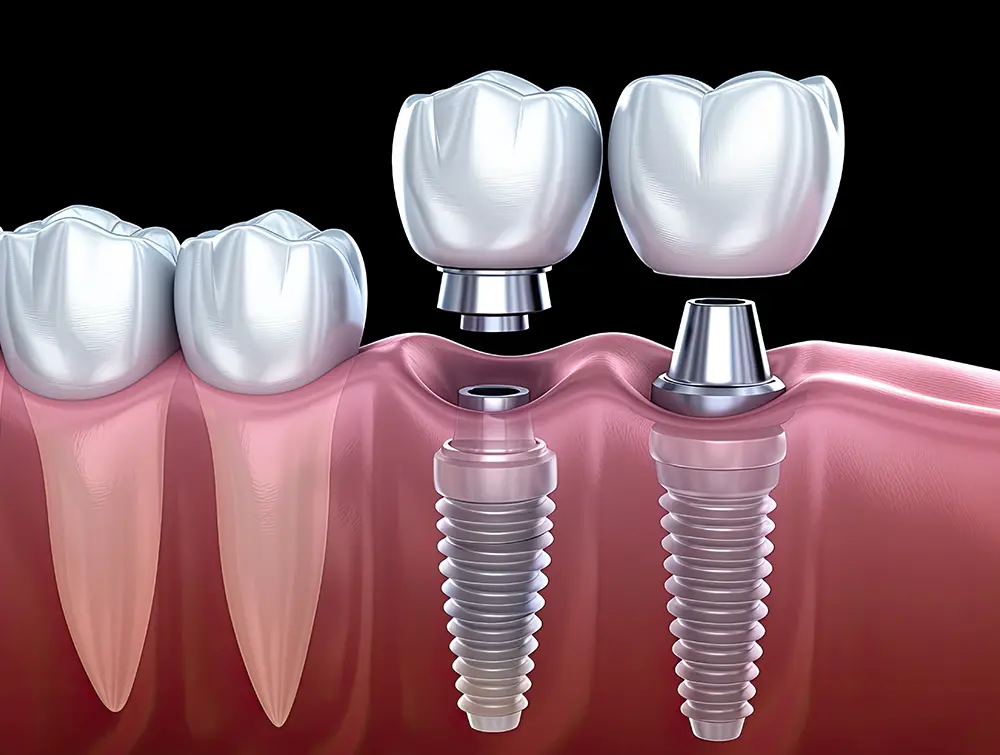
To fully understand how implant surgery is performed, it is first necessary to recognize the anatomical components of this high-tech product. A standard dental implant system basically consists of three main parts: the titanium ‘fixture’ placed into the jawbone that mimics the real tooth root, the ‘abutment’ which is the connection piece placed on this root part and emerging above the gum, and finally the upper prosthesis (zirconium or porcelain crown) that assumes the aesthetic and chewing function. The main reason why titanium is so preferred in the medical world is its extraordinary biocompatibility (tissue-friendly) feature. The human body does not perceive titanium as a foreign substance and reject it; on the contrary, the osteoblast (bone-building) cells in the jawbone firmly attach to the specially roughened surface of the titanium, making it an inseparable part of the bone over time.
Serving in Kahramanmaraş, Dentocare Klinik prefers internationally certified implant systems suitable for patients’ anatomical structures, bone densities, and aesthetic expectations. The surface technology of the implant (hydrophilic structure, acid-etched surfaces, etc.) directly affects the speed at which bone cells attach to the implant. Therefore, the quality of the material used before proceeding to the surgical procedure constitutes the fundamental building block of long-term mechanical success and a healthy chewing system.
Step 1: Digital Diagnostics and 3D Planning (Pre-Operation)
The greatest revolution of modern implantology is that the surgical operation is performed not in the physician’s mind or merely on two-dimensional x-rays, but in a three-dimensional digital environment. The success of implant treatment relies on meticulous engineering calculations made prior to the operation rather than the operation itself. During the initial examination phase, the patient’s general systemic health (diabetes, blood pressure, heart diseases, history of osteoporosis, or regularly used medications) is evaluated in detail. It should not be forgotten that intraoral health cannot be considered independently of general body health, and for a safe surgery, the body’s cellular repair capacity is expected to be at an ideal level.
After taking this medical anamnesis (patient history), the 3D Volumetric Dental Tomography (CBCT) devices within Dentocare Klinik come into play. Unlike traditional panoramic x-rays, thanks to tomography, the thickness, height, bone density (quality) of the jawbone, the paths followed by nerve canals, and the exact locations of sinus cavities are analyzed in three dimensions with millimetric precision. In light of these data, the physician determines in a virtual environment exactly which diameter and length of implant will be placed at what exact angle of the bone, days before the surgery. When necessary, surgical guides are produced using digital impressions, laying the groundwork for the operation to be completed with a zero margin of error, free from surprises, and in a completely predictable manner.
Step 2: Minimally Invasive Surgical Phase (Placement of the Fixture)
The surgical phase is the stage where digital planning is physically transferred to the clinic. Contrary to popular belief, implant operations are much less traumatic and more comfortable procedures than tooth extraction. The procedure begins solely with completely numbing the area to be worked on with local anesthesia. Depending on the patient’s anatomical suitability, the classic “flap” (separating the gum from the bone with a small incision) method can be applied; in cases where bone volume is very good and 3D guides are used, “flapless” methods (opening a socket only the diameter of the implant without lifting the tissue), also known as “seamless implants,” may be preferred. Dentocare Klinik specialists have adopted the principle of increasing the healing speed by keeping tissue trauma to a minimum.
The socket where the implant will be placed is prepared with millimetric precision on the jawbone using specially designed and gradually expanding sterile burs (titanium drill bits). During this stage, continuous cooling with sterile saline is performed to prevent the bone tissue from overheating; because bone cells are extremely sensitive to heat. Once the socket is prepared, the titanium implant is slowly placed into the bone with a predetermined torque (tightening) force. If the “primary stability” (the initial grip tightness of the implant to the bone) achieved during the procedure is high, the healing cap that will shape the gum can be attached to the implant immediately. Otherwise, the implant is left under the gum, covered, and the tissues are left to rest so that the body’s natural healing mechanisms can do their job.
Step 3: Osseointegration and Waiting for Biological Healing
After the surgical procedure is completed, that miraculous biological process that will determine the long-term success of the implant begins: Osseointegration. This process is the jawbone accepting the titanium surface of the implant, producing new bone cells at a microscopic level, and tightly wrapping the threads (gears) of the implant. Since the bone structure in the upper jaw is more spongy (cancellous), this waiting period is 3 to 4 months on average; whereas in the lower jaw, since the bone is harder (cortical) in structure, osseointegration can be completed between 2 to 3 months. Of course, these periods vary depending on whether advanced surgical procedures such as additional bone powder (graft) or sinus lifting were performed during the procedure.
During this waiting phase, temporary prosthetic solutions are produced by Dentocare Klinik so that the patient does not experience aesthetic and functional losses. Thus, the individual can continue their daily social and professional life uninterrupted without the anxiety of being toothless. During the healing process, the patient’s immune system, diet, and especially staying away from smoking, which directly impairs tissue blood supply, are vital factors that directly affect the speed and quality of bone cells attaching to the implant.
Implant Treatment Process Timeline and Clinical Phases
The adventure of a dental implant from its starting point to its final aesthetic prosthesis requires a multidisciplinary medical approach. You can examine how the treatment stages follow each other and the main clinical goal of each phase in the table below:
| Treatment Stage | Applied Procedures | Main Clinical Goal |
|---|---|---|
| 1. Diagnostics and Planning | Systemic evaluation, 3D Tomography analysis, production of digital surgical templates. | To map the patient’s anatomical risks and determine the surgical route with zero error. |
| 2. Surgical Operation | Local anesthesia, preparation of the implant socket, and placement of the titanium fixture into the jawbone. | To cause the least trauma to the tissue by achieving high primary stability. |
| 3. Osseointegration Phase | Biological fusion process lasting 2-3 months in the lower jaw and 3-4 months in the upper jaw. Use of temporary prosthesis. | To ensure bone cells fully integrate into the implant surface at a microscopic level. |
| 4. Prosthetic and Aesthetic Stage | Taking digital impressions (CAD/CAM), abutment placement, and delivery of the zirconium/porcelain crown. | To restore the patient’s natural chewing force, phonation (speech), and permanent aesthetic smile. |
Step 4: Prosthetic Stage and the Construction of a Natural Smile
When the biological bond between the bone and the implant reaches the desired strength, the final and most exciting part of the process for patients, the construction of the prosthesis (superstructure), begins. At this stage, if the implant is buried under the gum, the implant is uncovered with a small laser or cautery touch, and a “gingiva former” (healing cap) is attached to prepare the gum for crown construction. After a few days of gum shaping, instead of traditional impression pastes, 3D impressions with millimetric precision are often taken using digital intraoral scanners.
The taken digital impressions are transferred to the laboratory environment, and the connection piece (abutment) that will sit on the implant and the final zirconium or porcelain crown are designed. Zirconium comes to the forefront, especially in anterior aesthetic restorations, thanks to its high light transmittance and tremendous biological compatibility with the gum. The produced crown is fixed to the implant by taking into account the bite balances, contact points with adjacent teeth, and the patient’s facial proportions. Thus, the structure, which was merely a titanium screw weeks ago, begins to function in the mouth as if it were an innate, natural tooth.
Critical Warnings for Maintaining Biological Balance After Implants
A successfully completed implant treatment has the potential to serve for a lifetime; however, turning this potential into reality depends on the patient’s daily habits. Implants do not decay, but the gum and bone tissue surrounding them are susceptible to infection (peri-implantitis). To protect this ecosystem, the essential elements that need to be added to the routine are as follows:
- Advanced Mechanical Cleaning: Going beyond the standard tooth brushing routine, the use of dental floss, interdental brushes, or a pressurized water flosser should absolutely not be neglected to prevent bacterial accumulation around the implant. Especially cleaning the undersides of the pontics of bridge-shaped implant-supported prostheses is the most vital step in keeping infection away.
- Strict Avoidance of Tobacco Products: Smoking impairs the oxygenation of tissues by narrowing the capillaries in the mouth. Decreased blood flow dramatically increases the risk of bone loss around the implant. For long-term implant health, avoiding tobacco products and not skipping six-month periodic physician check-ups are the most important insurances of the process.
Conclusion: A Safe Investment in Your Health
In summary, the dental implant process is not merely a “screw placement” procedure; it is a complicated art of restoration where dentistry, maxillofacial surgery, radiology, and bioengineering come together, respecting human biology. Today, where tooth loss is not a destiny, thanks to the zero-error vision offered by digital technologies, treatment processes now progress in a much more predictable, fast, and comfortable manner.