
How to Perform Filling Treatment for Children Afraid of the Dentist?
One of the biggest challenges parents face in their children’s health processes is undoubtedly dental visits. The unique smell of the clinic environment, the sounds of the instruments, the bright lights, and most importantly, the “unknown,” can be a serious source of anxiety for children. This condition, defined in medical literature as “Dental Phobia” or “Dental Anxiety,” can cause the child to resist treatment, not open their mouth, or even refuse to enter the clinic.
However, cavities don’t wait. An advanced cavity won’t stop just because “the child is afraid”; on the contrary, it leads to pain, infection, and more complex conditions. So, what is the solution in such a situation? To treat it forcefully or to postpone it? Modern Pedodontics (Pediatric Dentistry) offers a wide range of solutions to overcome this impasse, from pedagogical approaches to advanced anesthesia techniques.
The Origin of Fear: Why Does a Child Fear?
Before finding a solution, it is necessary to understand the source of the problem. Dental phobia in children is generally based on three main reasons:
- Fear of the Unknown: Children feel insecure when they don’t know what they will encounter.
- Loss of Control: Being in a lying position in the chair and having someone working inside their mouth makes the child feel vulnerable.
- Learned Fears: Bad experiences recounted by parents or friends (“the needle hurt so much,” “they pulled my tooth,” etc.) create a prejudice in the child’s mind.
1. Step: Behavioral Management Techniques (Psychological Approach)
Pedodontists, or pediatric dentists, are specialists trained not only in dental treatment but also in child psychology. When faced with a fearful child, the first method used is drug-free and natural behavior management. Tell-Show-Do
This is the most basic and effective technique. The dentist explains the procedure in simple language the child can understand, demonstrates the instrument on the child’s hand or fingernail, and then applies it.
Example: The aerator (buzzing instrument) is introduced to the child as a “germ vacuum cleaner.” The tip is touched to the child’s finger, and the dentist says, “Look, it just tickles and sprays water.” The child relaxes when they see that the instrument does not cause harm. Gamification and Distraction
The less the clinical environment feels like a “hospital,” the more comfortable the child will be. Cartoons, colorful filling options (allowing the child to choose their own filling color), and stories told during treatment distract the child from fear.
Step 2: Advanced Treatment Options (Pharmacological Approach)
In some cases, if the child is very young (0-3 years), has experienced a traumatic event before, has an excessive gag reflex, or is an individual with special needs, behavioral guidance techniques may not be sufficient. Treating the child by forcing them, making them cry, and using physical force (“cuddle therapy”) is a method with a high risk of trauma that is no longer preferred in modern dentistry.
At this point, Sedation or General Anesthesia comes into play to protect the child’s safety and psychological health. These methods are not a “last resort,” but a safe and comfortable treatment option.
Conscious Sedation: “Relaxation Without Sleeping”
Sedation is a state of relaxation where the child is conscious but their fear, anxiety, and excitement are suppressed. The most common method is the one known as “laughing gas.”
How is it Applied?
A small mask is placed over the child’s nose, and a mixture of oxygen and nitrous oxide gas is inhaled. This gas slightly numbs the child, making them feel happy and relaxed. The child can respond to the doctor’s commands (open your mouth, spit, etc.) but is not bothered by the sounds or the needle during the procedure. When the procedure is finished, the gas is turned off, and the child returns completely to normal within 3-5 minutes. Side effects are extremely minimal.
General Anesthesia: “All in One Go”
If the child is too young to sit in a chair, has extreme fear (dental phobia), or has many teeth that need treatment, general anesthesia is the most suitable option. This procedure is performed in a fully equipped hospital setting, under the supervision of an anesthesiologist.
Advantages:
The child remembers, feels, and hears nothing. Therefore, the risk of psychological trauma is “zero”.
All necessary procedures such as fillings, root canals, extractions, and space maintainers are completed in a single session.
Because the doctor works in a motionless and dry environment, the quality and success of the fillings are maximized.
The child returns home with all their teeth completed when they wake up.
Comparative Table of Methods
The doctor and the family decide together which method is suitable for which child. The following table clarifies this distinction:
| Feature | Clinical Setting (Local Anesthesia) | Conscious Sedation | General Anesthesia |
|---|---|---|---|
| State of Consciousness | Fully Awake | Awake, but calm/sleepy | Fully Closed (Sleep) |
| Memory | Remembers everything | May not remember some moments | Remembers nothing |
| Application Location | Dental Clinic | Dental Clinic (Equipped) | Operating Room |
| Number of Procedures | Divided into sessions | May take 1-2 sessions | Finished in one session |
| Target Audience | Compliant, communicative children | Those with mild anxiety, gag reflexes | Very young, disabled or extremely phobic children |
Filling Process: Step-by-Step Insights
Is it done?
For a fearful child, the filling process begins with building trust rather than focusing on the technique.
- Introduction and Trust: Usually, no procedure is performed in the first session. The child is simply introduced, the chair is shown, and the teeth are examined in mirrors. This “adaptation session” helps the child feel safe in the environment.
- Anesthesia Management: If anesthesia is required for the filling, a “topical gel” (fruit-based anesthetic gel) is applied first. This prevents the child from feeling the needle insertion. The syringe is usually kept out of the child’s field of vision.
- Cleaning the Cavity: Instead of noisy instruments, quieter micromotors or newer generation techniques are preferred whenever possible.
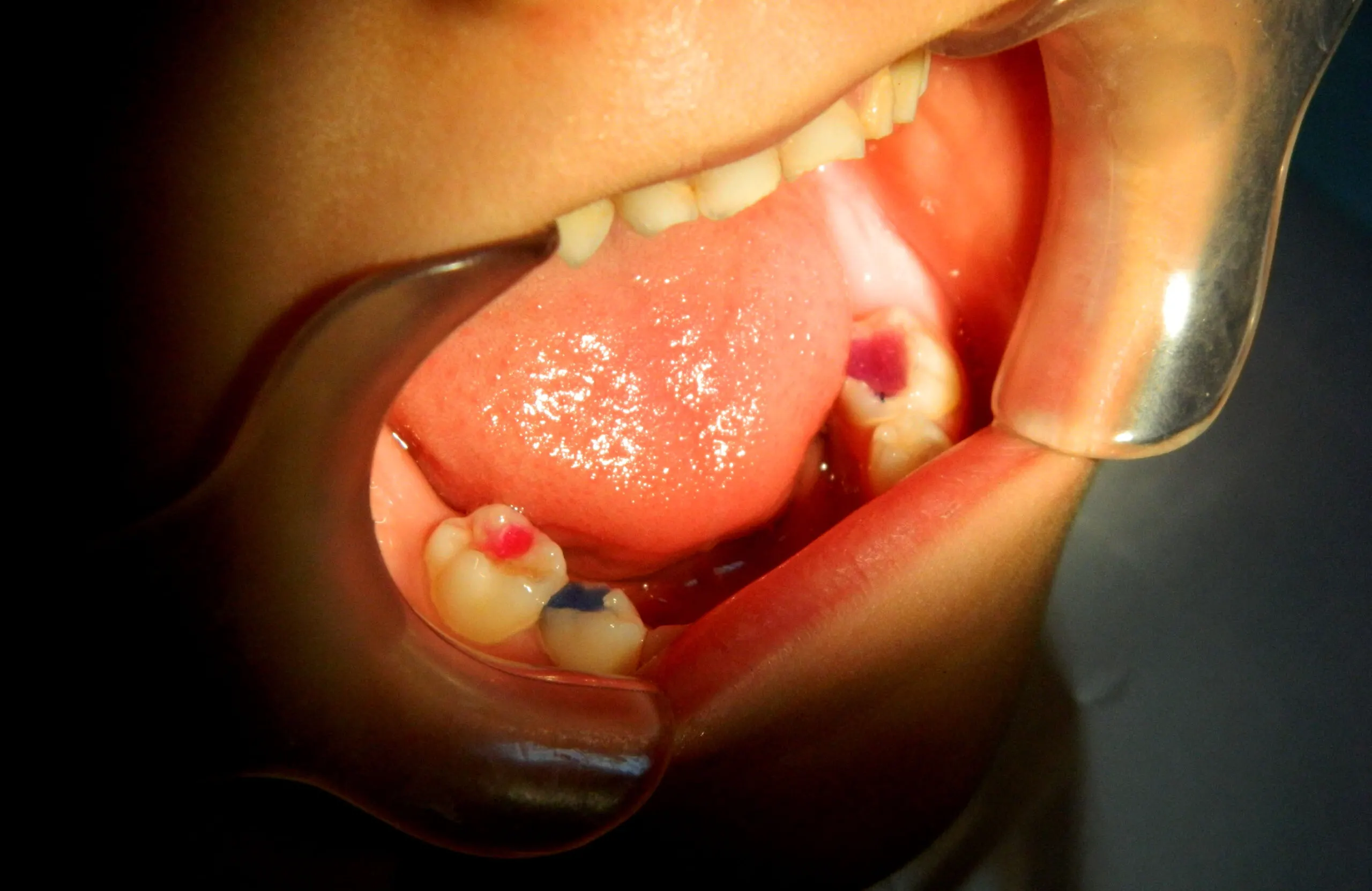
Filling Selection: To increase the child’s motivation, “colored fillings” (pink, blue, orange) can be used. When a child chooses the color of the filling in their own tooth, they become involved in the process and gain a sense of control.
Golden Advice for Parents
Avoid saying “Don’t be afraid, it won’t hurt” when preparing your child for treatment. Because the word “pain” has a negative connotation. Instead, use positive and concrete expressions such as “We will clean the germs in your tooth and paint it.” Also, not projecting your own fears of the dentist onto your child is vital for the success of the process. Threats such as “If you don’t behave, they will give you an injection” make it impossible for the child to establish a trusting relationship with the doctor.
Conclusion
Filling treatment is not impossible for a child who is afraid of the dentist; it just requires the right approach and the right technique. Pedodontists will always find a solution suitable for each child’s temperament and anxiety level. Whether through playful persuasion or sedation, the goal is clear: to protect the child’s physical health while avoiding trauma to their mental well-being and preparing them for a healthy, lifelong relationship with their dentist. Remember, the pain and risk of infection from an untreated cavity are far more damaging than a controlled treatment process.







