Kahramanmaraş Implant Treatment Methods
Scientific and Evidence-Based Maxillofacial Surgery Protocols Developed for Individual Anatomical Needs
Personalized Treatment Approach in Dental Implantology
The treatment of missing teeth is a highly individualized and complex process in which a single standard procedure cannot be applied to every patient. Each individual’s jawbone density, number of missing teeth, position of the sinus cavities, and aesthetic expectations are completely different. The “one-size-fits-all treatment” logic often encountered in traditional dentistry has been replaced in modern implantology by personalized surgical protocols. In the field of Kahramanmaraş implant treatment methods, Dentocare Clinic integrates current technology into its clinical practice and determines the safest, most comfortable, and longest-lasting medical method specific to each individual after conducting detailed anatomical analyses of its patients through 3D Volumetric Tomography.
The main goal behind the diversification of treatment methods used in maxillofacial surgery is to reconstruct the patient’s oral functions in the closest possible way to natural teeth while minimizing surgical trauma. The biological treatment plan for a completely edentulous jaw with bone resorption already underway and that of a patient who has lost only one front tooth due to trauma are entirely different from one another. Dentocare Clinic specialists successfully apply advanced treatment methods accepted in the international literature to maximize the cellular integration (osseointegration) established by titanium roots with the jawbone.
Implant Methods Classified According to Case Dynamics
Below, you can review in detail the main implant treatment protocols commonly applied today according to the number of missing teeth, the patient’s bone condition, and the timing of prosthetic loading:
1. Single Tooth Implant Application
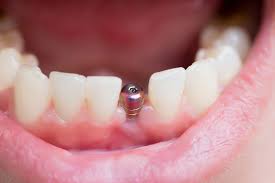
This is the most conservative method applied when only one tooth has been lost. Unlike traditional bridges, the healthy teeth on the right and left of the gap are absolutely not touched. A single titanium screw is placed into the jawbone, and a zirconia or porcelain crown in the natural tooth form is attached on top. It is the ideal method that stimulates the bone and stops resorption in that region.
2. Implant-Supported Bridges in Multiple Tooth Loss
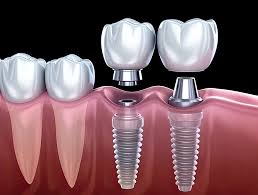
In cases where several adjacent teeth are missing, instead of placing a separate implant for each missing tooth, implants are strategically placed at the beginning and end of the created gap. These implants support multiple-unit porcelain bridges placed on top. It is an engineering solution compatible with the jaw structure that provides comfort for the patient in terms of both cost and surgical field.
3. The All-on-4 Concept in Complete Edentulism
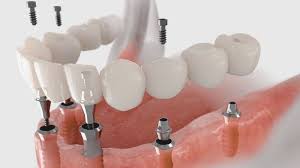
This is a revolutionary technique developed for patients who have no teeth at all and especially for those with advanced bone resorption in the posterior regions. Only four implants, placed into the upper or lower jaw at specific angles (generally straight in the anterior region and angled in the posterior region), support the entire full-arch prosthesis in a fixed manner. It offers the possibility of having fixed teeth without the need for advanced bone grafting procedures.
4. The All-on-6 Concept in Complete Edentulism
This is a broader and stronger version of the All-on-4 system. In completely edentulous patients with sufficient jawbone volume, six implants are placed in a single jaw. Since force is distributed across six separate points, mechanical strength is much higher. It restores the patient’s biting and chewing force to the maximum level they could achieve with their natural dentition.
Treatment Methods According to Timing: Immediate Implantation
One of the issues patients are most curious about in maxillofacial surgery is when they will be able to regain their teeth. In traditional protocols, after the implant is placed, a period of 2 to 4 months is usually required for integration with the bone, and the prosthesis is attached afterward (Delayed Loading). However, with today’s technology, different timing strategies can be applied depending on the case:
Flapless and Same-Day (Immediate) Applications
The same-day implant (Immediate Loading) protocol involves placing a titanium implant directly into the root socket during the same session in which the problematic tooth is extracted, and immediately attaching a temporary fixed tooth. This method allows the patient to maintain their social life without interruption, especially in cases of tooth loss in the aesthetic zone, such as the front teeth. However, for this method to be applied, there must be no acute infection in the extraction socket, and the jawbone must be of sufficient quality to securely grip the implant (primary stability). Dentocare Clinic specialists evaluate in detail before the operation, through 3D tomography analyses, whether your jawbone is suitable for this contemporary treatment method.
Clinical Comparison of Treatment Approaches
Which implant method should be preferred is a decision to be made together with the clinician by considering the patient’s functional needs and bone biology. You can transparently review the structural differences of the main methods applied for different clinical scenarios in the table below:
| Evaluation Factor | Single/Multiple Conventional Implants | All-on-4 / All-on-6 Systems | Immediate (Same-Day) Implants |
|---|---|---|---|
| Target Case Profile | Individuals with localized tooth loss or partial edentulism. | Individuals with complete tooth loss or those whose remaining teeth will all be extracted. | Especially aesthetic cases involving anterior trauma or situations requiring immediate extraction. |
| Bone Requirement | Sufficient vertical and horizontal bone volume is required in the area where the implant will be placed. | Thanks to special angled placement, it may not require grafting even in posterior bone resorption cases. | Requires the absence of infection in the extraction site and high-quality dense bone tissue. |
| Time Until Prosthesis Placement | Generally, 2–4 months are required for the titanium to integrate with the bone at the cellular level. | The patient is discharged on the day of surgery with temporary fixed prostheses attached. | Temporary aesthetic crowns are placed during the same session simultaneously with the operation. |
| Daily Life Comfort | During the waiting period, the patient must protect the area; afterward, it provides a completely natural tooth sensation. | The patient arrives at the clinic without teeth and returns home the same day with fixed teeth, regaining confidence. | Psychological comfort is very high since no aesthetic gap appears in social life. |
Which Method Is the Right Decision for You?
The availability of more than one successful treatment method in modern dentistry is a major advantage for our patients. However, it should not be forgotten that the key to successful treatment is not choosing a method based on hearsay, but trusting the medical path drawn by a specialist clinician after a detailed radiological and clinical examination. Many factors such as your jawbone structure, age, chronic illnesses, smoking habits, and the strength of your chewing muscles are meticulously analyzed by Dentocare Clinic dentists, and the most suitable “Personalized Treatment Protocol” is created in accordance with your biology.