Is Filling Treatment Painful in Children?
Parenting is a process of constantly protecting a child’s physical and emotional health. One of the situations that most worries a parent in this process is the possibility of their child experiencing pain during a medical procedure. Especially when it comes to dental visits and filling treatments, this anxiety can combine with (often exaggerated) stories from the past and turn into great fear. Questions such as “Will my child stay in the chair?”, “Will they cry when they get the injection?”, “Will it hurt a lot?” are the most basic questions that occupy the minds of parents before treatment.
However, it should not be forgotten that medicine and dentistry have made revolutionary advancements in the last twenty years. Pedodontics (Pediatric Dentistry), in particular, is a specialized field that focuses not only on treating teeth but also on managing the child’s psychology and making the procedure as comfortable as possible.
Pain or Fear?
Distinguishing Concepts
The concept of “pain” works very differently in children than in adults. An adult can distinguish the pressure, vibration, or sound they feel in the dentist’s chair and does not categorize them as “pain.” However, for children, the unknown is a source of pain in itself. The most common situation in pedodontics is that a child interprets the touch, pressure, or vibration they feel as “pain.”
The sounds produced by the instruments used during the filling procedure and the presence of water in the mouth develop a defense mechanism in the child. If the child is not sufficiently informed before the procedure (in appropriate language), they may perceive even the slightest touch as painful. Therefore, in modern pediatric dentistry, the priority is “psychological preparation” before physical anesthesia.
The Heroes of the Process: Modern Anesthesia Methods
Milk teeth and young permanent teeth are living tissues; that is, they contain nerves. Stimulation of these nerves while cleaning cavities can cause pain. However, nowadays very effective methods are used to completely eliminate this pain:
1. Topical Anesthesia (Pre-numbing)
Fear of needles is the biggest obstacle to treatment. To overcome this obstacle, fruit-flavored (strawberry, banana, gum-flavored) topical anesthetic gels or sprays are applied to the gums before the injection. These gels numb the surface of the gum, minimizing or completely eliminating the sensation of the needle insertion. Children usually only taste the gel at this stage.
2. Local Anesthesia and Fine-Tipped Needles
Local anesthesia is applied to the area numbed by the gel using very fine-tipped needles specially made for children. Doctors usually hold the needle at an angle that the child cannot see and complete the procedure quickly. Apart from a slight feeling of pressure when the anesthetic drug is administered to the tissue, children usually get through this stage without problems.
3. Digital Anesthesia (Computer-Assisted)
This technology, used in some clinics, delivers the anesthetic liquid drop by drop, adjusting it according to tissue pressure. It eliminates pressure pain and provides great comfort for children because it doesn’t look like a needle (it’s pen-shaped). What Will You Feel During Treatment?
After the tooth and surrounding area are completely numb, it is physiologically impossible to feel pain. Nerve transmission is temporarily stopped. However, the child continues to feel the following during the procedure, and may sometimes confuse them with pain:
- Vibration: The vibration created by the instruments (commonly known as “buzzing”) as they work on the tooth.
- Pressure: The slight pressure applied by the dentist while placing the filling.
- Sounds: The sound of the water aspirator and instruments.
- Coolness: The coolness of the water used to cool the tooth during the procedure.
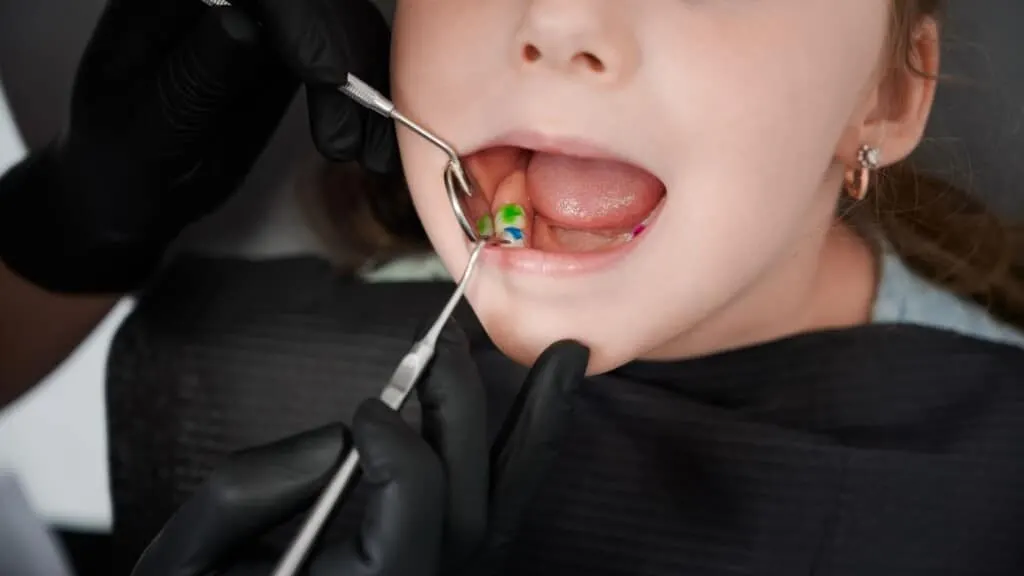
Pedodontists introduce these sensations to the child beforehand using the “Tell-Show-Do” technique. For example, the vibration of the instrument is touched to the child’s fingernail and it is said, “Look, this is just tickling.” In this way, the child understands that the vibration they feel is not pain.
Differences Between Adult and Pediatric Treatment
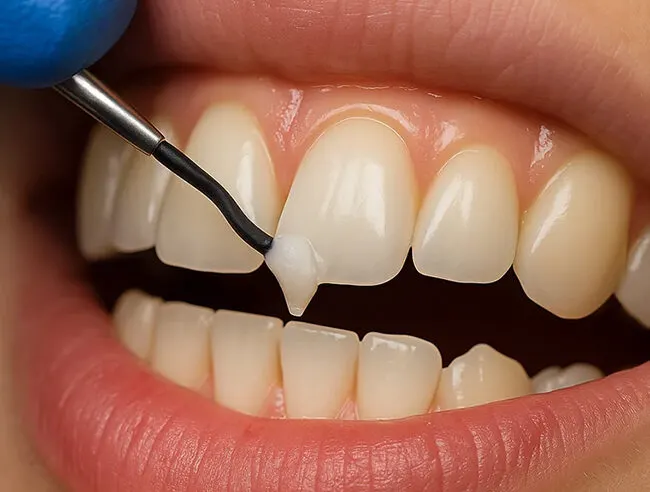
The filler procedure in children is managed with a different procedure than in adults. The following table summarizes these differences:
| Feature | Adult Filling | Child Filling (Pedodontics) |
|---|---|---|
| Communication | Technical details are explained. | Gamification and storytelling are used. |
| Duration | May be longer and more detailed. | Because children have little patience, work is done quickly and effectively. |
| Anesthesia | Standard procedure. | Covered techniques supported by topical gels. |
| Material | Aesthetic composites. | Fast-curing, fluoride or colored fillers. |
ParentParents’ Responsibilities: What to Do, What Not to Do?
One of the most important factors affecting a child’s performance and perception of pain in the chair is the parent’s attitude.
Things to Never Do:
Saying “Don’t be afraid, it won’t hurt at all.” (This sentence puts the idea in the child’s mind that “it might hurt.”)
Telling lies such as “They won’t give you an injection.” (It damages the trust relationship.)
- Telling your own bad dental experiences in front of the child.
- Making threats like, “If you don’t behave, they’ll pull your tooth.”
What to Do:
- Explain the treatment in simple terms: “They will clean the germs in your tooth and wash it.”
- Trust the doctor and leave the communication to the doctor.
- Prefer morning appointments (Children are more energetic and tolerant in the mornings).
Post-Anesthesia Caution!
Although no pain is felt during the treatment, the most important period is after the treatment. The effect of local anesthesia can last 2-3 hours. During this time, the lips, tongue, and cheeks are numb. Children may bite, chew, or scratch the numb area with their nails to try and make sense of this strange sensation. This can lead to much more serious soft tissue injuries (“white sores”) than just toothache. It is very important for parents to closely monitor the child and not feed them until the numbness subsides.
Sedation and General Anesthesia Option
In some cases, if the child is very young, has extreme fear (dental phobia), communication is not possible (individuals with special needs), or has many teeth requiring treatment, it may not be possible to perform the treatment while the child is sitting in the chair. In such cases, to protect the child’s psychology and avoid trauma, performing all procedures in one go under “Sedation” or “General Anesthesia” without the child feeling anything is the most comfortable and safest option.
Conclusion
In summary; With modern techniques and the approach of an expert pediatric dentist, filling treatment in children is not a physically painful procedure. The discomfort felt is usually sensory stimuli from sounds, water, and vibration. With the positive attitude of the parent and the correct guidance of the doctor, filling treatment can transform from a traumatic experience for children into a heroically overcome adventure. The chronic pain and risk of infection caused by a decayed tooth are far more damaging than the short-term stress of the treatment process.