
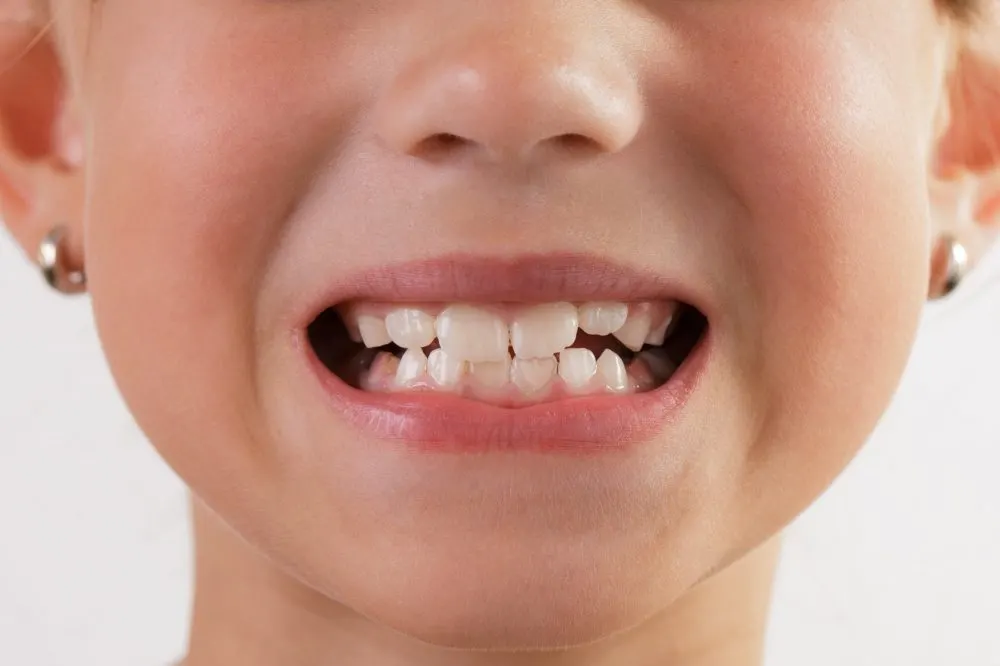
Kahramanmaraş Baby Tooth Filling
Childhood is a critical stage where growth and development are fastest, and nutritional habits are shaped. During this process, baby teeth are not just “temporary” organs, but fundamental building blocks that support the child’s nutrition, speech, and psychological development. However, Kahramanmaraş’s rich culinary culture (ice cream, sweets, etc.) and sometimes inadequate oral hygiene habits can cause early caries in baby teeth. Caries neglected with the thought “they will fall out anyway” can lead to greater pain, infections, and orthodontic problems later on. At this point, “baby tooth filling” comes into play, the most basic pedodontic treatment applied to keep the tooth in the mouth and restore its function.
Why Should Baby Tooth Fillings Be Done?
The anatomical structure of baby teeth is quite different from permanent teeth. The enamel layer is thinner, and the nerve chamber (pulp) is larger. Therefore, decay progresses much faster in baby teeth and quickly reaches the nerve, causing pain. The main purposes of filling treatment are:
- Pain Prevention: To prevent decay from progressing and reaching the nerve (pulpitis) and causing the child to experience nighttime pain.
- Infection Control: To prevent abscess formation at the root tip of the tooth and facial swelling.
- Space Maintainer Function: If a baby tooth is extracted prematurely, the adjacent teeth shift into the gap, closing the space for the permanent tooth that will erupt from below. Holding the tooth in the mouth with a filling acts as the most natural space maintainer.
- Nutritional Function: A child who cannot chew due to decay begins to swallow food whole or chews only on one side. Fillings restore chewing function.
Differences Between Adult and Pediatric Fillings
Parents often worry about their children based on their own dental filling experiences. However, the materials and techniques used in pedodontics (children’s dentistry) are customized to the needs of children.
1. Material Difference (Compomer and Glass Ionomer)
While aesthetic composites are used in adults, “Compomer” or “Glass Ionomer” fillings are generally preferred in children. The biggest advantage of these materials is that they chemically adhere to the tooth and release the fluoride they contain into the tooth over time. Thus, the risk of decay forming again under or around the filling is reduced. In addition, these materials are materials that have lower technical sensitivity to the child’s saliva and moist oral environment, and are faster to apply.
2. Colored Fillings (Motivation Tool)
In pediatric dentistry clinics in Kahramanmaraş, “Colored Fillings” (Twinky Star, etc.) are frequently used to increase children’s participation in treatment. The child chooses the color of their filling (pink, blue, green, gold). This allows the child to perceive the procedure as a game and proudly shows their filling to their friends after treatment. This psychological approach is very effective in overcoming dental phobia. Treatment Process: Step-by-Step Steps
In pediatric dentistry, the child’s psychological state is as important as technical success. The treatment process usually proceeds with the “Tell-Show-Do” technique. Painless Treatment Approach:
Anesthesia may be necessary to prevent pain while cleaning the decay. To avoid triggering needle phobia in children, a “fruit-flavored numbing gel” is applied to the gums first. After the gums are numbed, local anesthesia is administered using very fine-tipped syringes specifically designed for children. Often, the child doesn’t even feel the needle being inserted.
Following anesthesia, the decayed tissue is cleaned with instruments marketed as “germ hunters.” The prepared cavity is filled with the chosen filling material and hardened with a special light. At the end of the procedure, a height check is performed and the filling is polished. The entire process takes between 15-30 minutes, depending on the child’s cooperation.
Comparison of Primary and Permanent Tooth Fillings
The following comparison table will be useful to understand the characteristics of interventions performed on primary teeth:
| Features | Primary Tooth Filling | Permanent Tooth Filling (Adult) |
|---|---|---|
| Material Used | Compomer / Glass Ionomer (Fluoride-releasing) | Composite / Porcelain (Aesthetic and hard) |
| Durability Period | It is aimed to last until the tooth falls out. | For many years It is aimed to withstand it. |
| Application Time | Requires quick application (Children are impatient). | Longer and more detailed work may be required. |
| Risk of Secondary Caries | The risk is lower thanks to fluoride release. | The risk continues depending on hygiene. |
Special Recommendations for the Kahramanmaraş Region
In Kahramanmaraş, children’s nutritionSticky sweets and acidic drinks, which are part of dietary habits, can also pose a risk for teeth with fillings. The idea that “it won’t decay anymore” after a filling is wrong. The filling repairs the damage caused by decay, but the rest of the tooth is vulnerable to new decay.
Regular Brushing: Brushing twice a day is essential, including for teeth with fillings.
Diet Control: Consumption of sticky foods should be limited, and the mouth should be rinsed with water after consumption.
Check-up Every 6 Months: The alignment of the fillings and the formation of new decay should be regularly checked by a pediatric dentist.
In Which Cases Do Fillings Become Insufficient?
If the decay is very advanced and has destroyed a large part of the tooth, the filling material may not be sufficient to hold the tooth and may break. In such cases, instead of extracting the tooth, ready-made metal crowns called “Stainless Steel Crowns” (SSC) or zirconium crowns are preferred. These crowns protect the tooth by surrounding it like a cap and fall out with the tooth when the time comes.
Conclusion: Protection for a Healthy Future
Filling applications for baby teeth in Kahramanmaraş are one of the most important steps taken to protect your child’s oral health. Treating a decayed tooth relieves your child of pain, improves their nutrition, and ensures the proper alignment of their future permanent teeth. Early diagnosis and timely fillings solve the problem without the need for more complex treatments (root canal treatment, extraction).







