Kahramanmaraş Orthognathic Surgery Center: A Multidisciplinary Approach in Jaw Surgery with Dentocare Clinic
In human anatomy, the relationship between the lower and upper jaw serves vital functions far beyond shaping the characteristic expression of the face. An ideal jaw closure ensures that food is ground properly, the load on the joints is distributed evenly, sounds are articulated clearly during speech, and most importantly, the airway remains open for healthy breathing. However, due to genetic transmission, developmental anomalies during growth, or external trauma, the position of the jawbones may become skeletally impaired. The correction of these skeletal discrepancies, which are too severe to be resolved by braces (orthodontics) alone, is made possible through orthognathic surgery (jaw surgery), one of the most advanced interventions in modern dentistry and maxillofacial surgery. In your search for a Kahramanmaraş orthognathic surgery center, Dentocare Clinic, distinguished by its strong technological infrastructure and expert medical staff, meticulously manages this comprehensive process that fundamentally transforms patients’ quality of life.
Orthognathic surgery is not merely an aesthetic “beautification” procedure for our patients; it is a process of biomechanical restructuring. Conditions such as an excessively protruded or retruded lower jaw, or a drooping (gummy smile) or asymmetrically developed upper jaw, may pave the way for sleep apnea, severe temporomandibular joint (TMJ) pain, and digestive system problems later in life. At Dentocare Clinic, this process is carried out through perfect coordination between orthodontic specialists and maxillofacial (jaw-face) surgeons, with the aim of giving our patients easier breathing, healthier chewing function, and an entirely new facial profile in flawless harmony with their facial features.
What Skeletal Problems Does Orthognathic Surgery Address?
Jaw surgeries performed in individuals who have completed their growth and development (generally age 18 and above) are the gold standard in correcting many skeletal anomalies. As a result of the 3D volumetric tomography and cephalometric analyses performed at our clinic, orthognathic surgery is generally planned for patients experiencing the following structural problems:
- Prognathism (Protruding Lower Jaw): This occurs when the lower jawbone develops excessively and extends forward relative to the upper jaw. It both hardens the side profile of the face and makes it impossible for the front teeth to perform their biting function properly.
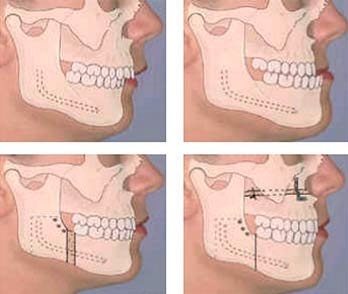
- Retrognathism (Receding Lower Jaw): This refers to insufficient development of the lower jaw, causing it to remain positioned backward. In addition to creating a noticeable aesthetic deficiency in the profile, it can also lead to very serious health problems such as sleep apnea and severe snoring due to airway narrowing.
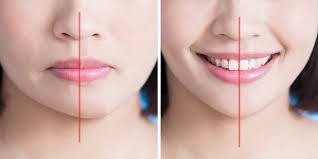
- Open Bite and Facial Asymmetry: Open bite is a condition where a visible gap remains between the front teeth even when the back teeth are fully closed. In facial asymmetry, one of the jawbones shifts to the right or left, disrupting the midline of the face. This condition may cause chronic pain and degeneration in the jaw joints (TMJ).
Dentocare Clinic: “Teamwork” in Treatment (Multidisciplinary Process)
Orthognathic surgery is not an independent procedure that a surgeon can simply perform alone in the operating room. The perfection of the process depends on the joint engineering work carried out by the orthodontist and the maxillofacial surgeon before and after the operation. At Dentocare Clinic in Kahramanmaraş, our patients are guided through the following transparent and carefully planned treatment journey:
1. Pre-Surgical Orthodontic Preparation (Decompensation):
During this phase, which begins months before surgery, our orthodontic specialist uses braces or clear aligners to position your teeth at their ideal angles within the jawbone. At this stage, your teeth may temporarily appear even more misaligned; the reason is to ensure that when the jawbones are moved during surgery, the teeth lock together perfectly like pieces of a puzzle.
2. 3D Virtual Surgical Planning (Virtual Surgery):
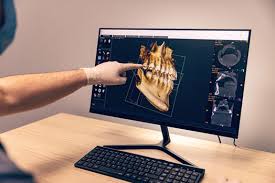
Once the teeth have reached the desired position, three-dimensional scans of your facial skeleton are transferred into a digital environment. Our specialist surgeons first perform the surgery virtually. The exact extent to which the jawbones will be moved forward, backward, or upward is calculated through this software, and surgical guide splints are produced. At this stage, our patients are able to virtually see the facial profile they will achieve after surgery.
3. Surgical Operation and Rehabilitation Period:
In the operation, which is performed under general anesthesia in a fully equipped operating room, all interventions are carried out from داخل the mouth. This means no external incisions or suture scars remain on your face. The bones are fixed in their new positions with biocompatible titanium mini-plates and screws. After a few days of hospitalization, the healing process begins.
Treatment Decision: Why Are Braces Alone Not Enough?
Our patients often ask, “Can’t this problem be solved just by wearing braces?” In order to understand the extent of skeletal problems and establish the correct treatment expectations, we have summarized the critical differences between the two approaches in the table below:
| Feature and Expectation | Orthodontics Only (Braces Treatment) | Orthognathic Surgery + Orthodontics |
|---|---|---|
| Area of Effect | A treatment in which the bone remains fixed and only the teeth are moved. | The actual repositioning of the lower/upper jawbones relative to the base of the skull. |
| Conditions It Treats | Only dental-origin crowding and mild bite irregularities. | Serious skeletal asymmetries and jaws positioned far too forward or backward. |
| Effect on Breathing and Facial Profile | Does not significantly change the airway (breathing) or the external facial profile (chin tip, etc.). | Expands the narrowed airway (resolving sleep apnea) and provides an aesthetic/dramatic change in the facial profile. |
| Permanence (Risk of Relapse) | When skeletal cases are forced with braces alone (camouflage), the risk of the teeth returning to their previous position is very high. | Since the bone structure is anatomically corrected, it provides a lifelong, stable occlusion (bite). |
Life-Changing Recovery
The recovery period after orthognathic surgery requires patience and involves several weeks of a soft-food diet. However, patients who successfully complete this process describe the change they experience a few months after the operation as “life-changing.” Muscles strained during chewing relax, the lips can close easily at rest, and snoring and sleep problems are replaced by a quality night’s sleep. Most importantly, as the golden proportion is achieved in the patient’s facial features, they gain a deep sense of self-confidence in the reflection they see in the mirror.
Take a Step Toward Healthy Function and a Flawless Expression
You do not have to accept the pain in your jaw joint, breathing difficulties, and aesthetic concerns. By applying to Dentocare Clinic in Kahramanmaraş, which offers services with advanced technological infrastructure and a multidisciplinary team of expert doctors, discover the functional and aesthetic possibilities that orthognathic surgery can offer you. You can consult our specialists for comprehensive 3D analysis and treatment planning.