Pedodontics in Kahramanmaraş
Childhood is the most critical stage in which the foundations of lifelong health habits are laid. Especially when it comes to oral and dental health, correct interventions and habits acquired in early childhood guarantee a healthy smile in adulthood. Pediatric dentistry, called “Pedodontics” in medical literature, is a specialized field that covers the protection, treatment, and monitoring of jaw development of primary and permanent teeth in children aged 0-13. With the increased awareness of parents in the region, Kahramanmaraş pedodontics services have gained a modern dimension with the philosophy of “preventive medicine,” going beyond simply extracting painful teeth.
What is Pedodontics and Why is a Specialist Needed?
Children are not “miniature adults.” Their anatomical structure, physiological responses, and most importantly, their psychological state are completely different from adults. Therefore, children’s dental treatments should be managed by Pedodontists (Pediatric Dentists) who have received specialized training in this field, rather than general dentistry. After graduating from dental school, Pedodontists undergo years of specialized training in pediatric dentistry, child psychology, and growth and development.
In Kahramanmaraş pedodontics clinics, the goal is not only to remove cavities but also to prevent the child from developing “dental phobia” (fear of the dentist). Using behavioral guidance techniques such as “Tell-Show-Do,” children experience a treatment process that feels like a game. This approach ensures that the child will confidently visit the dentist for life.
Baby Teeth: The “They’ll Fall Out Anyway” Misconception
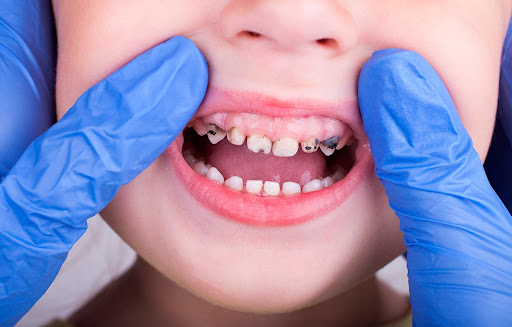
The common belief in society that “Baby teeth are temporary, they don’t need treatment, they can be extracted” is one of the biggest harms done to children’s oral health. Baby teeth have vital functions for a child’s development:
- Nutrition: During a child’s growth period, proper chewing of food is necessary for obtaining protein, vitamins, and minerals. Decayed or missing teeth can lead to malnutrition.
- Speech (Phonation): Correct pronunciation of sounds depends especially on the presence of front baby teeth. Early tooth loss can cause speech disorders.
- Space Maintainer Function: The most important function of baby teeth is to guide the permanent teeth that will erupt underneath. If a baby tooth is extracted prematurely, the adjacent teeth shift into the space, and there is no room left for the permanent tooth that will erupt underneath. This situation necessitates costly and long-term orthodontic (braces) treatments in the future.
Preventive Treatments Applied in Kahramanmaraş
The cornerstone of modern pedodontics is “Preventive Dentistry”. The goal is not to treat decay after it has formed, but to prevent it from forming. Considering the dietary culture of Kahramanmaraş (consumption of ice cream, sweets, acidic drinks, etc.), preventive treatments gain extra importance.
1. Fissure Sealant
The chewing surfaces of molars have thin grooves (fissures) that even toothbrush bristles cannot reach. 80% of cavities start at these points. In the fissure sealant procedure, these grooves are sealed with a fluid and protective filling material without abrading the tooth surface at all. This prevents food accumulation. It is a completely painless and very short procedure.
2. Topical Fluoride Application
Fluoride is a mineral that strengthens the structure of tooth enamel, making it resistant to acid attacks. Professional fluoride applications (varnish or gel) are applied under the supervision of a physician and at intervals determined according to the child’s caries risk group (e.g., every 6 months). This process protects the enamel like “armor”.
Treatment Procedures: Differences Between Adults and Children
The materials and techniques used in pediatric dentistry are specifically chosen for the anatomy of baby teeth. The following table summarizes these differences:
| Feature | Adult Treatment | Pedodontic (Child) Treatment |
|---|---|---|
| Filling Material | Composite or Porcelain | Compomer (Colored fillings) or Glass Ionomer (Fluoride-releasing fillings). |
| Root Canal Treatment | Root canals are completely filled. | Amputation (Partial root canal treatment) is frequently performed; The vitality of the tooth is attempted to be preserved. |
| After Tooth Extraction | Implant or Bridge | “Space Maintainer” appliances (to preserve the space until the permanent tooth erupts). |
| Anesthesia Method | Standard Injection | First, numbing with topical gel, then with fine-tipped needles specifically for children. |
Space Maintainers: A Shield Against Orthodontic Problems
If a baby tooth has to be extracted much earlier than its natural shedding time due to trauma or advanced decay, an appliance called a “Space Maintainer” is used.This is where the space maintainer comes in. These small metal or plastic devices protect the space left by the extracted tooth. This prevents the adjacent teeth from tilting into that space and preserves the space for the permanent tooth to erupt. Space maintainers are the most economical and easiest way to prevent future crowding.
Dental Trauma in Children: What to Do in an Emergency?
Children are active, and dental trauma due to falls/bumps is common. In trauma cases presenting to pedodontics clinics in Kahramanmaraş, the first intervention is very critical.
Emergency Note to Parents:
If your child’s permanent tooth is completely knocked out (avulsion), hold the tooth by the white part (crown), not the root. Never wash or rub it. Place the tooth in a glass of cold milk and contact a dentist within 1 hour at the latest. If a baby tooth has come loose, do not try to put it back in (it may damage the underlying tooth), but be sure to have it checked by a dentist.
Clinic Selection and Advice for Parents
When choosing a dentist for your child in Kahramanmaraş, the most important criteria to consider are the dentist’s “specialization” and the clinic’s “sterilization” standards. Your child’s immune system may not be as strong as an adult’s; therefore, clinics that use autoclave sterilization, have packaged instruments, and fully comply with hygiene rules should be preferred. Furthermore, dentists who can communicate with your child, are patient, and have expertise in pedodontics directly affect treatment success.