Kahramanmaraş Primary Tooth Treatment
Childhood is a special period where growth and development are most dynamic, and the body is constantly changing. One of the areas where this change is most evident is the oral and dental structure. Primary teeth, which begin to erupt around the age of 6 and remain in the mouth until the age of 12-13, serving the child’s development, are unfortunately neglected in society with the perception that “they will fall out anyway, and new ones will come in their place.” However, primary tooth treatment in Kahramanmaraş is not just about extracting a painful tooth or filling it; it is a holistic approach that protects the child’s general health, nutrition, speech, and psychology. Infections in primary teeth can disrupt the structure of the permanent tooth underneath, and early extractions can lead to serious orthodontic problems in the future.
Why Should Primary Teeth Be Treated?
It is true that primary teeth are temporary, but their function is not temporary. Baby teeth perform the following vital functions during the most critical developmental stages of a child’s life:
- Nutrition: During a child’s growth period, they need to chew food effectively to obtain protein, vitamins, and minerals. Decayed or painful teeth can cause the child to avoid eating and lead to nutritional deficiencies.
- Guiding Permanent Teeth: Baby teeth determine the path for the permanent teeth that will erupt underneath. If a baby tooth is extracted due to decay before its natural shedding time, the adjacent teeth shift into the space, closing the gap for the permanent tooth that will erupt underneath. This situation necessitates orthodontic (braces) treatment in the future.
Jaw Development: Chewing forces trigger the growth of the jaw bones. Chewing with healthy baby teeth supports jaw and facial development.
Treatment Methods Applied to Baby Teeth
In pedodontics clinics in Kahramanmaraş, special materials and techniques suitable for the anatomy and psychology of children are used. Since the structure of baby teeth is different from permanent teeth, the treatment protocols also differ. 1. Baby Tooth Fillings (Compomer and Glass Ionomer)
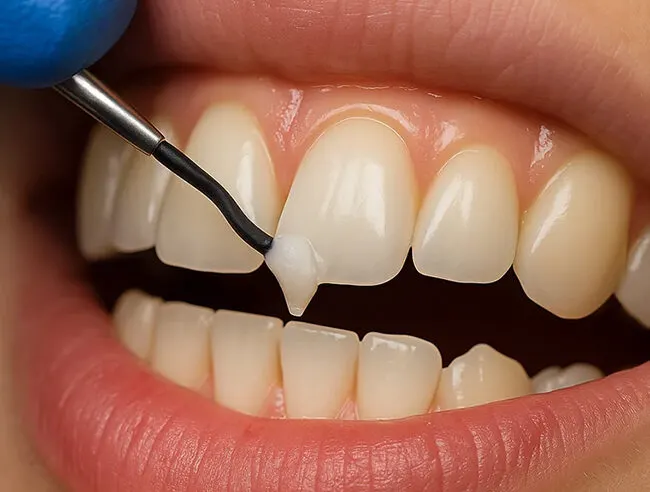
After cleaning caries in children, the resulting cavity is usually filled not with standard composites as in adults, but with “Compomer” (colored fillings) or “Glass Ionomer” (fluoride-releasing fillings). These materials are more resistant to moist environments and continue to protect the tooth from caries by releasing fluoride from the inside. Colored fillings are frequently preferred to increase children’s compliance (motivation) with treatment. 2. Amputation (Partial Root Canal Treatment)
In baby teeth, decay reaches the nerve chamber (pulp) very quickly. While adults undergo direct root canal treatment when the nerve is affected, in children, if the nerve in the root portion is still alive, an “amputation” procedure is performed. In this procedure, only the infected nerve tissue at the top of the tooth (crown) is removed, and the living tissue in the roots is not touched. Thus, the tooth retains its vitality and can remain in the mouth until its natural shedding time. Amputation is a shorter and easier procedure than root canal treatment.
If the infection has progressed to the roots of the tooth or an abscess has formed at the root tip, root canal treatment is applied to the baby tooth. Since the roots of baby teeth will dissolve over time, special “absorbable” pastes are used instead of permanent root canal fillings used in adults. Thus, as the permanent tooth coming from underneath dissolves the root of the baby tooth, the root canal filling also dissolves with it and does not block the eruption path.
Kahramanmaraş Region and Tooth Decay Risk Factors
Kahramanmaraş is known for its rich culinary culture. However, the frequent consumption of sticky/sugary foods such as ice cream, syrupy desserts, dried fruit paste, and sausage in children’s diets is a significant factor increasing the risk of tooth decay. Sticky foods, in particular, adhere to the tooth surface, providing a long-term environment for bacteria to produce acid.
Important Advice for Parents:
Instead of completely banning sugary foods, managing the timing of their consumption is more effective. Sugary foods should be consumed immediately after main meals, and teeth should be brushed afterwards. Constantly snacking between meals keeps the acidity in the mouth constantly high, maximizing the risk of tooth decay.
Milk Tooth Extraction and Space Maintainers
The priority of pediatric dentists is always to keep the tooth in the mouth. However, extraction may be decided upon if the infection has spread to the bone, if there is a risk of damaging the underlying permanent tooth, or if the tooth is too damaged to be restored. If a baby tooth is extracted prematurely, a “Space Maintainer” must be used.
What is a Space Maintainer? They are small appliances that can be fixed or removable. They preserve the space left by the extracted tooth and prevent neighboring teeth from tilting into that space. This preserves the space for the permanent tooth that will erupt from below. Space maintainers are the most economical “preventive” application, preventing costly and lengthy orthodontic treatments in the future. Differences Between Adult and Child TreatmentsPediatric dentistry (Pedodontics) differs from general dentistry in terms of the techniques and approaches used. The following table summarizes these differences:
| Feature | Adult Treatment | Pediatric (Pedodontic) Treatment |
|---|---|---|
| Filling Material | Composite / Porcelain | Compomer / Glass Ionomer / Colored Fillings |
| Root Canal Treatment | Roots are filled with permanent fillings. | Absorbable pastes are used or amputation is performed. |
| Coronal Veneer | Zirconium / Metal Supported Porcelain | Stainless Steel Crowns (SSC) or Zirconium (Prefabricated). |
| Post-Extraction | Implant or Bridge | Space Maintainer (To preserve the space). |
| Anesthesia | Standard Injection | Pre-numbing with topical gel and fine-tipped needles. |
How to Overcome Dental Phobia in Children?
One of the most important issues addressed in Kahramanmaraş primary tooth treatment clinics is the management of “Dental Phobia”. Children’s fear usually stems from the unknown. Pedodontists use the “Tell-Show-Do” technique. For example, they let the child listen to the sound of the filling device, call the water-spraying instrument a “rain machine,” and demonstrate that it doesn’t hurt by touching the instrument to the child’s fingernail before the procedure. These approaches are vital for gaining the child’s trust and ensuring a trauma-free treatment process.
Conclusion: Early Intervention Saves the Future
Problems with baby teeth are problems that grow and threaten the child’s overall health if neglected. In Kahramanmaraş, parents taking their children to a pediatric dentist (pedodontist) regularly (every 6 months) from the moment their first teeth erupt not only prevents cavities but also helps the child get used to the dentist’s chair and grow up as a fearless individual. Healthy baby teeth are a guarantee of a healthy adulthood.