Morning and Evening Toothbrushing Routine for Children: A Guide to a Sustainable Habit
Habits are the invisible architects of our lives. The foundations laid, especially in childhood, directly shape an individual’s health profile in adulthood. When it comes to oral and dental health, the strongest element of this foundation is undoubtedly a “regular toothbrushing” routine. However, for many parents, establishing this routine can be a process that is easy in theory but quite challenging in practice. Brushing sessions, squeezed between the rush of the morning and the fatigue of the evening, are often neglected or rushed.
Scientific research and dental authorities emphasize that tooth decay is a preventable disease. The golden rule of this prevention is mechanical cleaning twice a day, in accordance with the rhythm of the biological clock. So, why specifically morning and evening? What is the role of these two time periods in oral physiology? How can you integrate this discipline into a child’s life without creating pressure or conflict?
Why “Twice a Day” and Why “Morning and Evening”?
The frequency of brushing your teeth is not a matter of choice; it is a biological necessity related to the rate of bacterial growth and the chemistry of the oral environment. Bacteria in the oral flora feed on food residues (especially sugars and carbohydrates) and form a sticky layer called “plaque.” This plaque needs time to mature on the tooth surface.
The main purpose of brushing twice a day is to prevent this plaque from maturing and turning into an “acid-producing factory” and to protect teeth during nighttime hours when saliva flow is reduced. 12-hour periods are the ideal time frame for plaque control.
Morning Routine: A Fresh Start to the Day
Morning brushing is often the most neglected or shortened brushing session, usually due to the rush to get to school or work. However, it is critical for cleaning bacteria that accumulate in the mouth overnight and preparing teeth for acid attacks during the day.
Before or After Breakfast?
This is a frequently asked question in dentistry. Both approaches have their advantages:
- After Breakfast (Classic Approach): This is ideal for cleaning food residues such as cheese, bread, and jam from the teeth. However, if acidic foods like orange juice are consumed at breakfast, the tooth enamel softens somewhat. In this case, it is necessary to wait at least 30 minutes before brushing.
Before Breakfast (Modern Preventive Approach): Due to decreased saliva production overnight, the number of bacteria in the mouth increases. Brushing before breakfast cleans these bacteria and, thanks to fluoride toothpaste, strengthens the tooth enamel against the acids in breakfast. If you’re short on time in the mornings and can’t wait 30 minutes after breakfast, brushing as soon as you wake up might be a safer strategy.
Evening Routine: The Most Critical Moment of the Day
If your child only had the right to brush their teeth once a day, it should definitely be right before bedtime. Brushing in the evening is the insurance policy for dental health. Why Night Brushing is “Non-Negotiable”?
When the human body goes into sleep mode, the salivary glands also slow down their work. Saliva is the mouth’s natural washing system and acid neutralizer. The mouth dries out during sleep. If we sleep with food residue on our teeth, bacteria attack the tooth enamel in this dry and unprotected environment until morning. This process is the main cause of “bottle caries” or interproximal caries.
The evening routine should be based on this rule: “The only thing that should go into your mouth after brushing is water.” Drinking a glass of milk or eating fruit after brushing will reset all the cleansing.
Morning and Evening Routine Comparison
To better understand the goals and strategies of the two time periods, you can examine the table below:
| Feature | Morning Routine | Evening Routine |
|---|---|---|
| Main Goal | To clear night plaque, fresh breath, start the day protected. | To clear food accumulated throughout the day, prevent acid reflux at night. |
| Difficulty Level | Time constraints and rush. | Fatigue and sleep state. |
| Recommended Time | Upon waking or 30 minutes after breakfast. | Just before bedtime (Last step). |
| Tolerance | Tolerable if rarely skipped (not recommended). | Should never be skipped. |
Parental Strategies for Establishing a Routine
Turning a behavior into a “habit” is a process that takes an average of 21 to 66 days. In this process, the parent’s role is to be a “guide” rather than a controller.
1. Use Visual Reminders
Children think concretely. A “Morning-Evening Schedule” that you hang on your bathroom mirror can work wonders.You can create a chart with pictures of the sun and moon on it. After each brushing, have your child put a checkmark or sticker on it. This increases the satisfaction of completing the task.
2. The “Breaking the Chain” Method
Aim to create an uninterrupted chain on the calendar, like Barış Manço’s famous advice, “Don’t forget to brush your teeth.” The motivation, “Look, we haven’t missed a single day for 5 days, our chain has gotten very long, let’s not break it,” ensures the child’s continuity.
3. Brush Together (Mirroring Technique)
Children imitate what is done, not what is said. Seeing parents brush their teeth in the mornings and evenings proves that this is not “a rule unique to children,” but “a form of care that everyone does.” Brushing side-by-side while looking in the mirror gives both a chance to correct technical mistakes and socializes the process.
Routine Management by Age Group
0-3 Years: Completely Parental Control
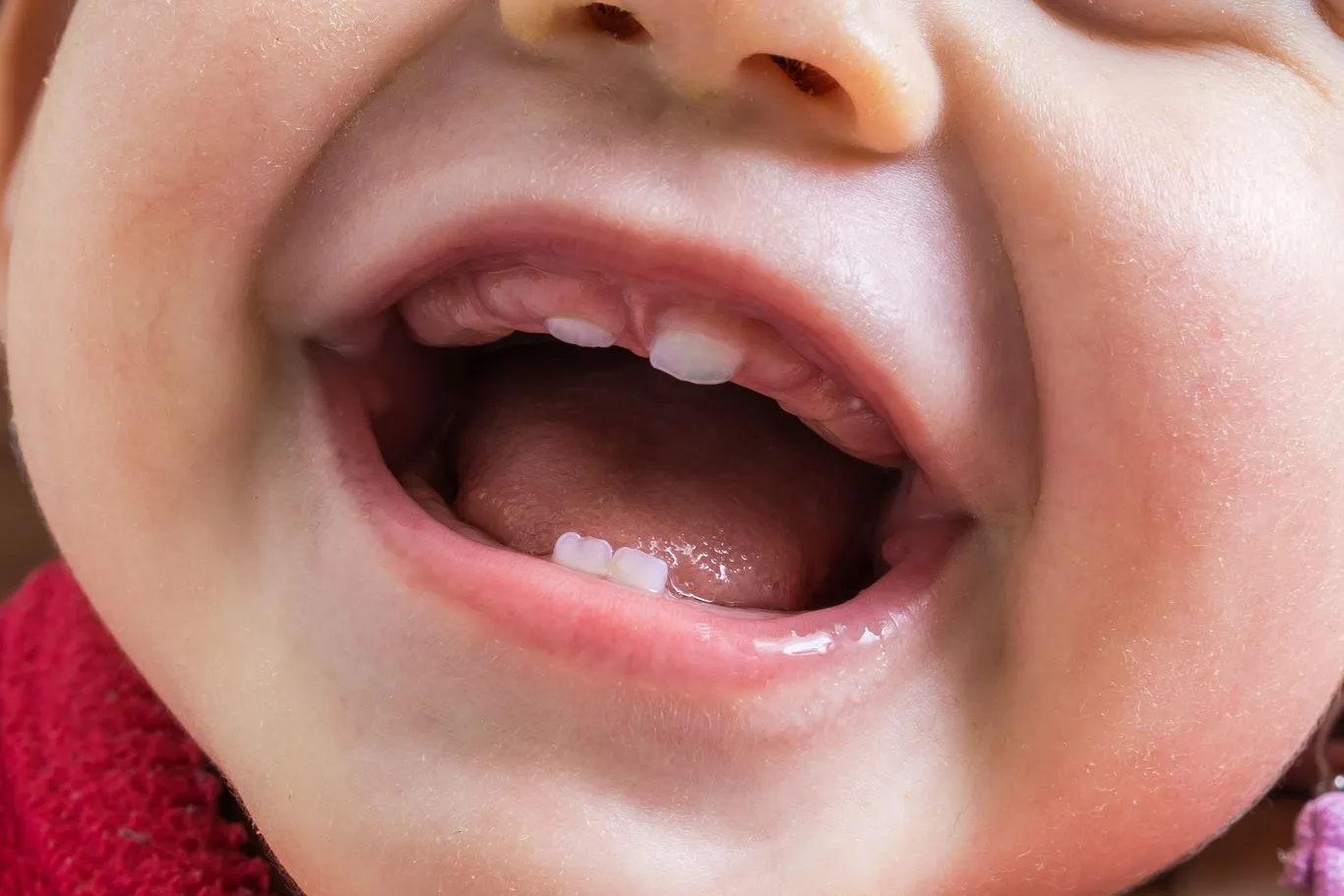
During this period, routine is the responsibility of the parent. Even if the baby objects, teeth (or gums) should be cleaned after breakfast in the morning and before bedtime at night. Wiping the teeth after nighttime feeding (breastfeeding/bottle feeding) is the most important part of the routine.
3-6 Years: Cooperation Period
The child may say “I’ll do it,” but their ability is limited. The routine should work as follows: The child takes the toothbrush, tries to brush their own teeth (plays), then the parent says, “It’s my turn, let me pick up the germs hiding in the back,” and does the actual cleaning.
6-12 Years: Controlled Freedom
School-age children can now brush their own teeth, but reminders are necessary. Especially in the evenings when they are tired, there may be a tendency to “pretend to brush.” Occasional parental checks or monitoring with plaque-staining tablets improves the quality of the routine.
Special Circumstances: Illness and Vacation
The biggest enemy of routines is when the order is disrupted. Brushing can be neglected when a child is sick or on vacation. However, oral care is even more important during illness (syrups are usually sugary) and vacations (more snacks are consumed). The message “We brush even on vacation” is the strongest reinforcement for establishing the habit.
Conclusion
A morning and evening tooth brushing routine is one of the most valuable life skills you can give your child. This habit not only protects their teeth but also instills self-discipline, respect for their body, and a sense of responsibility. There may be difficult evenings or hectic mornings; however, the firm and loving attitude you display as a parent will ensure that this routine becomes a healthy reflex that will last a lifetime. Remember, a healthy smile is the sum of small steps taken every morning and every evening.