
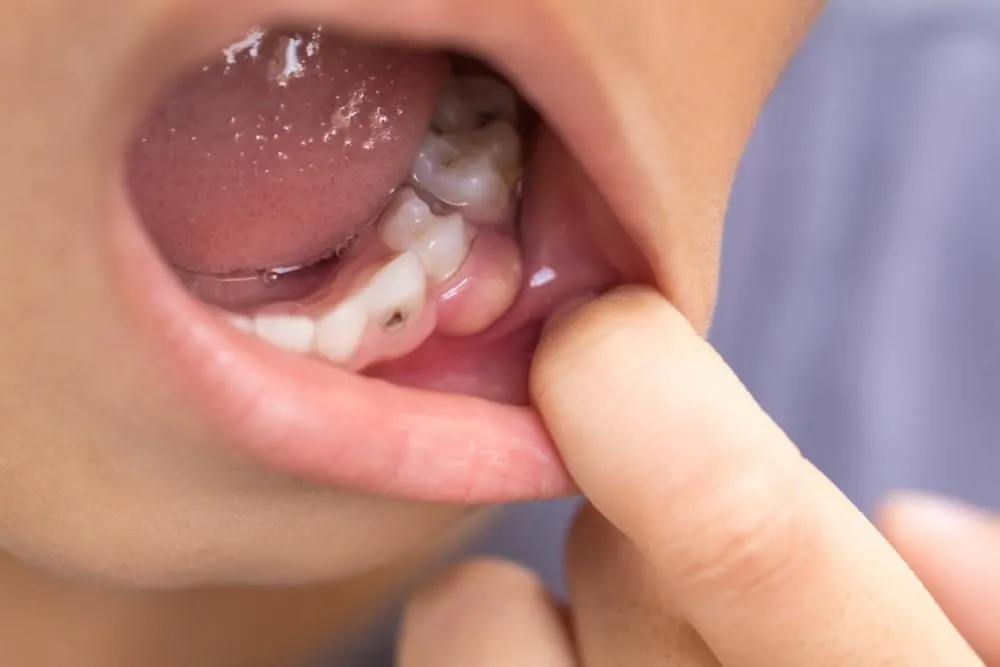
Should Filling or Extraction Be Preferred in Baby Tooth Decay?
One of the most frequent, most confusing, and perhaps most critical decisions parents face in pediatric dentistry (pedodontics) clinics is this: “My child has a decayed tooth. Should we try to save it with a filling, or should we have it extracted since it’s a tooth that will be replaced anyway?” This dilemma may seem like the “extraction” option as a more practical and definitive solution at first glance. The idea that “a new one will grow in its place anyway” is a dangerous myth that is widespread in society but does not align with medical realities.
The fundamental principle in modern dentistry is “prevention.” Losing an organ (tooth) should always be the last resort. Baby teeth are not just temporary structures for chewing; they are biological “space maintainers” that guide a child’s jaw development, enable speech, shape their aesthetic appearance, and most importantly, guide the permanent teeth that will erupt underneath.
The Functions of Baby Teeth: Why Should We Protect Them?
To understand the decision-making process, it’s essential to fully grasp the function of a baby tooth. A baby tooth is not simply a “tool for eating.”
1. Natural Space Maintainer Function: Each baby tooth protects the space where the permanent tooth underneath will erupt. When a baby tooth falls out on its own after its biological clock is up, the permanent tooth underneath easily erupts through the path it created. If a baby tooth is extracted prematurely, this path is lost.
2. Jaw and Facial Development: Chewing forces trigger the growth of the jawbones. A child who experiences early tooth loss will not use that area. This can lead to developmental delays and asymmetry in the jaw.
3. Nutrition and General Health: Children who cannot chew food adequately due to decayed or missing teeth may experience digestive problems or become malnourished by turning to soft foods. When is Filling Treatment Preferred?
In dentistry, the “Gold Standard” is preserving the tooth in the mouth. No matter how deep the decay, if there is no irreversible damage to the roots of the tooth and the surrounding bone tissue, treatment is always the priority.
In Which Cases Are Fillings (or Root Canal Treatment) Performed?
- Simple and Moderate Decay: If the remaining tooth tissue after cleaning the decay is strong enough to hold the filling material (compomer, composite, etc.), a filling is definitely done.
- Decay Reaching the Nerve: Even if the decay has reached the nerve (pulp) of the tooth, the infection is cleaned by “Amputation” (partial root canal) or “Root Canal Treatment” and the tooth is kept in the mouth by placing a filling.
If There Is Still a Long Time Until It Falls Out: For example, if a baby molar that should fall out at age 10-11 decays at age 5, that tooth needs to stay in the mouth for another 5-6 years. This situation absolutely requires treatment.
When Does Tooth Extraction Become Necessary?
Although saving the tooth is the priority, in some cases extraction is an unavoidable medical necessity. The decision for “extraction” is made not according to the parent’s wishes, but according to the doctor’s radiographic (X-ray) and clinical examination.
Extraction Indications (Mandatory Cases):
- Tooth Damaged to the Point of Being Untreatable: If the decay has reached the roots of the tooth and there is no healthy wall left to hold a filling, extraction is considered.
- Persistent Infections and Abscesses: In cases of infections that do not heal despite root canal treatment, constantly recur, form cysts in the bone, and threaten the health (enamel) of the underlying permanent tooth, the tooth must be removed.
- If the Time of Falling Out is Very Close: If the time of falling out of the decayed tooth has already come (if it is seen on the X-ray to be directly under the permanent tooth) and the tooth is loose, extraction may be preferred instead of dealing with complex treatments.
Filling and Extraction Decision Table
The following table shows the criteria a dentist considers when making a decision. It summarizes:
| Criteria | Filling / Treatment Preference | Extraction Preference |
|---|---|---|
| Tooth Damage | There are solid walls to hold a filling. | Decayed down to the root level. |
| Infection Status | No infection or treatable. | Recurrent abscess, bone loss. |
| Time of Falling Out | Years until the permanent tooth erupts. | |
| Effect on Permanent Tooth | Necessary as a space maintainer. | Infection damages the permanent tooth. |
The Cost of Early Extraction: The Necessity of Space Maintainers
The most common mistake parents make is: “If we have it extracted, we’ll be rid of it; it’s inexpensive and quick.” However, early extraction of a baby tooth is not the end of the treatment process, but the beginning of a more complex process.
If a sIf a baby tooth is extracted prematurely, the adjacent teeth begin to shift (tilt) into the resulting space. This causes the space for the permanent tooth to erupt from below to close. The permanent tooth either remains impacted or erupts from a different location (palate/cheek). This leads to serious orthodontic problems in the future.
Therefore, if a baby tooth must be extracted early, metal or plastic appliances called “space maintainers” must be made to preserve that space. In other words, extraction is not “easier” or “cheaper” than a filling. Extraction + space maintainer treatment is generally more expensive and requires more follow-up than a filling.
Psychological Aspect: How Does it Affect the Child?
Extraction (tooth removal) is perceived as a more traumatic procedure for children than fillings. The fear of “they will pull my tooth with pliers” can create dental phobia (dentophobia) in children. However, when a filling is described as “cleaning and painting” or “patching” the tooth, it is more easily accepted by the child. Keeping the tooth in the mouth is also important for the child’s sense of body integrity and self-confidence (especially in front teeth).
Important Advice for Parents
When you notice a cavity in your child’s tooth or pain begins, think about “long-term oral health” rather than “short-term relief” when making a decision. If your dentist says “We can save this tooth,” be sure to consider the filling or root canal treatment option. Extraction is an irreversible decision. However, saving the tooth is the biggest investment you can make in your child’s future smile, chewing, and jaw structure.
Conclusion: Which is More Correct?
In short; “filling or extraction?” for baby tooth decay. The answer to that question, except in exceptional cases (advanced infection, teeth that are due to fall out), is definitely filling and treatment. Modern dentistry uses all available means to keep the tooth in the mouth. Extraction is only the last resort when all other options have been exhausted. Protecting baby teeth is a fundamental requirement for your child to have proper tooth alignment and healthy chewing function in adolescence and adulthood.







