Kahramanmaraş Teeth Clenching and Temporomandibular Joint (TMJ) Treatment: Free Your Locked Jaw with Dentocare Clinic
In human anatomy, the only joint that is truly one of a kind, and that must function on both the right and left sides at the same time in perfect synchronization, is our jaw joint (Temporomandibular Joint – TMJ). This remarkable mechanism moves thousands of times a day while speaking, laughing, swallowing, and most importantly, eating. Unfortunately, when it is faced with the problem of involuntary teeth clenching (bruxism), it undergoes severe destruction. Dentocare Clinic, which applies modern dentistry principles in the diagnosis and management of jaw joint disorders in Kahramanmaraş and the surrounding area, offers scientifically grounded and lasting treatment protocols against joint deformities that can turn patients’ quality of life into a nightmare.
Jaw joint pain and loss of function usually do not appear all at once. Stress-related teeth grinding that continues for years, disrupted jaw closure caused by poorly made fillings or prostheses, and even posture disorders gradually wear down the delicate structures inside the joint. Most patients do not pay attention to the small “clicking” sounds coming from their jaw, until one morning they wake up unable to fully open their mouth, or their jaw suddenly locks while biting into an apple. At Dentocare Clinic, our main goal is not merely to mask these symptoms temporarily; it is to preserve the position of that delicate disc inside the joint space, stop the wear process, and restore the joint’s ability to perform healthy sliding and rotational movements again.
Why Does the Jaw Joint Deteriorate? The Process of Disc Displacement
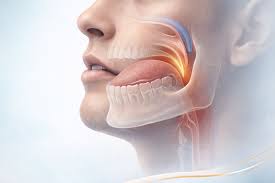
Our jaw joint contains a cartilaginous “articular disc” located between the head of the lower jawbone (condyle) and the socket at the base of the skull, acting almost like a shock absorber. This disc prevents the bones from rubbing against each other and ensures smooth movement. However, when you clench your teeth with tremendous force throughout the night, enormous pressure builds up on this disc. Joint fluid (synovial fluid), which is constantly exposed to pressure, begins to decrease, and the ligaments that hold the disc in place stretch and wear out.
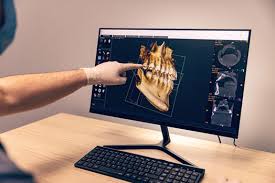
As the ligaments loosen, the disc begins to slip forward from its normal position. This is the scientific explanation for the “click” or “pop” sound you hear when opening and closing your jaw: the condyle makes this sound as it jumps onto the displaced disc. If the teeth clenching habit is not treated and this mechanical trauma continues, the disc eventually becomes completely deformed, the jumping motion over the disc can no longer occur, and the extremely painful condition we call “jaw locking” emerges, where the mouth can open only a few centimeters. In order to determine the stage of joint damage, Dentocare Clinic dentists benefit not only from clinical examination but also from advanced radiological imaging techniques, creating the most suitable treatment roadmap for each individual.
Symptoms of Temporomandibular Joint (TMJ) Damage: Your Body’s Warning Signals
Jaw joint disorders caused by teeth clenching reveal themselves through a complex set of symptoms. If you frequently experience the symptoms below, we can say that the shock-absorbing system in your jaw joint has begun to suffer serious damage:
- Functional Limitation (Locking): Difficulty opening the mouth in the morning, the jaw catching at a certain point during yawning throughout the day, and being able to open only with manual assistance.
- Crepitation and Clicking Sounds: While eating, sounds such as clicking, rubbing, or a sand-like rustling coming from the jaw, sometimes audible not only to you but even to people nearby.
- Pain Radiating to the Ear and Surrounding Area: Because the jaw joint is only millimeters away from the ear canal, there may be a feeling of fullness in the ear, ringing, and deep ear pain for which ENT specialists cannot find a cause.
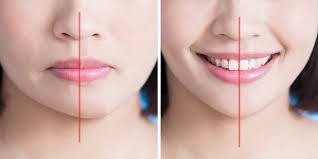
- Chewing Asymmetry and Jaw Deviation: When opening your mouth, your lower jaw moves not in a straight line but in an “S” shape or deviates toward one side (right/left).
Stages and Clinical Presentations of Jaw Joint Disorders
Temporomandibular joint disorders (TMD) progress with different levels of severity in each patient. Determining the stage of the disease is critically important for proper treatment planning. At Dentocare Clinic, the main stages and their reflections that we consider while evaluating our patients are as follows:
| Disease Stage | Condition Inside the Joint | Symptoms Experienced by the Patient |
|---|---|---|
| Stage 1 (Early Stage) | The joint disc has shifted slightly forward, but it can still return to its normal position while opening the jaw (Disc Displacement with Reduction). | Occasional “clicking” sounds, mild jaw fatigue in the morning. Pain is rare or very slight. It is usually ignored. |
| Stage 2 (Intermediate Stage) | The ligaments holding the disc have weakened, and it becomes more difficult for the condyle to jump onto the disc. A decrease in joint fluid and inflammation begins. | Persistent clicking sounds, sharp pain during chewing, slight limitation in mouth opening, and referred headaches. |
| Stage 3 (Advanced Stage) | The disc has completely moved forward and its shape has deteriorated. While opening the jaw, the condyle can no longer move onto the disc (Disc Displacement without Reduction). | The clicking sound disappears, but is replaced by “jaw locking.” Mouth opening falls below the level of 2–3 finger widths, and severe, chronic joint pain occurs. |
TMJ (Jaw Joint) Treatment Protocols at Dentocare Clinic
Jaw joint treatment is a meticulous process that requires patience and depends on doctor-patient cooperation. At Kahramanmaraş Dentocare Clinic, far beyond standard pharmacy-type night guards, advanced occlusal splint (joint splint) treatments are applied with a complete focus on correcting the biomechanics of the joint.
If your disc has slipped out of place, your lower jaw is guided in a controlled manner forward and downward with a specially prepared Anterior Repositioning Splint made in the laboratory. In this way, the joint space is widened, the pressure on the displaced disc is removed, and an ideal physiological environment is created for the disc to return to its former anatomical position. With regular use of the splint and the periodic adjustments (occlusal refinements) made by our dentist, the joint ligaments are given the opportunity to heal, and the inflammation (edema) is gradually cleared by the body.
In addition to splint treatment, if you have missing teeth, completing them with implant or bridge treatments, and if you have faulty bite relationships (malocclusion), correcting them with orthodontic treatments or prosthetic restorations, will ensure that the load placed on your jaw joint is distributed equally to both sides. During the treatment process, hot/cold compresses applied to the joint area, soft diet programs, and jaw physical therapy exercises will be your strongest aids in supporting the main treatment at our clinic.
Do Not Leave Your Jaw Health to Chance, Trust the Professionals
The jaw joint is an area with a very limited capacity for self-healing and is highly vulnerable to wear. Every day postponed with the thought of “it will pass over time” causes a little more damage to your joint cartilage and lays the groundwork for degenerative joint diseases (osteoarthritis), which are much more difficult to treat.
If you too are bothered by the sounds coming from your jaw while eating, experience the fear of locking when opening your mouth in the morning, and want to break free from this painful cycle, now is the perfect time to turn to the expertise of Kahramanmaraş Dentocare Clinic. With our disciplined diagnostic processes, modern treatment equipment, and patient-specific joint therapy plans, we help you step into a pain-free and comfortable life where you can yawn freely. Contact us now to protect your jaw joint health and receive a detailed evaluation.