What Are Afşin Dental Implant Treatments? A Permanent Solution for Missing Teeth
What Exactly Is an Implant and How Does It Work?
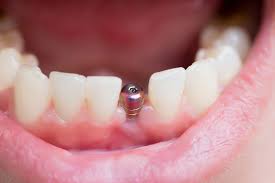
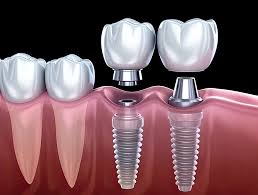
Unlike classical prostheses, an implant is a small screw-shaped structure placed directly into the jawbone and acting as an “artificial tooth root.” They are made of highly biocompatible titanium, which is perfectly compatible with the human body. Thanks to titanium’s inherent biocompatibility, the jawbone does not perceive it as a foreign object and instead tightly surrounds it, integrating it as part of itself.
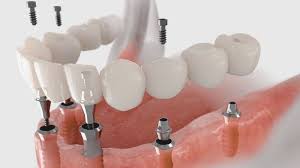
After this root structure fully integrates with the bone (osseointegration), an aesthetic crown made of porcelain or zirconium is placed on top. The result is a structure that cannot be distinguished from a natural tooth externally, allowing you to chew hard foods such as apples or nuts with the same comfort as your natural teeth.
💡 Dentocare Approach: Why Choose Implants?
In traditional bridge treatments, the two adjacent healthy teeth must be reduced (filed down) to replace a missing tooth. However, in implant treatments performed at our clinic, no intervention is made to neighboring teeth. Only the missing area is treated, preserving the structural integrity of your healthy teeth for life.
Advantages of Implants Compared to Traditional Bridge Prostheses
When evaluating which treatment method is right for you, it is important to consider long-term benefits:
| Comparison Point | Traditional Bridge Treatment | Dentocare Implant Treatment |
|---|---|---|
| Condition of Adjacent Teeth | Healthy neighboring teeth are cut to provide support. | Adjacent teeth are not touched at all. |
| Jawbone Health | Bone resorption begins over time in the missing tooth area. | The titanium root transmits chewing forces to the bone, preventing bone loss. |
| Lifespan | May need replacement within 7–10 years. | Can last a lifetime with good oral hygiene. |
| Natural Feel and Aesthetics | Food accumulation or a gap sensation may occur at the gum line. | Provides a single, independent structure just like a natural tooth. |
Step-by-Step Dentocare Implant Process
From the moment you step into our clinic until the moment you leave with your new healthy smile, our clinical workflow is as follows:
- Comprehensive Imaging and Planning: Our experienced physicians use 3D panoramic X-ray devices to map your jawbone thickness, nerve pathways, and bone density with millimetric precision. The correct diameter and length of the titanium implant are determined at this stage.
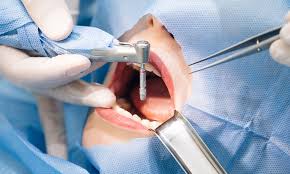
- Placement of the Artificial Root: The procedure begins under local anesthesia designed for maximum comfort. The titanium root is placed into the jawbone cavity in a highly controlled manner. This process is short and does not restrict daily life.
- Bone Integration (Healing) Period: The body needs time to integrate the titanium surface and complete bone healing—approximately 2 months in the lower jaw and 3 months in the upper jaw. Temporary teeth are placed immediately so that aesthetics are not affected during this period.
- Placement of the Permanent Crown: After successful integration, your permanent porcelain or zirconium teeth are placed. They are designed to match your jaw structure, facial features, and the color of adjacent teeth.
What to Expect Before and After the Procedure
The most important concern for our patients is comfort. Thanks to modern medical approaches, this process is no different from a simple filling or tooth extraction in terms of comfort.
After the procedure, supportive medications prescribed by our physicians and ice application help minimize swelling. Consuming soft and warm foods for the first few days significantly accelerates healing.
Frequently Asked Questions (FAQ)
The most common questions from our patients visiting our Afşin clinic and our transparent answers:
Does titanium cause allergies in the body?
No, it does not. Titanium is one of the rare biocompatible elements. It has been safely used in many medical fields (heart pacemakers, joint prostheses) for years and does not cause allergic reactions or rejection in the human body.
Can implants be placed at older ages?
There is no upper age limit for implants; the lower limit is 18, when bone development is complete. Even an 80-year-old individual in good general health (controlled diabetes or blood pressure) and sufficient jawbone volume can safely receive implants.
Can people with bone loss benefit from this treatment?
Yes. If bone thinning or resorption is detected, the area can be strengthened before implant placement using bone grafting (bone powder), making it suitable for treatment.
Conclusion: The Joy of Chewing and Smiling Freely
Tooth loss is not only an aesthetic issue but also a condition that directly affects nutrition and overall health. Thanks to advancing technology, you no longer have to live with this problem. Restoring the full function and natural feel of your teeth is now easier and more accessible than ever.
At Dentocare Clinic, we add value to your health with advanced diagnostic methods, high-quality titanium materials, and a fully sterile clinical environment. If you are seeking reliable, permanent, and aesthetic dental treatment in Afşin, we invite you to our clinic to create your personalized treatment plan. Leaving deficiencies behind and smiling confidently again is in your hands.