What is Amputation Treatment in Children, and Why is it Applied?
One of the terms that parents hear most frequently, but perhaps cause the most confusion for, during their children’s dental treatments is “Amputation.” Known as “Pulpotomy” in medical literature and often referred to as “Partial Root Canal Treatment” among the public, this procedure is one of the most fundamental and protective treatments in pediatric dentistry (Pedodontics). Although the word “amputation” means the cutting and removal of an organ in other fields of medicine, in dentistry this term refers to a rescue operation performed to preserve the vitality of the tooth and prolong its life.
Due to their structure, baby teeth are organs where decay progresses very quickly. A cavity that parents think of as “a small stain” can quickly reach the nerve (pulp) of the tooth. At this point, if the decay has affected the nerve but the tissues in the root portion are still healthy, “Amputation” treatment comes into play instead of extracting the tooth.
What is Amputation (Pulpotomy)?
We can liken the structure of a tooth to an egg. On the outermost layer is the hard enamel, below it is the dentin, and on the innermost layer is the “pulp” (tooth core), which contains the vascular and nerve bundle that provides the tooth’s vitality. The pulp tissue is found both in the visible part of the tooth (crown) and inside the roots.
Amputation (Pulpotomy); is a treatment applied when the decay only affects the nerve tissue in the upper part of the tooth (crown), but the nerve tissue in the roots is still alive and healthy. In this procedure, the dentist cleans the decay and removes the infected upper nerve tissue. However, the healthy nerve tissue in the roots is not touched. Special medications are placed at the mouths of the root canals to keep the tooth alive, and it is then sealed with a filling. In short; The diseased part of the tooth is removed, while the healthy root portion is preserved.
Why is it applied? What is its purpose?
The basic philosophy of amputation treatment is “Keeping the tooth in the mouth”. The best space maintainer for a baby tooth is the tooth itself. The purposes of amputation are:
- Keeping the tooth alive: Because the nerves in the roots are preserved, the tooth maintains its vitality, continues to be nourished, and when the physiological shedding time comes, its roots resorb normally.
- Preventing early extraction: If the tooth is extracted when the decay reaches the nerve, the space for the permanent tooth that will erupt from below may be closed. Amputation, by keeping the tooth in the mouth, prevents space loss and future orthodontic problems.
- Pain Relief: Since the infected upper part is removed, the pain the child feels while eating or consuming sweets disappears.
Differences Between Amputation and Root Canal Treatment
Parents may often ask, “Why amputation instead of root canal treatment?” or vice versa. Understanding the difference between these two treatments is important for grasping the logic of the process:
| Features | Amputation (Partial Root Canal) | Root Canal Treatment (Full Root Canal) |
|---|---|---|
| Scope of Procedure | Only the nerves in the upper part (crown) are removed. | All nerves in both the upper and root parts are removed. |
| Condition of the Tooth | The roots are alive and healthy. | The nerves in the roots are also infected or dead. |
| Application Duration | It takes less time. | It is a longer and more detailed procedure. |
| Indications | Deep but not root-level cavities. | Teeth that cause night pain and have a risk of abscess. |
How Does the Treatment Process Work? Step by Step
Amputation treatment in children is generally a comfortable process completed in a single session with the correct anesthesia.
1. Anesthesia: Local anesthesia is applied to the tooth before the procedure. This ensures the child does not feel any pain during the procedure. For comfort, the gums are first numbed with a topical gel (spray).
2. 1. Cleaning the Decay: The dentist cleans all the decayed tissue and infected enamel from the tooth.
2. Accessing and Cutting the Pulp: After cleaning the decay, the pulp chamber (the space containing the nerves) is accessed. The infected upper nerve tissue is cut and removed with sterile instruments. At this stage, the entrances to the root canals are visible.
3. Bleeding Control and Medication: Bleeding occurring on the healthy root tissue is stopped. Then, special materials (MTA, Calcium Hydroxide, etc.) or medicated pastes that heal and protect the tissue are placed at the mouths of the root canals.
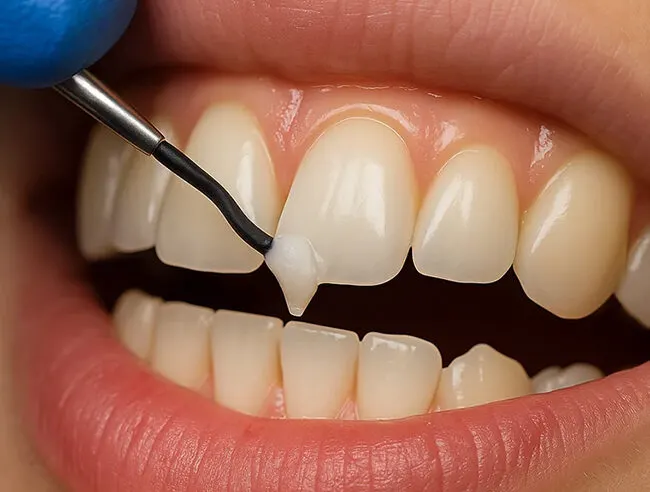
4. Restoration (Filling): After the procedure is completed, the tooth is covered with a watertight filling material or, if there is significant material loss, with a “Stainless Steel Crown” (metal coating).
In Which Cases Cannot Amputation Be Performed?
Not every decayed tooth can be saved by amputation. In some cases, the infection is very advanced and amputation is insufficient. Amputation is necessary in the following situations:Instead of treatment, root canal treatment or extraction is considered:
- Night Pain: If there is spontaneous pain that wakes the child from sleep, it means the infection has reached the roots (root canal treatment is required).
- Abscess and Swelling: If there is swelling like a pimple in the gum or swelling in the face, the root tip is inflamed.
- Root Resorption: If the tooth is very close to falling out and most of its roots have resorbed, extraction may be preferred instead of treatment.
- Uncontrollable Bleeding: If bleeding from the roots cannot be stopped during the procedure, this indicates that the roots are also inflamed.
Important Note to Parents
A tooth that has undergone amputation treatment, if the treatment is successful, will remain in the mouth without problems until its normal falling out time. However, regular check-ups after treatment should not be neglected. Rarely, the living tissue in the roots may react over time and require root canal treatment. Therefore, check-ups with a pediatric dentist every 6 months are critical for monitoring the treatment.
Post-Treatment Considerations
After the amputation procedure, some points should be considered for your child’s comfort:
Numbness: The effect of anesthesia may last 2-3 hours. During this time, care should be taken to prevent the child from biting their lip or cheek, and they should not be fed.
Sensitivity: Mild sensitivity for 1-2 days after the procedure is normal. If necessary, simple painkillers recommended by your doctor can be used.
Oral Hygiene: The idea of ”treatment has been done, let’s not touch it” is wrong. All teeth, including the treated tooth, should be brushed regularly. Lack of hygiene can lead to new cavities.
Conclusion
Amputation treatment in children is one of the strongest tools we have to prevent the early loss of baby teeth. Every tooth extracted with the thought “it will fall out anyway” creates a risk of malocclusion in the child’s future dental alignment. Amputation (partial root canal treatment) is a treatment with high biological compatibility and a very satisfactory success rate that keeps the tooth alive, allowing it to maintain its function and act as a space maintainer. If your doctor recommends this treatment for your child’s deep cavities, you can confidently approve it, knowing that it is the most protective approach to prolong the life of the tooth.