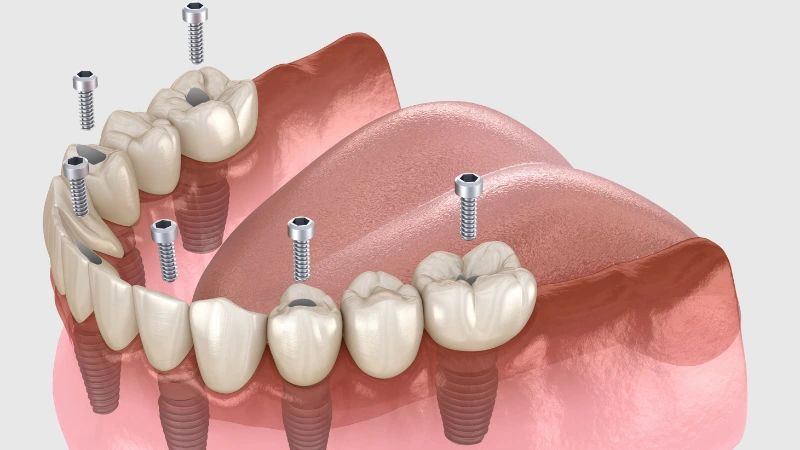
The cost of an implant is shaped by the number of implants needed, the imaging and examination items, whether a bone graft is required, the type of crown placed on the implant and the scope of the treatment plan. That is why two people who come in for the same “single implant” can end up with different plans and different total costs. A clear picture only emerges after the examination and imaging.
Why does the cost of an implant differ from person to person?
An implant is not a single product but a treatment process made up of several stages. Every mouth has its own bone structure, gum condition and number of missing teeth; so every treatment plan is prepared individually. Because each mouth calls for a separate plan, giving one number and saying “an implant costs this much” would be misleading. The more useful question is: which stages are needed in my mouth, and what does each stage cover?
The items below help you see why the plan, and therefore the cost, changes.
Examination and imaging items
Treatment starts with an intraoral examination and imaging. X-rays and three-dimensional tomography show the height and thickness of the bone and its distance to structures such as nerves or the sinus. Without this information, the size and position of the implant cannot be planned with confidence. Which images are needed depends on the person. At the examination, your general health, the medications you use, smoking and the health of your gums are also assessed, because these affect both how the treatment proceeds and any additional procedures that may be needed. If an additional procedure turns up, the plan and the cost are updated accordingly.
Finding out from the clinic beforehand whether imaging and a graft are calculated separately is the easiest way to avoid surprises later.
The effect of a bone graft on the cost
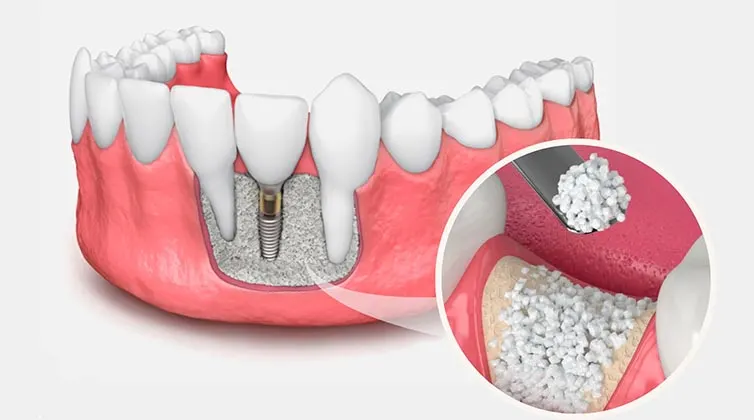
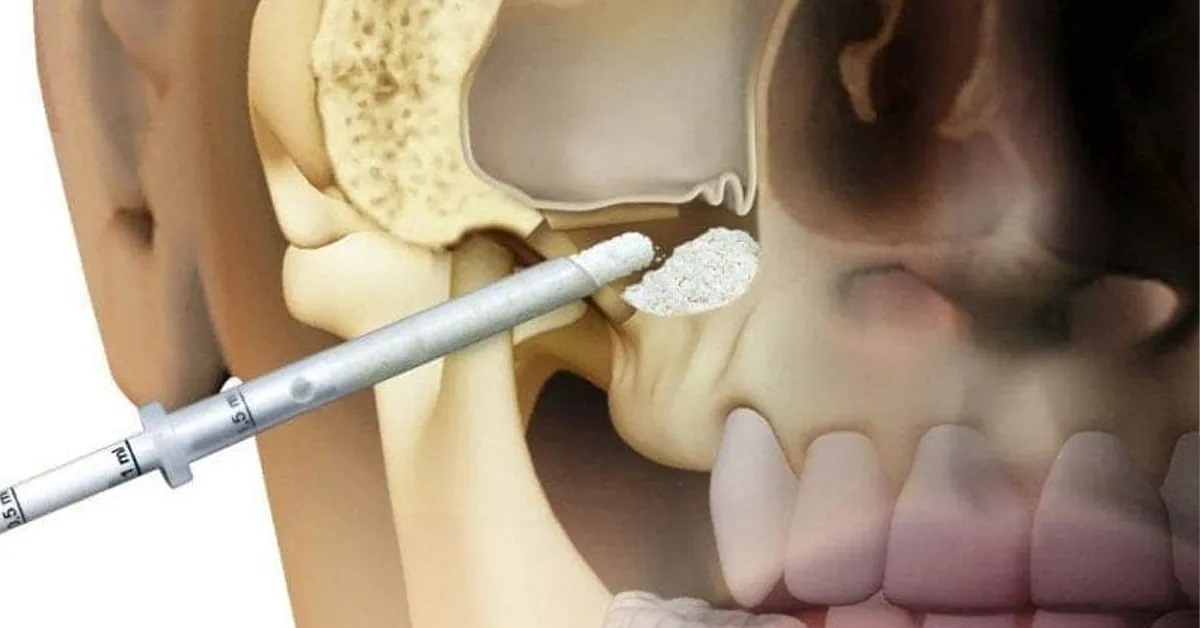
If a tooth has been missing for a long time or the bone around it has weakened, bone reinforcement may be needed before or during implant placement. This is an additional surgical step and also needs extra time for healing. As a result, the total plan and cost differ from a plan that does not need a graft. We explained how bone reinforcement is done in our article on bone powder application for teeth.
Not everyone needs a graft; what decides it is not your age but the volume and quality of your bone in that area. If the bone is sufficient, this item drops out of the plan completely, which explains why the totals of two people differ.
Types of crowns on implants and the zirconia option
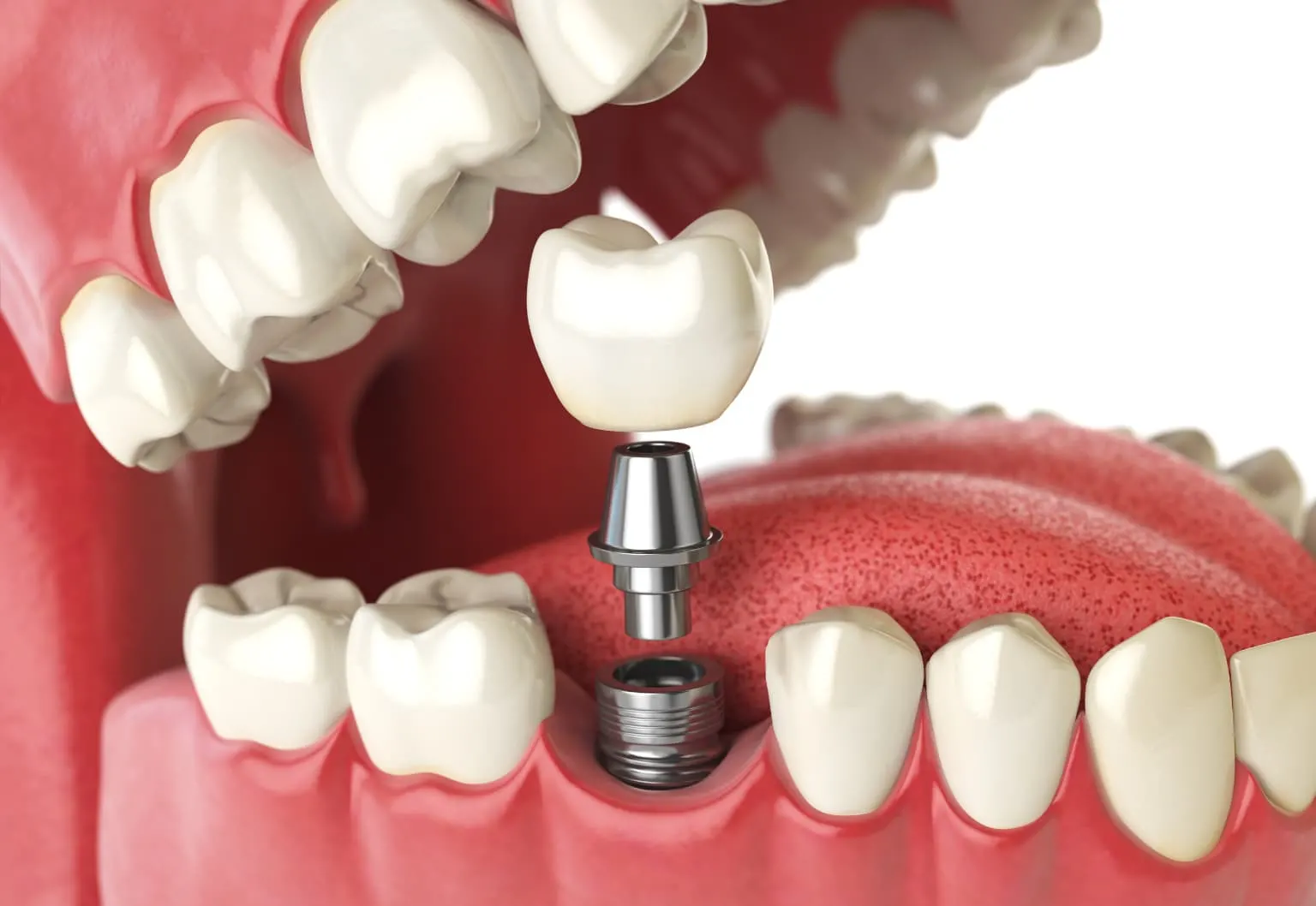
The implant itself is the titanium screw inside the bone; the tooth you see is the crown placed on top. The type of crown is chosen according to your aesthetic expectations and the position of the tooth in the mouth. Zirconia, porcelain and metal-supported options have different durability and appearance characteristics, and each affects the cost differently. The answer to whether a zirconia crown changes the cost of an implant is usually yes, because the material and laboratory work vary with the crown. The article zirconia or porcelain on an implant, which compares the two materials, can help your decision.
The difference between a single implant and a multiple-implant plan
When one tooth is missing, one implant and one crown are enough. When several teeth or the whole jaw are missing, the number of implants, the structure of the prosthesis they will carry and the scope of surgery change. In full-jaw plans, prostheses carried by fewer implants, rather than one implant for every missing tooth, also come into consideration. You can find the two approaches in our article on the difference between All-on-4 and All-on-6.
As the number grows, the duration of surgery, the healing plan and the preparation of the prosthesis also grow. For this reason, when planning a budget, you should ask about “the whole treatment” rather than “per implant”.
Two people, two different plans: a sample comparison
The first person had a tooth removed recently; the bone is sound and the neighboring teeth are healthy. After the examination and imaging, a single implant and a crown are considered enough. The second person lost a tooth many years ago, the bone has thinned and a neighboring tooth has a cavity. In this person, the cavity is treated first, bone reinforcement is done, healing is awaited, and only then is the implant placed. Both came because “a tooth is missing”, yet the scope and duration of the plan are very different. The change in cost comes from this difference.
What to look at when comparing quotes
If you are getting plans from different clinics, look at the content, not just the total. Imaging, graft, temporary tooth, crown and follow-up sessions may be included in one plan and separate in another. Comparing two plans that do not include the same items is misleading. You can also ask which implant system and crown material will be used and why the dentist made that choice. A good plan is one that can explain in plain language why each item is needed.
Other items that affect the cost
- Cavities, gum disease or infection that must be treated before the implant
- Teeth that need to be removed
- The need for a temporary tooth or temporary prosthesis
- The implant system and components used
- Follow-up sessions during the healing period
You should ask at the examination whether each of these items is part of the plan.
Aftercare is part of the plan too
Treatment does not end once the implant is placed; follow-up appointments, professional cleaning and regular care at home directly affect how long the implant lasts. If the gums and the area around the implant are not kept healthy, inflammation can develop around the implant and additional treatment may be needed. So the cost should be considered not only for the day of surgery but also in terms of long-term care. You can find how to do daily care in our article on implant care and daily oral hygiene. Habits such as teeth clenching also affect the life of the crown; telling your dentist about this from the start helps in choosing a suitable material.
Questions to ask at the examination for budget planning
Writing down these questions before you go to the examination helps you plan your budget correctly:
- Which imaging is included in the plan, and is it calculated separately?
- Is a bone graft needed, and if so, how is it reflected in the plan?
- Which crown types are available, and what is the difference between them?
- How many implants are recommended, and why?
- In how many stages and how many months will the treatment be completed?
- Are follow-up sessions included in the plan?
Clarify, together with these questions, how many months the treatment will take.
What to discuss with the dentist about payment and the treatment plan
Once the treatment plan is clear, you may want to learn in writing at which stages payment will be made and in what order the treatment will proceed. If the plan changes, for example if a graft turns out to be needed during surgery, it is also appropriate to ask beforehand how the additional item will be handled. Because implant treatment is a long-term investment, starting with an understanding of the plan makes things easier for both you and your dentist.
To see a plan specific to your situation and to ask your dentist your questions, you can request an examination appointment through our contact page.