Orthognathic Surgery Pre-Assessment Process
Orthognathic surgery, also known as jaw surgery, is not just a surgical procedure; it is a multidisciplinary treatment journey requiring meticulous preparation, planning, and follow-up that can last for months, sometimes even years. This process, which aims to correct skeletal discrepancies in the jaw bones (lower jaw protrusion/retrusion, upper jaw narrowing, asymmetries, etc.), directly affects not only the patient’s appearance but also their basic life functions such as breathing, chewing, speaking, and swallowing. Therefore, the pre-surgical assessment process is as vital as the surgery itself. The foundation of a successful outcome is laid not in the operating room, but in clinical analyses and digital planning carried out months in advance.
With its investments in healthcare and the strengthening of its expert medical staff, Kahramanmaraş is becoming a center where such complex and advanced surgical procedures can be planned. For individuals living in Kahramanmaraş who experience functional or aesthetic problems stemming from their jaw structure, accurate diagnosis and proper treatment planning are of paramount importance. This process is a team effort where an Oral and Maxillofacial Surgeon and an Orthodontist (braces specialist) work shoulder to shoulder.
Clinical Examination and Initial Assessment
The first step in the process is a clinical examination where the patient’s complaints and expectations are listened to in detail. Patients who apply to clinics in Kahramanmaraş usually come with complaints such as “my chin is protruding,” “my face is crooked,” or “I can’t bite.” At this stage, the specialist examines the patient’s face from both profile and frontal perspectives.
The following parameters are evaluated during the clinical examination:
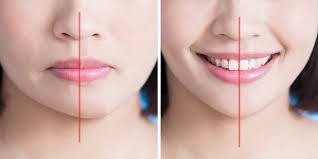
Facial Symmetry: Differences between the right and left halves of the face are checked, and whether the chin tip deviates from the midline is examined.
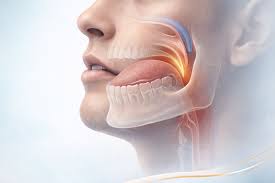
Profile Analysis: The relationship between the forehead, nose, lips, and chin tip is examined. The lower jaw is examined to determine if it is recessed (retrognathia) or prognathic (pronated).
Smile Line: The extent to which the gums are visible when the patient smiles (Gummy Smile) and the visibility of the teeth are evaluated.
Occlusion (Bite): The contact between the upper and lower teeth, and the presence of an open bite or cross bite are checked.
Temp-mode joint examination: Pain, clicking sounds, or limited movement in the temporomandibular joint (TMJ) are checked. Surgery is not planned until joint health is stable. Radiological Imaging and Digital Analysis
No matter how detailed the visual examination is, advanced radiological examinations are necessary to understand the bone structure and the condition of the tooth roots. In modern centers in Kahramanmaraş, 3D imaging technologies are used, going beyond traditional films. Cephalometric Analysis
These are millimeter-precise measurements taken on a lateral X-ray of the patient’s head. In this analysis, the position of the jawbones relative to the base of the skull, the angle of the teeth, and the thickness of the soft tissues are calculated. The deviation from the “ideal” values is mathematically determined. This data forms the basis for how many millimeters the surgeon will move the bones during the operation. 2. Cone Beam Computed Tomography (CBCT)
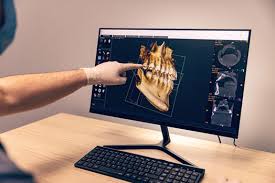
This is considered the “gold standard” method in orthognathic surgery planning. It creates a 3D digital copy of the patient’s skull structure. This allows the position of the nerves (especially the mandibular nerve passing through the lower jaw), bone thickness, joint structure, and airway volume to be clearly seen. Asymmetries and anatomical variations that may be missed in 2D films are detected with 3D tomography, minimizing surgical risks.
Pre-operative Orthodontic Preparation (Decompensation)
This is the stage that most surprises and sometimes complicates for patients. The question “Why do I need braces before surgery?” is frequently asked. In individuals with skeletal deformities, the body, as a natural reflex, tries to “camouflage” the bite by tilting the teeth. For example, in someone with a protruding lower jaw, their lower teeth will tilt backward.
The goal of pre-operative orthodontic treatment (decompensation) is to correct these incorrect tilts of the teeth and bring each tooth to its ideal position on its own jawbone. During this process, the patient’s jaw deformity may temporarily become more pronounced, and the bite may be disrupted. While this can be frightening for patients, it is actually an indication that the treatment is on the right track. The teeth are prepared so that they will perfectly align when the bones are moved to the correct position during surgery. Orthodontists in Kahramanmaraş complete this process in an average of 12-18 months, preparing the patient for surgery.
Virtual Surgical Simulation (VSP and 3D Planning)
One of the greatest opportunities offered by technology is being able to see the outcome of the surgery before the operation even begins.
Virtual Surgery (Virtual Surgical Planning – VSP): The patient’s 3D tomography data and facial scanThe images are transferred to specialized software. The surgeon virtually cuts, moves, and repositions the bones on this software. Thanks to this simulation:
– The aesthetic changes that will occur in the face can be predicted.
– Guide plates (splints) to be used during surgery are produced with millimeter precision using 3D printers.
– The surgery time is shortened, and the margin of error is reduced to almost zero.
Orthognathic Surgery Roadmap
For a patient who will begin the orthognathic surgery process in Kahramanmaraş, the general timeline and evaluation steps are as follows:
| Stage | Procedure Detail | Estimated Duration |
|---|---|---|
| 1. Initial Examination | Clinical evaluation, analysis of expectations. | 1 Day |
| 2. Registration and Analysis | X-rays, photographs, measurements, tomography. | 1-2 Weeks |
| 3. Preparatory Orthodontics | Preparing the teeth for surgery (Braces). | 12 – 18 Months |
| 4. Surgical Planning | New registrations, virtual simulation, splint fabrication. | 1 month before surgery |
| 5. Surgery (Operation) | Hospital admission and operation. | 1-3 Days (Hospitalization) |
| 6. Final Orthodontics | Fine adjustments and reinforcement. | 6 – 9 Months (Post-surgery) |
Psychological Assessment and Management of Expectations
Psychological preparation is as important as physical preparation. Orthognathic surgery is a procedure that creates significant changes in the face. It may take time for the patient to get used to their new face. Furthermore, the lengthy treatment process (braces, surgery, recovery period) requires patience.
In Kahramanmaraş, specialists assess whether the patient is psychologically ready for this process and whether their expectations are realistic (for example, unrealistic desires such as wanting to have a celebrity’s jaw). The success rate is much higher in patients who are highly motivated, understand the process, and cooperate with the physician.
Multidisciplinary Council: Joint Decision-Making Mechanism
Orthognathic surgery is not a “one-man” job. The best results are achieved through the collective wisdom of different specialties. In Kahramanmaraş, case planning is usually done by a council. This council includes the Oral Surgeon who will perform the surgery, the Orthodontist who will straighten the teeth, and, if necessary, a periodontist or prosthodontist. Each specialist evaluates the case from their own perspective, and a common treatment protocol is determined. This approach eliminates surprises the patient might encounter.
Result: Success Built on Solid Foundations
In summary; The “Orthognathic Surgery Pre-Assessment Process” is the most critical phase determining the success of the surgery. Surgeries performed without accurate diagnosis, detailed digital planning, and patient orthodontic preparation can result in disappointment.
The most important advice for patients considering jaw surgery in Kahramanmaraş is to trust their doctor, obtain detailed information about the entire process, and be patient before embarking on this long journey. It should be remembered that a good preparation process is the key to healthy function and an aesthetically pleasing smile that will last a lifetime.