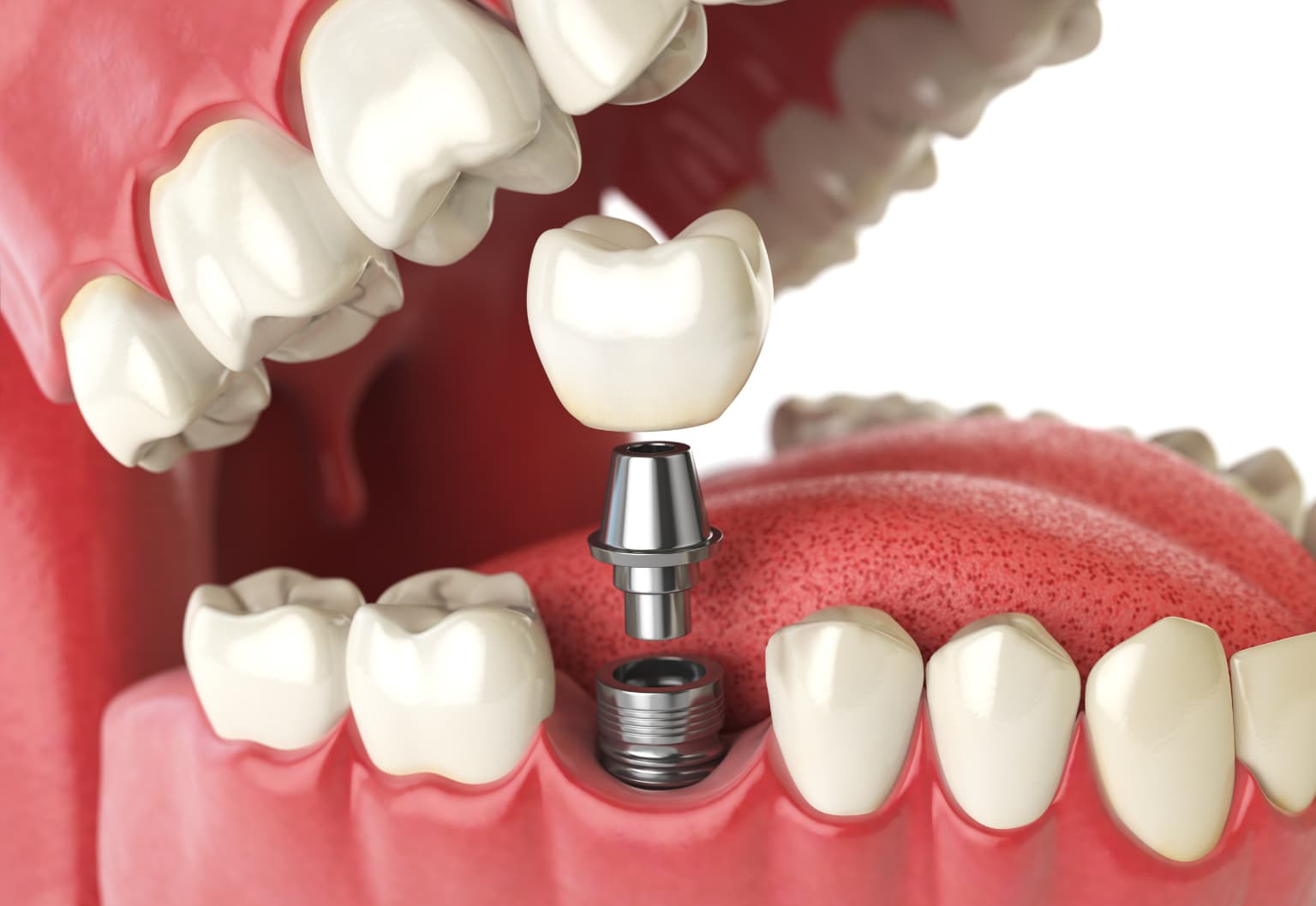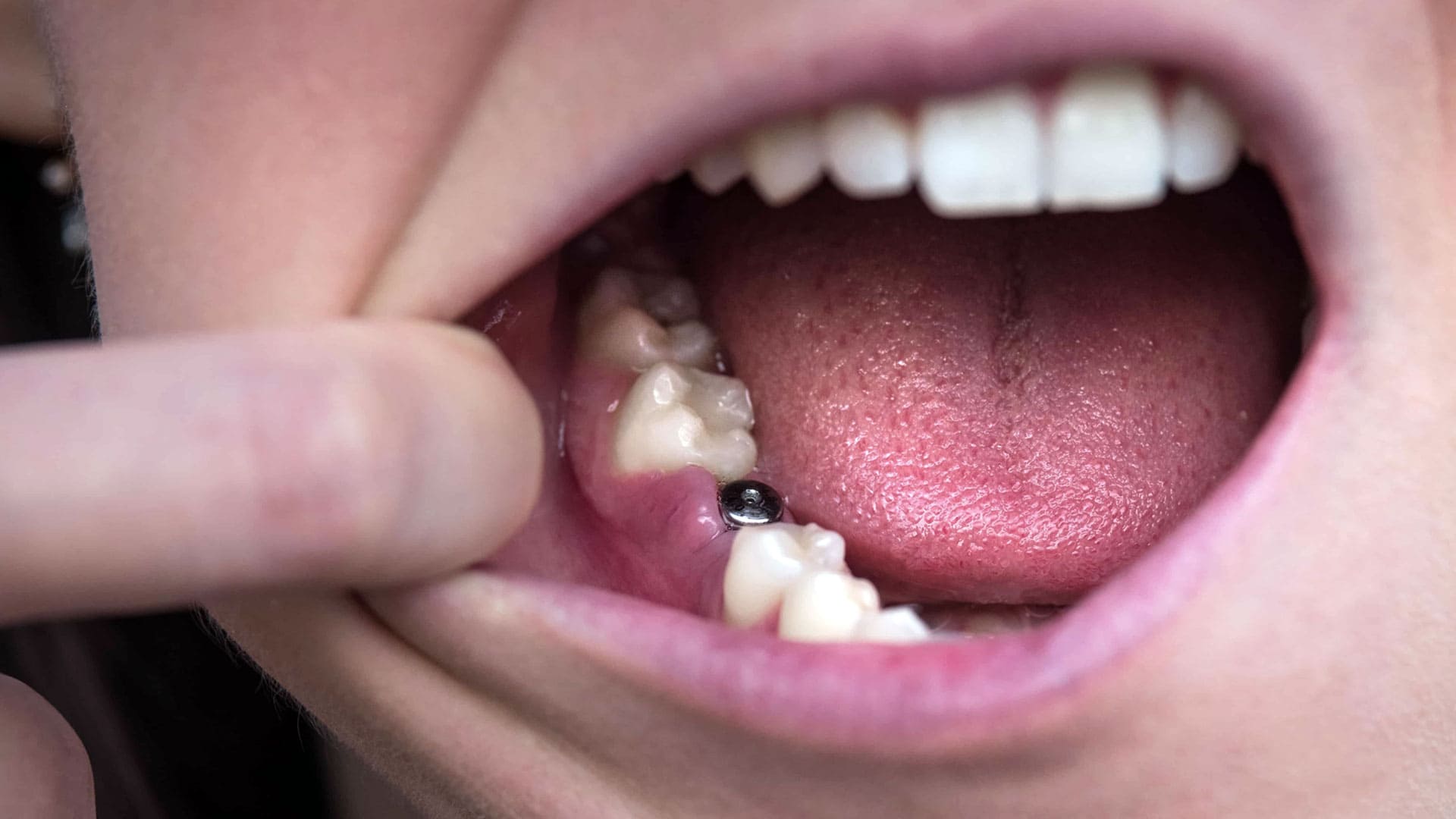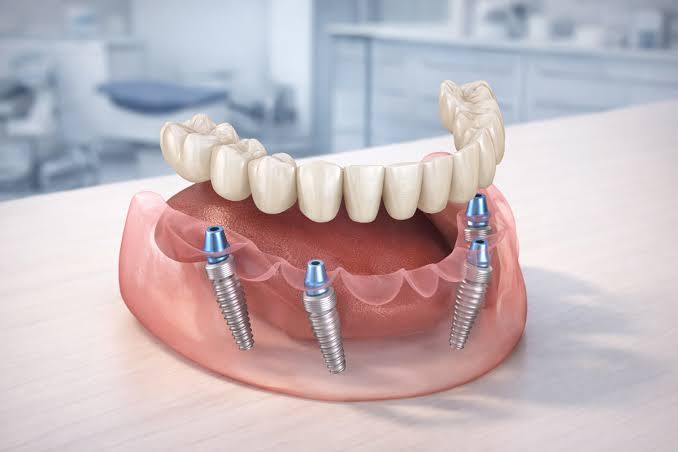
Many people who wear full dentures, especially in the lower jaw, find that the denture moves or lifts when they talk or eat. One option often discussed in this situation is an implant overdenture, also called an implant-retained removable denture. The denture attaches to a small number of implants in the jaw using special connectors, and you can still take it out yourself for cleaning. This article explains what an implant overdenture is, how it works, who it may suit, what treatment involves and how to look after it day to day.
What is an implant overdenture?
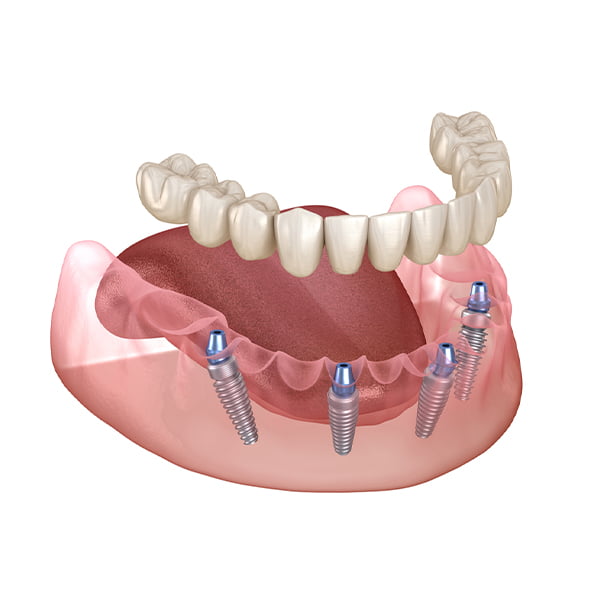
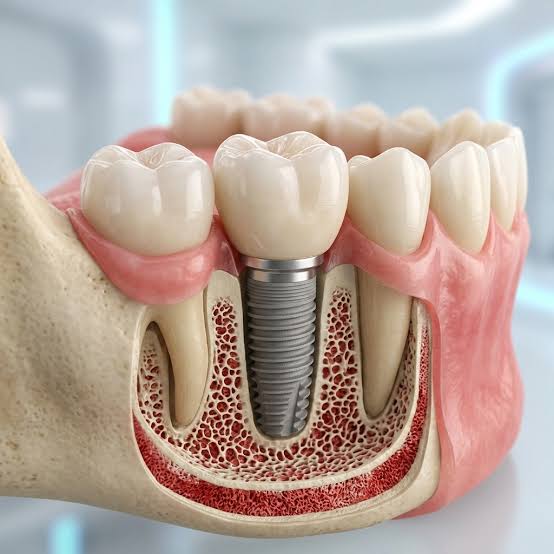
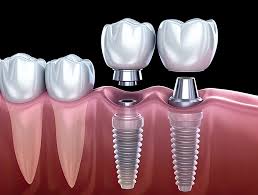
An overdenture is a removable denture that sits over implants placed in a jaw with no teeth and clips onto them. A conventional full denture rests only on the gums and palate and relies on suction, whereas an implant overdenture is attached to implants and therefore moves much less.
Usually two implants are used in the lower jaw, and four or more are common in the upper jaw. A two-implant overdenture has been described in international clinical consensus statements as one of the standard options for a lower jaw without teeth. Because bone in the upper jaw is usually softer, more implants are typically planned there. With enough implants, the part of an upper denture that covers the palate can sometimes be reduced, which some people find helps with taste and speech.
Types of attachment
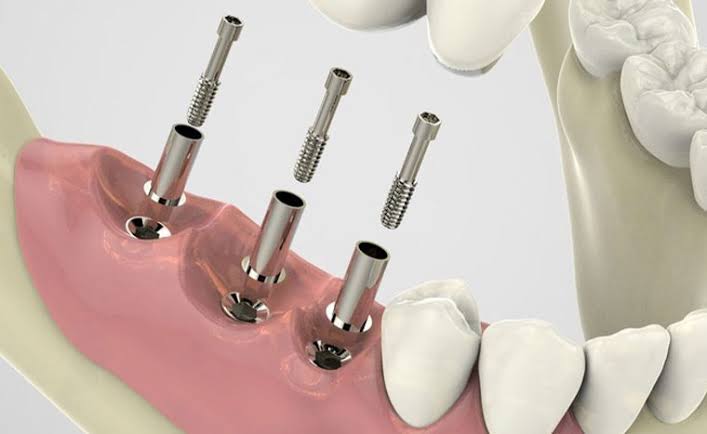
How the denture attaches to the implants is chosen according to bone, the number of implants and how easy you find handling small parts. The main systems are:
- Ball attachments: a rounded head is fitted on each implant, with a matching socket inside the denture. This is a simple and widely used system.
- Locator-type attachments: low-profile heads with replaceable plastic inserts. The inserts can be changed as they wear, and their grip can be adjusted.
- Bar systems: the implants are joined by a metal bar and the denture clips onto it. This gives more support, but cleaning under the bar needs extra care.
- Magnetic attachments: used less often; their retention is usually lower than other systems.
Attachments wear over time, so replacing inserts or parts when the grip loosens is a normal part of maintenance.
Who is it for?
An implant overdenture may be an option for people who:
- Are missing all their teeth in one or both jaws
- Are unhappy with a loose full denture, particularly a lower denture that will not stay in place
- Do not have enough bone for a fixed prosthesis or wish to avoid extra bone surgery
- Prefer treatment with fewer implants
- Value being able to remove and clean the denture easily because of dexterity or general health, for example older adults
Compared with a fixed prosthesis, an overdenture has some differences. It may need fewer implants, it is easier to replace lost tissue in areas of bone loss with the pink part of the denture, and it can be removed for cleaning. On the other hand, some people prefer the feel of a fixed structure. If you would like to learn about fixed options, see the page on full jaw implant procedures. Which option suits you is decided by looking at your expectations and your mouth together.
Factors that may limit suitability
- Uncontrolled diabetes or certain conditions that affect healing
- Heavy smoking
- A history of head and neck radiotherapy or certain medications that affect bone
- Bone loss too advanced for implants (sometimes manageable with a bone graft)
In people who have worn full dentures for many years, pressure from the denture can gradually thin the jawbone. Bone volume and density are therefore central to planning; you can read more in the article on why the jawbone matters in implant procedures. Bone also directly affects how many implants can be placed and which attachment system is chosen.
How does treatment progress?
- Examination and imaging: a clinical examination, a panoramic X-ray and, in most cases, a 3D scan. The fit of your current denture is also assessed.
- Implant placement: the implants are placed under local anaesthetic at the planned positions. During healing, your existing denture can often be adjusted so it does not press on the implant sites. The page on implant applications gives a general overview of the process.
- Healing: implants usually take two to four months to fuse with the bone, sometimes longer in the upper jaw or where bone is soft. In some suitable cases, earlier loading is possible.
- Attachments and denture: the attachment heads are fitted. A new denture may be made, or, if suitable, your existing denture may be modified to clip onto the implants.
- Adjustment and check-ups: small adjustments may be needed in the first weeks, followed by regular check-ups.
Care, risks and limitations
Long-term use of an implant overdenture depends largely on daily care:
- Remove the denture every day and clean it with a denture brush
- Gently clean the attachment heads and the surrounding gum with a soft brush
- Unless your dentist advises otherwise, take the denture out at night to rest your gums
- Attend check-ups, usually every six to twelve months
Filling the sink with water or placing a towel underneath while cleaning reduces the chance of breakage if you drop the denture. When you are not wearing it, storing it as your dentist recommends, in a moist environment or a clean container, helps it keep its shape.
Possible problems include worn inserts and reduced grip, a fractured denture, inflammation around the implants (peri-implant mucositis or peri-implantitis) and the need to reline the denture as the bone changes over time. Although an implant overdenture is held much more firmly than a conventional denture, it is not as immobile as a fixed prosthesis, and very slight movement during chewing is possible.
Frequently asked questions
Should I take my implant overdenture out at night?
In most cases dentists recommend removing it at night so your gums can rest and the denture can be cleaned. Different advice may be given in some specific situations. Your dentist will tell you what suits you.
Can my existing denture be converted to an overdenture?
If your denture is in good condition and fits well, it can sometimes be fitted with attachment housings and adapted to the implants. If it is old, worn or ill-fitting, a new denture may be more suitable. This is decided after an examination.
How many implants do I need?
In the lower jaw, two implants are often enough. In the upper jaw, four or more are usually planned because the bone is softer. The number depends on bone volume and the attachment system chosen.
Can I eat everything with an implant overdenture?
Chewing usually becomes easier than with a conventional denture, and many people can broaden their diet. Even so, very hard, sticky or bony foods can strain the attachments and denture. Taking smaller bites and chewing on both sides is advised.
Final thoughts
An implant overdenture is worth considering for people who struggle with a loose full denture and prefer a removable option. An examination that looks at your bone, expectations and cleaning habits together helps you and your dentist decide on a suitable plan.
This article is for general information only; the right treatment for you is decided by your dentist after an examination and any necessary tests.